
New Delhi, September 18, 2025:
As the world intensifies efforts to combat climate change, a new solution is steadily gaining global attention: Blue Carbon Credits. These credits are emerging as a powerful mechanism to reduce carbon emissions while simultaneously preserving fragile marine and coastal ecosystems. Experts suggest that blue carbon projects could become a cornerstone of sustainable development, offering both ecological and economic benefits.
What is Blue Carbon?
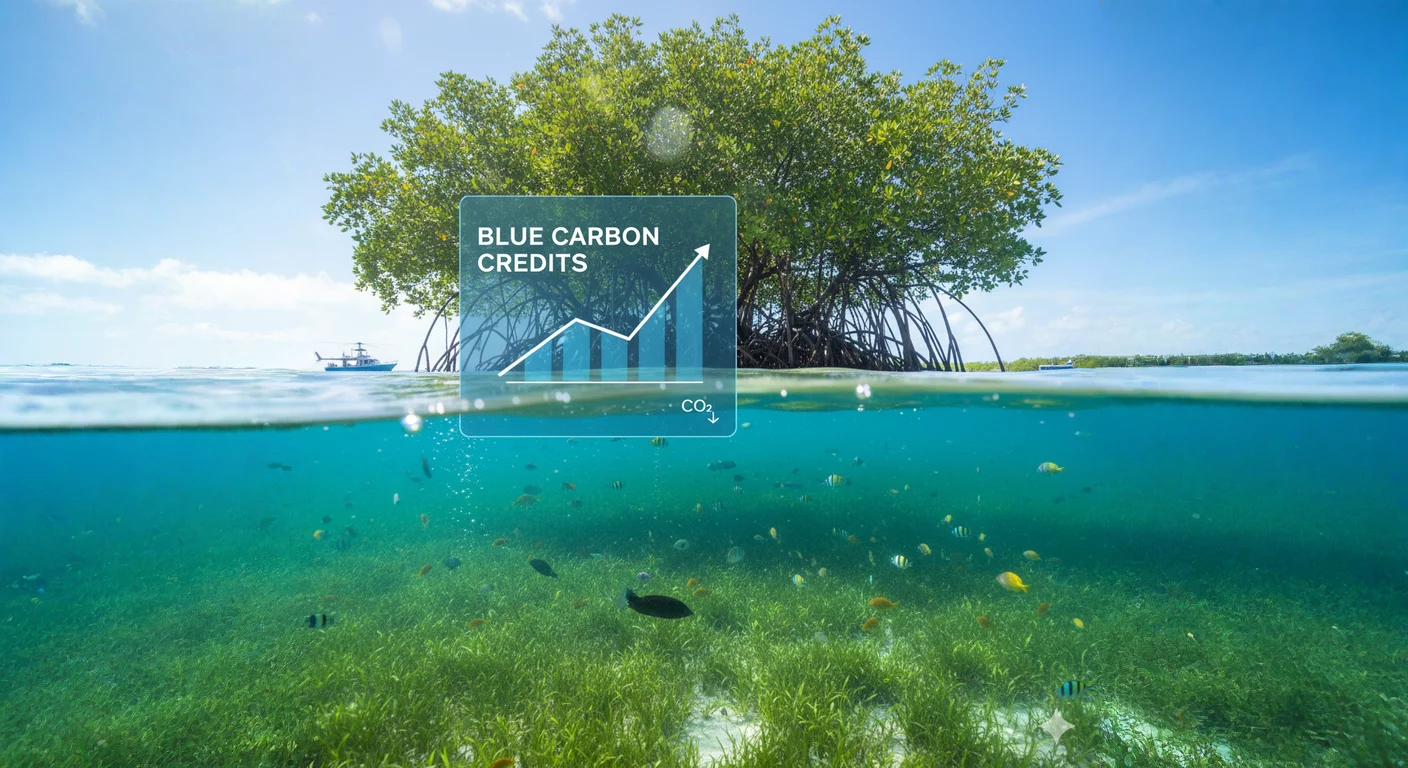
Blue Carbon refers to the carbon dioxide (CO₂) captured and stored in coastal and marine ecosystems such as mangroves, seagrasses, and salt marshes. Although these ecosystems cover barely 1% of the ocean floor, they are remarkably efficient at storing carbon, holding up to 10 times more carbon per unit area than land-based forests.
The efficiency of these ecosystems makes them invaluable in the fight against global warming. By protecting and expanding blue carbon habitats, countries can significantly boost their carbon sequestration capacity while also safeguarding biodiversity.
What are Blue Carbon Credits?
Blue Carbon Credits are tradable certificates that represent the removal or prevention of one tonne of CO₂ emissions from the atmosphere. These credits are generated through projects that focus on protecting or restoring coastal ecosystems. Activities can include:
- Planting new mangroves
- Preventing the destruction of seagrass meadows
- Implementing sustainable practices along coastal zones
Once generated, the credits can be sold in carbon markets where companies and individuals buy them to offset their carbon footprints.
How Do They Work?
The process of generating Blue Carbon Credits involves several stages:
- Project Development: Organizations initiate projects aimed at conserving or restoring coastal ecosystems.
- Carbon Sequestration Quantification: The amount of CO₂ captured or prevented from being released is scientifically measured and verified against standardized global protocols.
- Credit Issuance: Once verified, credits are issued—each representing one tonne of CO₂ saved.
- Trading: These credits can then be traded in carbon markets, allowing businesses to meet sustainability goals and comply with emission reduction commitments.
This structured process ensures both transparency and accountability, making blue carbon credits a credible addition to the broader carbon credit system.
Benefits of Blue Carbon Credits
The appeal of Blue Carbon Credits lies not only in their environmental impact but also in their social and economic benefits.
- Combating Climate Change: By absorbing and storing atmospheric CO₂, blue carbon ecosystems mitigate climate change impacts more effectively than many terrestrial solutions.
- Protecting Ecosystems: Blue carbon initiatives conserve vital coastal habitats, which in turn protect coastal communities from erosion, storms, and rising sea levels.
- Biodiversity Benefits: These ecosystems serve as critical habitats for fish, birds, and other marine life, supporting food security and ecological balance.
- Community Upliftment: Blue carbon projects often create jobs, support local economies, and provide incentives for sustainable coastal management.
This unique combination of environmental conservation and socio-economic development positions blue carbon credits as a win-win strategy for governments, corporations, and communities alike.
The Global Push for Blue Carbon
In recent years, global organizations have begun to recognize the potential of blue carbon projects. International climate agreements and carbon markets are increasingly considering blue carbon credits as part of emission reduction strategies.
For developing nations with extensive coastlines, such as India, Indonesia, and the Philippines, blue carbon credits present a dual opportunity: achieving climate targets under the Paris Agreement while also driving economic development in coastal regions.
Experts also note that blue carbon markets could grow significantly in the coming decade, potentially unlocking billions of dollars in climate finance.
Challenges Ahead
Despite the promise, challenges remain. The scientific quantification of carbon sequestration in marine ecosystems is complex and requires robust monitoring frameworks. Furthermore, building transparent trading systems and ensuring fair benefits for coastal communities are critical for long-term success.
Nevertheless, the momentum is building. Governments, NGOs, and private companies are increasingly collaborating to scale up blue carbon projects, signaling a new chapter in global climate action.
Conclusion
As the fight against climate change intensifies, Blue Carbon Credits are emerging as a powerful tool—offering climate resilience, ecological protection, and economic upliftment in one package. While challenges exist, the potential of these credits to reshape both carbon markets and coastal conservation is undeniable.
In the words of climate experts, investing in blue carbon is not just about reducing emissions—it’s about protecting the very ecosystems that sustain life on Earth.
Disclaimer: This article is based on information available from public sources. It has not been reported by EQMint journalists. EQMint has compiled and presented the content for informational purposes only and does not guarantee its accuracy or completeness. Readers are advised to verify details independently before relying on them.