

Author: Aditya Pareek | EQMint
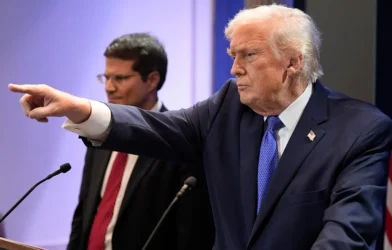
The U.S. administration under President Donald Trump has announced a 100% tariff on branded and patented pharmaceutical products imported into the United States, effective October 1, 2025. The policy is designed to pressure multinational drugmakers to shift manufacturing to U.S. soil — companies that set up plants domestically will reportedly be exempt.
At first glance, this announcement sparked concerns in India, the world’s leading supplier of affordable medicines to global markets. But a closer look suggests that India’s core pharmaceutical exports — generic medicines — may remain unaffected.
What’s in the Tariff?
- Branded/Patented Drugs: Subject to 100% tariff unless U.S. manufacturing units are established.
- Generic Medicines: Explicitly exempted from the tariff, providing a crucial safeguard for India’s $20+ billion generic exports to the U.S.
- Grey Zone: Ambiguity persists around “branded generics,” complex generics, and biosimilars. These products occupy a middle ground between traditional generics and patented drugs, raising the question of whether U.S. authorities will treat them as “branded” under the new rules.
Implications for India
- Generic Export Cushion – India’s competitive edge in low-cost generics remains intact, shielding a bulk of its pharmaceutical trade with the U.S. from immediate disruption.
- Branded Generics Uncertainty – With India supplying a significant share of branded generics, any adverse classification could dampen growth prospects in this segment.
- Opportunity in U.S. Manufacturing – Indian pharma majors with the capacity to invest may consider setting up local facilities in the U.S. to secure market access for complex products.
Market Reaction
Indian pharma stocks slipped after the tariff news, reflecting investor anxiety about possible spillover effects. However, analysts suggest that the exemption for generics could soften the blow, making the tariff more of a headline risk than a structural threat — at least for now.
What’s Next?
The clarity will come once the legal text of the tariff is published and classification guidelines are issued. Until then, Indian companies remain in a wait-and-watch mode, while policymakers in New Delhi monitor the situation closely.
For Indian pharma, the key lies not in generics — which appear safe — but in how Washington defines “branded generics.” That distinction could decide whether the Trump tariff turns into a storm or passes as a drizzle.
References
- Al Jazeera – Trump’s latest 100% tariff on pharmaceuticals
- Moneycontrol – Generic medicines exempted from Trump’s 100% pharma tariffs
- Times of India – Trump’s 100% pharma tariffs: India monitoring impact
- Reuters – Indian pharma stocks fall after Trump’s new drug tariffs
Disclaimer: This article is an opinion piece written for Eqmint. It is for informational purposes only and reflects the author’s perspective as of the date of publication. It should not be construed as investment advice, legal interpretation, or a definitive policy analysis. Readers are encouraged to consult official government notifications, legal texts, and professional advisors before making decisions related to trade, investment, or compliance.