

Author: Aditya Pareek | EQMint | Finance News
In a major boost to India’s industrial and infrastructure development, the Union government has approved multiple projects worth ₹7172 crore across nine states and Union Territories. The initiatives aim to strengthen domestic manufacturing, improve quality standards and reinforce supply chain capabilities for national-scale growth.
The announcement signals the government’s continued push to elevate India into a globally competitive manufacturing hub—one that produces with precision, stability and world-class efficiency.
A Multi-State Development Push
The newly approved projects span a diverse range of geographies and sectors. Key areas of focus include:
-
- Manufacturing and industrial infrastructure
-
- Supply chain digitisation and modernisation
-
- Quality enhancement and standardisation
-
- Stronger utility and logistics ecosystems
-
- Technology-led upgrades for MSMEs
-
- Regional skill development and talent mobilisation
By distributing these investments across nine states and UTs, the government aims to promote balanced, inclusive, and regionally diversified growth.
Focus on Six-Sigma Quality Standards
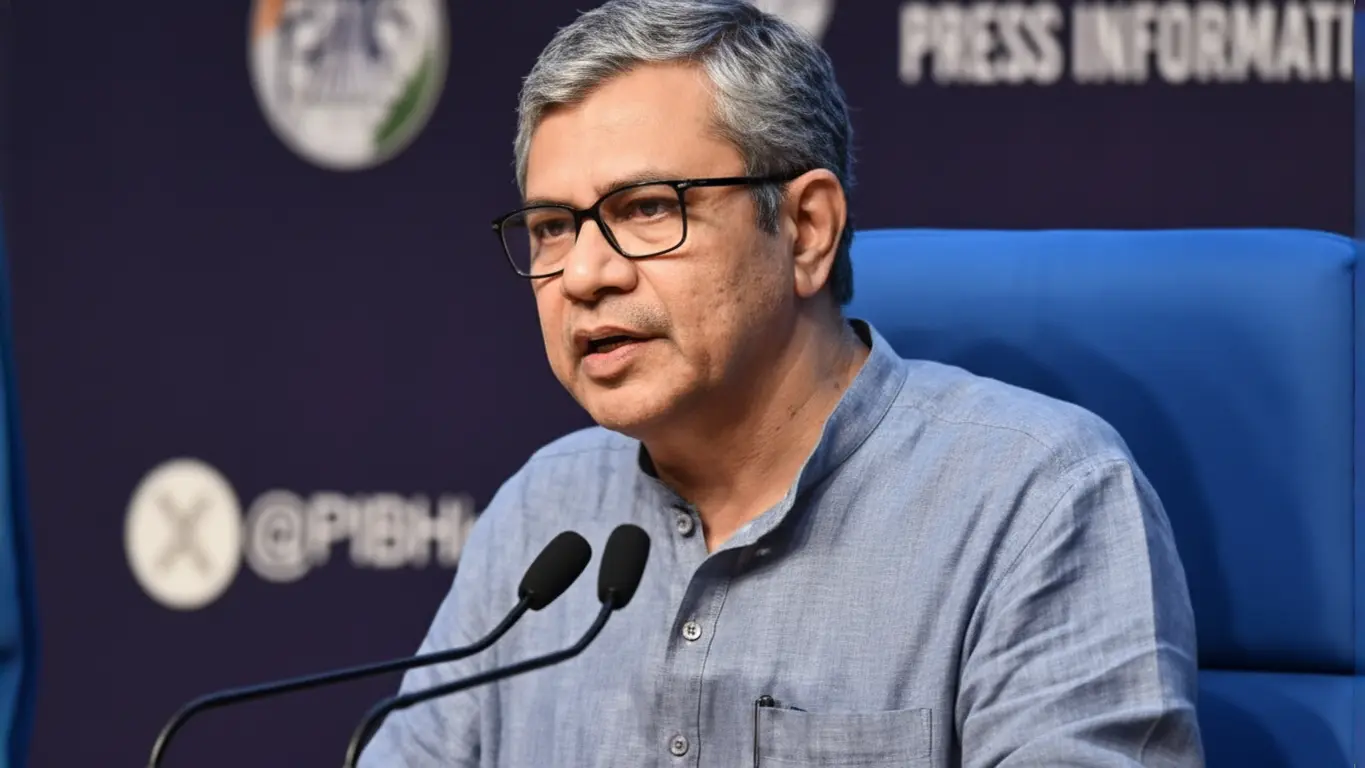
During the announcement, the minister underscored the importance of achieving six-sigma quality levels—a globally recognised benchmark associated with exceptionally low defect rates.
This represents a decisive shift in India’s manufacturing strategy:
Raising Production Excellence
Indian industries will be pushed to adopt precision-based processes and world-class efficiencies.
Supporting Import Substitution
Improved quality allows India to reduce import dependence in critical sectors such as electronics, telecom and machinery.
Enhancing Global Competitiveness
Higher manufacturing standards position India as a preferred sourcing destination for multinational companies.
Strengthening Domestic Supply Chain Resilience
A significant component of the ₹7,172 crore investment is directed toward enhancing supply chain resilience, an area exposed by global disruptions in recent years.
The projects aim to:
-
- Increase domestic production of high-priority components
-
- Reduce risk from single-point supply dependency
-
- Integrate MSMEs into large-scale national supply chains
-
- Strengthen warehousing, transportation and logistics infrastructure
-
- Accelerate digitised and real-time supply chain systems
Officials emphasised that India must build a supply chain capable of delivering predictable, reliable, and globally trusted outcomes.
State-Level Impact: Jobs, Growth and Industrial Expansion
The approved projects are expected to catalyse substantial economic activity. Preliminary assessments suggest:
-
- Significant job creation across industrial zones
-
- Greater capital expenditure across backward and aspirational districts
-
- Upgraded infrastructure supporting high-volume production
-
- Faster growth of MSME and ancillary clusters
-
- Improved state–centre coordination on industrial development
These outcomes align with ongoing national missions such as:
-
- Production Linked Incentive (PLI) schemes
-
- PM Gati Shakti
-
- Make in India
-
- Digital India and telecom infrastructure expansion
-
- PM Mitra mega textile parks
A Step Toward India’s Long-Term Industrial Vision
The ₹7172 crore approval is part of a much broader transformation underway in Indian manufacturing. The government’s blueprint focuses on:
-
- Scaling domestic capabilities for global export
-
- Building next-generation production clusters
-
- Encouraging R&D-led and technology-driven manufacturing
-
- Reducing import reliance for critical components
-
- Developing sunrise sectors like semiconductors, EVs, electronics and advanced telecom systems
Economists point out that distributing these projects across multiple states strengthens India’s overall manufacturing ecosystem rather than concentrating progress in a few industrial hubs.
Industry Welcomes the Decision
Industry associations and analysts have praised the announcement, highlighting its potential to accelerate India’s transition into a high-quality, resilient manufacturing base.
Experts noted that combining:
-
- high-value industrial investments
-
- upgraded quality expectations
-
- broader supply chain strengthening creates favorable conditions for long-term productivity and economic resilience.
Several industry leaders indicated that the move could also help India capture a larger share of global supply chain realignments as companies seek alternative manufacturing destinations.
Conclusion
The approval of ₹7172 crore worth of projects across nine states and Union Territories marks a major step toward elevating India’s industrial capability, improving quality standards and strengthening supply chain infrastructure.
With a clear focus on six-sigma quality and regional capacity building, the initiative supports India’s long-term ambition of becoming a globally competitive and resilient manufacturing powerhouse.
These projects are expected to generate significant economic activity, create jobs, and accelerate the pace of industrial development across the country, reinforcing India’s position as a rising global manufacturing hub.
For more such news and information visit EQMint.
Disclaimer: This article is based on information available from public sources. It has not been reported by EQMint journalists. EQMint has compiled and presented the content for informational purposes only and does not guarantee its accuracy or completeness. Readers are advised to verify details independently before relying on them.