
Author: Aditya Pareek | EQMint | Business news
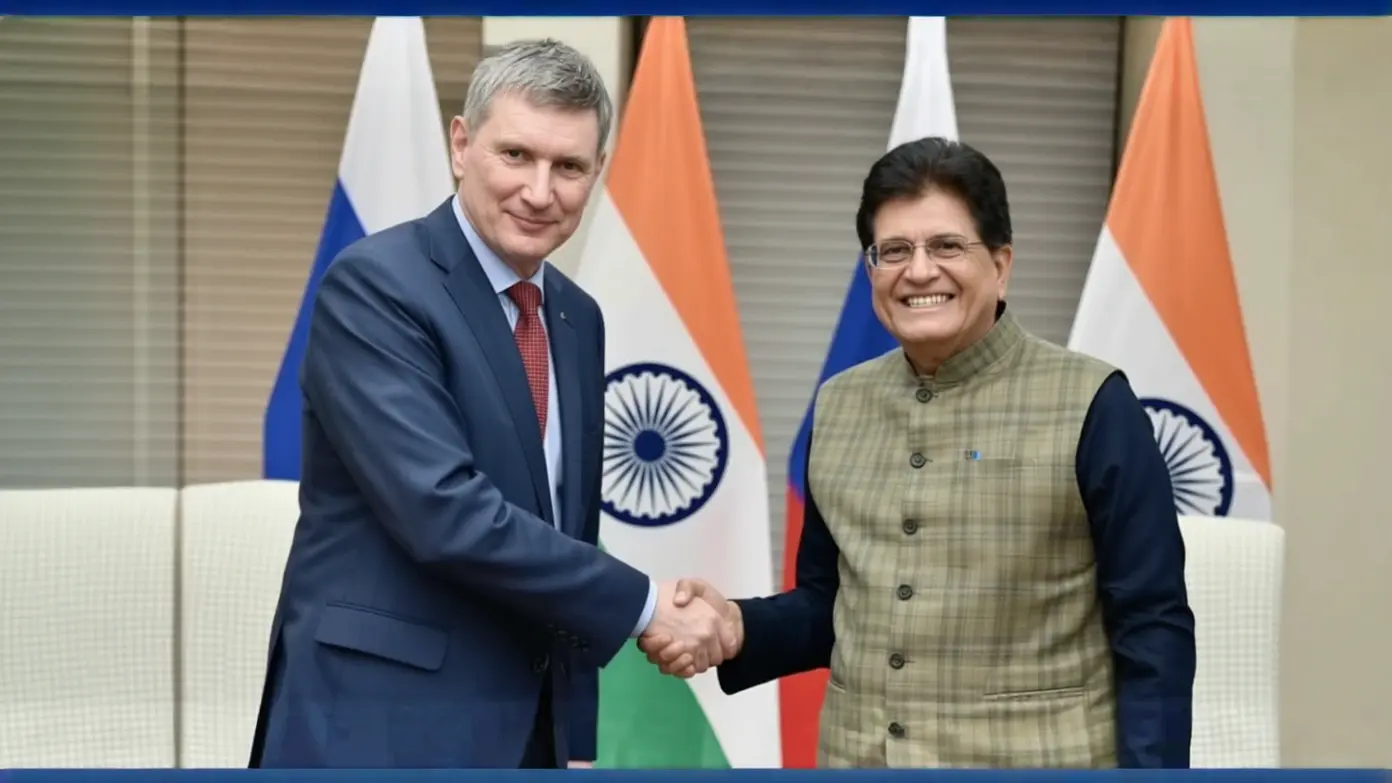
The India–Russia Business Forum, held alongside recent high-level discussions between both nations, has opened a promising chapter for the textile industry. Traditionally centred around energy and raw materials, the bilateral trade conversation has now shifted towards diversified sectors — with textiles emerging as a major area of focus. The Forum highlighted mutual opportunities, complementary strengths, and a shared resolve to deepen commercial exchanges, particularly in fabrics, garments, home textiles, and synthetic material production.
A Move Toward Balanced Trade
For decades, trade between the two countries has been heavily tilted towards Russian exports of oil, petroleum products, and minerals. India has sought ways to rebalance this trade, and textile exports are now seen as a viable solution. Russian delegates at the Forum emphasized the need to expand import categories to meet evolving consumer demand, while Indian representatives highlighted the capacity and quality of India’s textile manufacturing ecosystem.
This marks a shift from a commodity-heavy relationship to one that leverages India’s industrial strengths and enables Russia to broaden its market sourcing strategy.
Why Textiles Make Strategic Business Sense
India is one of the world’s leading textile producers, with strong capabilities in cotton fabrics, man-made fibres, garments, handicrafts, carpets, and home furnishing materials. The sector is structured, organised, and supported by a vast talent pool, creating a competitive advantage.
On the other hand, Russia has substantial reserves of polymers, synthetic fibres, and chemical inputs — critical raw materials needed for modern textile production. Integrating Russian material capabilities with Indian manufacturing expertise would create significant value for both economies.
This alignment also helps both nations create a more secure supply chain, especially important in times of global trade disruptions.
Forum Discussions: Building a Structured Roadmap
The Business Forum was not limited to abstract cooperation promises. Delegates from both countries laid out actionable strategies, including:
- Encouraging long-term textile procurement contracts
- Promoting joint ventures for processing and finishing units
- Developing Russian trade channels for Indian textile brands
- Improving logistics and cargo connectivity between ports
- Working toward easier clearance mechanisms and lower tariffs
- Interactions between trade chambers and textile industry delegations
The discussions showed that bilateral economic cooperation will now involve deeper institutional coordination rather than small, isolated shipments.
Opportunities for Indian Businesses
With Russian importers expressing clear interest in sourcing textiles from India, Indian manufacturers stand to benefit significantly:
- Expanded export volumes across multiple textile categories
- Scope for premium products, including design-based fashion exports
- Opportunities for co-manufacturing ventures with Russian partners
- Market diversification, reducing over-dependence on Western buyers
- Entry into a growing consumer market willing to pay for quality products
The Forum also pointed out that India’s cost efficiency, manufacturing scale, and reliable quality provide a strong foundation for rapid growth in trade volumes.
Understanding the Russian Market: A Key Requirement
Experts at the Forum emphasised that success in textile trade will depend on how well Indian exporters understand Russian consumer preferences. For example:
- Warmer fabrics and thermals are in demand due to climatic conditions
- Fashion sensibilities lean towards durability and premium finishing
- Competitive pricing is important, but quality remains the deciding factor
This calls for market research, targeted product development, and sustained branding efforts.
Addressing Challenges and Developing Solutions
The discussion also addressed potential hurdles, along with solutions:
- Shipping and logistics delays → Need for improved maritime routes
- Variations in material specifications → Technical harmonisation standards
- Regulatory approvals → Dedicated trade facilitation desks
- Limited brand visibility → Joint exhibitions and buyer–seller meets
The Forum agreed that collaboration must go beyond paperwork and require concrete operational planning.
Long-Term Impact and Vision
If the strategy laid out at the Business Forum is implemented properly, the textile sector could become one of the pillars of India–Russia bilateral trade. This will not only balance trade flows but also create thousands of jobs in India’s textile clusters and ensure reliable raw material channels for both nations.
In the long term, the textile partnership could evolve into co-manufacturing hubs, innovation centres for sustainable fabrics, and even joint branding for third-country exports.
For more such information visit EQMint.
Disclaimer: This article is based on information available from public sources. It has not been reported by EQMint journalists. EQMint has compiled and presented the content for informational purposes only and does not guarantee its accuracy or completeness. Readers are advised to verify details independently before relying on them.