
Author: Aditya Pareek | EQMint | Political News
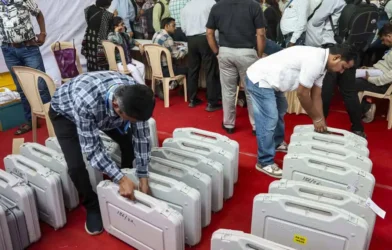
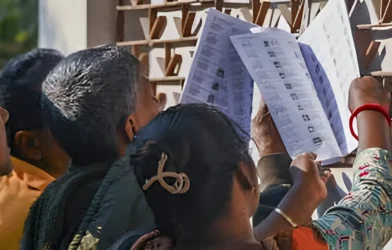
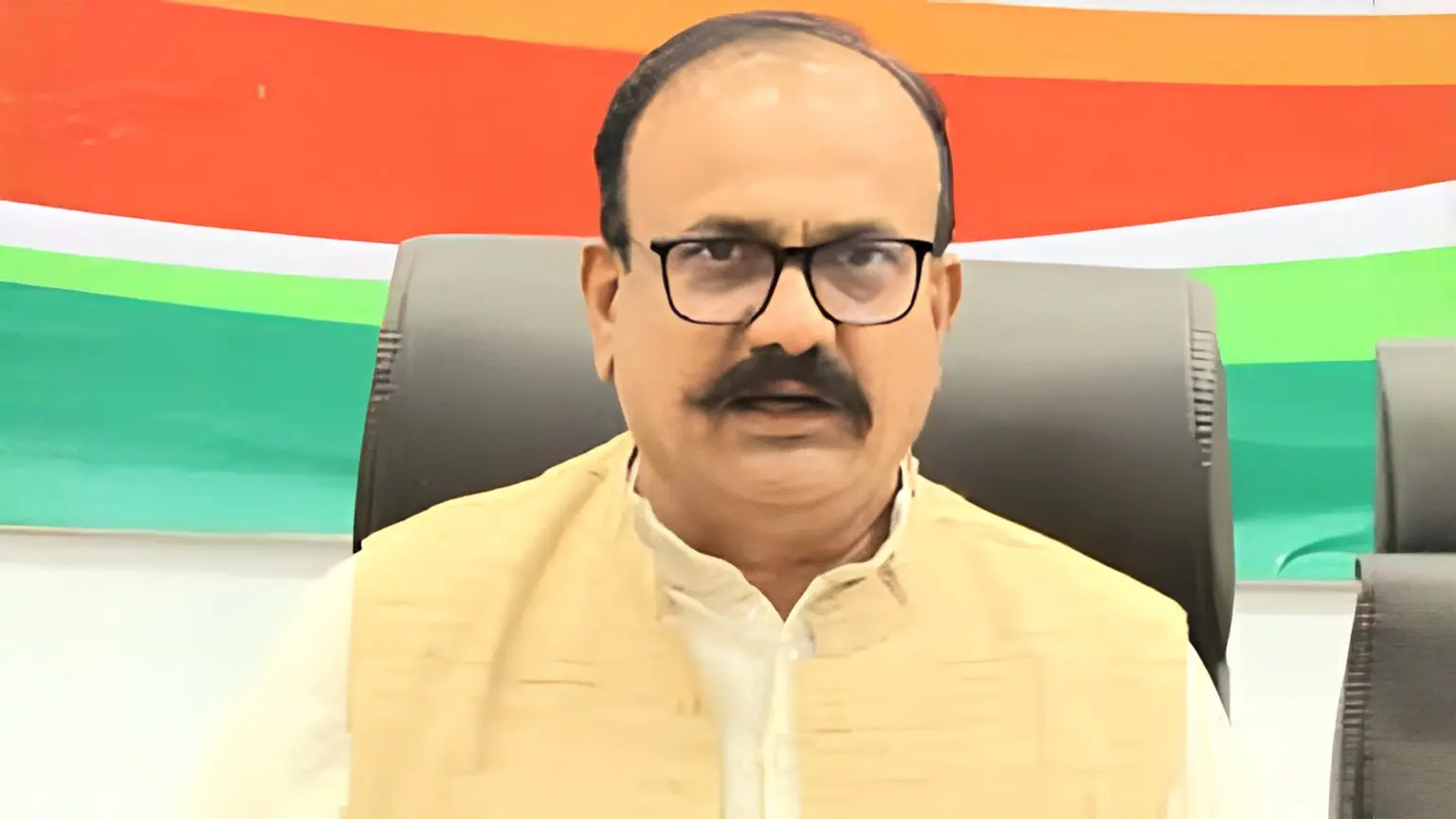
A day after the results of the first two phases of Maharashtra’s local body elections were declared, the political narrative in the state remains sharply contested. While the BJP-led Mahayuti alliance swept a majority of the local bodies, the Congress has pushed back against claims of a rout, alleging that the elections were far from fair. In an interview with The Indian Express, Maharashtra Congress president Harshvardhan Sapkal spoke candidly about his party’s performance, the role of money and administrative influence, alliance dynamics, and preparations for upcoming municipal corporation polls.
The Congress in Maharashtra won 28 of the 288 local bodies that went to the polls in the first two phases. Though the numbers appear modest against the Mahayuti’s landslide, Sapkal insists the results should not be seen as a rejection of the party.
‘We Are Still the Principal Opposition’
Defending the Congress’s showing, Sapkal said the party had reason to feel encouraged. According to him, Congress candidates won 41 president posts and 1,006 councillor posts across the state.
“These results are inspiring. They underline that the Congress has not lost its voter base and that we continue to stand firm as the principal Opposition force in Maharashtra,” he said. Sapkal credited the outcome to grassroots workers and their commitment to the party’s ideology rather than any top-down campaign.
However, he was quick to add that the contest itself was deeply skewed. “We did not fight a fair battle,” he alleged, claiming that the Congress was up against the combined weight of money, muscle power, and an administration that functioned under political pressure.
Allegations Against the Ruling Alliance and Administration
Sapkal directly targeted the ruling Mahayuti alliance, led by the Bharatiya Janata Party, and the state leadership. He accused the State Election Commission (SEC) of bias and claimed that the administration worked under the influence of Chief Minister Devendra Fadnavis and his deputies Eknath Shinde and Ajit Pawar.
“Have you seen the amount of money spent in these hyper-local polls? What Shinde spent could very well revive the economy of a poor country. The BJP is at par with him,” Sapkal said, alleging unchecked expenditure and intimidation tactics to ensure unopposed elections in several areas.
He questioned the role of the SEC, asking why no action was taken despite visible violations. According to him, the restructuring of wards also favoured the ruling parties, further tilting the contest.
Did the Opposition’s Strategy Hurt Its Chances?
One of the key questions following the results was whether the Opposition’s failure to contest uniformly under the Maha Vikas Aghadi (MVA) banner cost it dearly. The MVA includes the Congress, Shiv Sena (UBT), and Nationalist Congress Party (SP).
Sapkal rejected the claim that the Congress fought alone. “It would be wrong to say we contested alone. We gave our local units the freedom to decide alliances. In many places, we fought alongside Shiv Sena (UBT) and NCP (SP). Where alliances were not possible, we partnered with local parties and even farmer organisations,” he said.
The Congress chief argued that this decentralised approach was a strategic decision rather than a failure of coordination.
‘Vote Division Was Sometimes a Strategy’
Responding to the criticism that fragmented contests helped the Mahayuti, Sapkal offered a counterintuitive defence. He said the Congress’s strategy was to stop the BJP, even if that meant contesting solo in certain areas.
“If fielding a single MVA candidate could have led to consolidation of votes in favour of the Mahayuti, it was better to divide those votes,” he explained. According to Sapkal, local equations varied widely from Maharashtra’s district to district, making a uniform alliance formula impractical.
That said, he conceded that the results could have been better with improved coordination. “The results would have been better had there been better coordination,” he admitted, signalling room for introspection within the Opposition.
Empowering Local Units and Workers
Sapkal emphasised that local body elections are inherently different from Assembly or Lok Sabha polls. “It is not possible to manage everything from the centre in such localised elections,” he said, defending the decision to empower district and block-level units.
He argued that giving autonomy to local leaders helped build confidence and develop leadership at the grassroots. “Workers felt respected. They gained confidence, and that is crucial for the long-term revival of the organisation,” he added.
Preparing for Municipal Corporation Elections
With major municipal corporation polls scheduled next month, including high-stakes urban contests, Sapkal said the Congress is already drawing lessons from the local body elections.
“This election has taught us how to deal with centralisation of authority and the abuse of money and power,” he said. Unlike the current local body polls, municipal corporation elections are held ward-wise and do not directly elect a mayor, which Sapkal believes will level the playing field to some extent.
“Core ideas such as stopping the BJP will remain constant,” he said, reiterating that local units would again be given the authority to decide alliances based on ground realities.
Why Congress Is Going Solo in BMC
One of the most closely watched contests will be the Maharashtra’s Brihanmumbai Municipal Corporation (BMC) election. Sapkal confirmed that the Congress plans to contest the BMC polls on its own rather than in alliance with Shiv Sena (UBT).
“The decision was taken based on feedback from workers,” he said, adding that Mumbai Congress chief Varsha Gaikwad had already articulated the party’s stand. Sapkal clarified that this approach is specific to Mumbai and does not signal a statewide break from alliance politics.
“For the rest of Maharashtra, we are not saying we will go alone. Local units will decide what is beneficial,” he said.
The Road Ahead
Despite the Mahayuti’s sweeping victory, Sapkal remains upbeat about the Congress’s prospects. He insists that allegations of money power, administrative bias, and structural disadvantages must be addressed to ensure a level playing field.
As Maharashtra heads into another round of crucial urban elections, the Congress faces the challenge of converting grassroots confidence into electoral gains. Whether decentralised decision-making and flexible alliances can counter the ruling alliance’s organisational and financial strength remains to be seen—but for now, the party leadership is signalling resilience rather than retreat.
For more such news visit EQMint
Source links: Indian Express