Author : Aashiya Jain | EQMint | Political News
As Assam slowly inches toward the 2026 Assembly elections, the political temperature in the state is beginning to rise and so is the rhetoric. Over the past few months, the Bharatiya Janata Party (BJP) has noticeably sharpened its language on immigration, identity, and population change.
What was once framed largely around “infiltration” has now expanded into a broader, more emotionally charged narrative of a “demographic threat.” This shift is neither accidental nor sudden. It reflects a carefully calibrated political strategy aimed at consolidating support, particularly among indigenous communities, at a time when electoral stakes are high.
Immigration has long been a sensitive and defining issue in Assam. For decades, the state has grappled with concerns about undocumented migrants, primarily from Bangladesh, and the impact of migration on land, language, culture, and employment. The Assam Movement of the 1980s and the Assam Accord of 1985 were born out of these anxieties. The BJP, after coming to power in the state in 2016, tapped into this history with strong promises to “detect, delete, and deport” illegal immigrants.
Understanding the BJP’s Influence in Assam
In the initial years, the party’s messaging revolved around “infiltrators” a term frequently used by senior leaders to describe undocumented migrants. This narrative found institutional backing through the National Register of Citizens (NRC) exercise, which sought to identify illegal immigrants. While the NRC process was complex, controversial, and politically risky, it helped the BJP position itself as a party willing to take “tough decisions” on a long-standing issue.
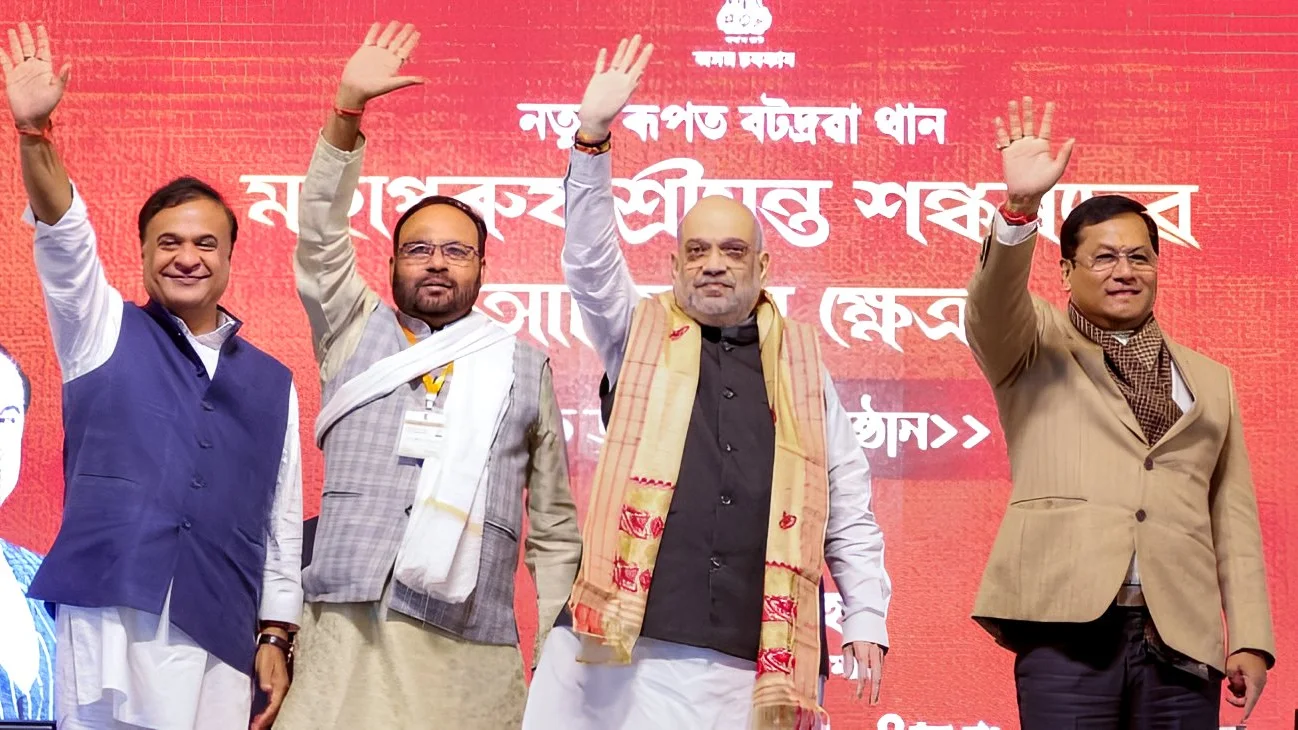
However, as the political landscape evolved, so did the party’s tone. In recent months, BJP leaders in Assam have increasingly spoken about a “demographic imbalance” and the danger it poses to the state’s future. Chief Minister Himanta Biswa Sarma has been at the forefront of this shift. His speeches now frequently link population growth in certain districts to concerns about cultural erosion, land encroachment, and changes in voting patterns. The language has moved from administrative legality to existential anxiety.
However, as the political landscape evolved, so did the party’s tone. In recent months, BJP leaders in Assam have increasingly spoken about a “demographic imbalance” and the danger it poses to the state’s future. Chief Minister Himanta Biswa Sarma has been at the forefront of this shift. His speeches now frequently link population growth in certain districts to concerns about cultural erosion, land encroachment, and changes in voting patterns. The language has moved from administrative legality to existential anxiety.
This reframing serves multiple political purposes. First, it broadens the issue beyond the NRC, which many saw as a closed or stalled chapter after the final list failed to meet political expectations. By talking about demographics, the BJP keeps the core concern alive without reopening the procedural debates around citizenship documents and tribunals. Second, it connects immigration to everyday fears land loss, unemployment, and cultural marginalisation making the issue more personal and immediate for voters.
The party has also tied this narrative to governance actions. Eviction drives in areas described as “encroached,” particularly on government and forest land, are often justified using the language of protecting indigenous rights. While the government maintains that these actions are lawful and necessary, opposition parties argue that they disproportionately target minority communities and deepen social divides. Yet, politically, such moves reinforce the BJP’s image as a party that “acts” rather than merely speaks.
Another important layer to this strategy is consolidation. Assam is ethnically and linguistically diverse, and building a stable political coalition has always been a challenge. By framing immigration as a demographic threat, the BJP attempts to create a shared sense of vulnerability among various indigenous groups — Assamese speakers, tribal communities, and other local populations. The message is subtle but clear: despite internal differences, there is a larger “outsider” challenge that requires unity.
At the same time, the BJP has been careful to blend this sharp rhetoric with development messaging. Infrastructure projects, welfare schemes, and improved law and order are consistently highlighted to avoid appearing as a single-issue party. The underlying message seems to be that strong leadership is needed not just to build roads and bridges, but also to “protect” Assam’s identity.
For more such a information : EQMint
Resource Link : IndianExp