
Author : Aashiya Jain | EQMint | Finance
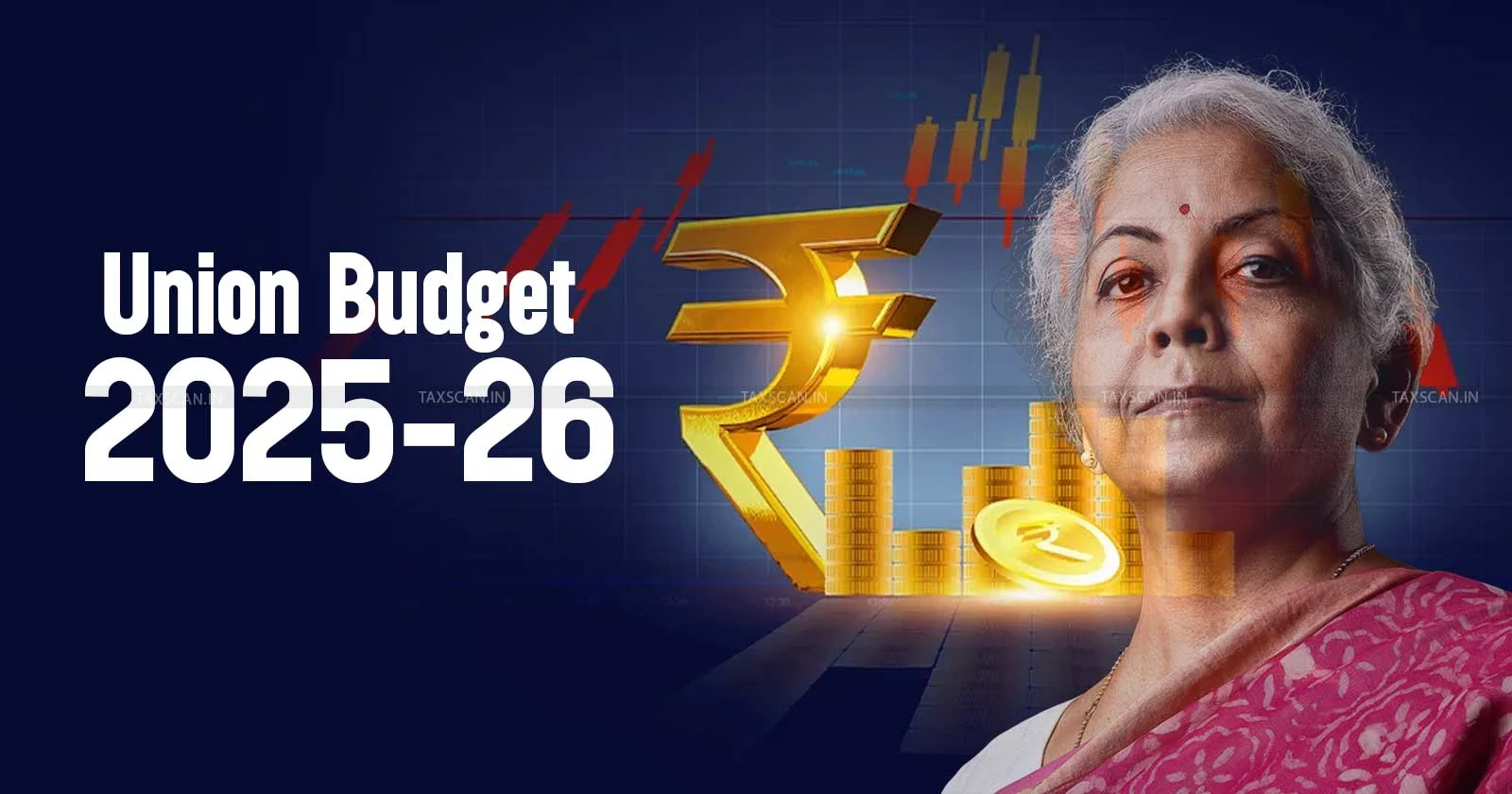
As Parliament prepares for Budget 2026, attention is firmly fixed on the broader economic backdrop against which Finance Minister Nirmala Sitharaman will present her proposals in the Lok Sabha. At the heart of that backdrop lies one critical number: India’s GDP growth ratE not as a political slogan, but as a measure of how the economy has actually performed in recent years and what space the government has for fiscal choices ahead.
Where India’s Growth Stands Today
According to official estimates from the National Statistical Office (NSO), India remained one of the fastest-growing major economies globally through FY2024–25. Provisional data placed real GDP growth for FY2024–25 at above 8%, supported by strong domestic demand, government capital expenditure, and resilient services output. This marked a continuation of India’s post-pandemic recovery, following growth of 7.2% in FY2022–23 and 8.7% in FY2021–22, when the economy rebounded sharply after COVID-related disruptions.
However, the momentum has shown signs of moderation. Growth in the first half of FY2025–26 slowed compared with the previous year, reflecting global headwinds, softer exports, and tighter financial conditions worldwide. These developments are central to how economists are reading the economy ahead of Budget 2026.
Quarterly Signals Matter
Recent quarterly GDP data underline this shift. While India has continued to grow faster than most advanced economies, quarter on quarter expansion has been uneven, with manufacturing and exports facing pressure even as services particularly financial services, trade, and public administration remain relatively robust.
Construction activity has stayed supported by public infrastructure spending, while private consumption has been mixed, reflecting inflation pressures and uneven income recovery across sectors. These nuances matter because Budget decisions often aim to address precisely such imbalances.
What Institutions Are Saying
Major domestic and international institutions have broadly aligned views on India’s near-term growth trajectory:
-
- The Reserve Bank of India (RBI) has projected GDP growth for FY2025–26 in the range of about 6.5–7%, citing strong domestic fundamentals but cautioning about global uncertainties.
-
- The International Monetary Fund (IMF) and World Bank have also placed India’s growth in a similar band, consistently identifying it as the fastest-growing large economy while noting risks from geopolitics, energy prices, and global financial volatility.
These are not speculative forecasts but baseline projections grounded in current data on investment, consumption, trade, and fiscal trends.
Why This Context Matters for Budget 2026
Budgets are shaped not just by ambition, but by arithmetic. A growth rate above 8% gives policymakers more flexibility higher revenues, stronger tax collections, and room to spend. A moderation toward the mid-6% range, while still healthy by global standards, calls for more careful calibration.
In recent years, the government has leaned heavily on capital expenditure (capex) as a growth driver. Official data show that public capex has risen sharply since FY2020–21, supporting roads, railways, defence manufacturing, and urban infrastructure. This strategy has helped crowd in private investment, but it also places pressure on fiscal balances.
As of the latest budget cycle, India’s fiscal deficit has been on a gradual consolidation path, moving down from pandemic-era highs while still remaining above pre-COVID levels. Growth assumptions play a crucial role here: stronger GDP growth improves the denominator, making deficit targets easier to manage without sharp spending cuts.
Sectoral Reality Check
A closer look at sectoral growth reveals why expectations for Budget 2026 are measured rather than exuberant:
-
- Agriculture has seen modest growth, heavily dependent on monsoon performance.
-
- Manufacturing growth has been uneven, affected by global demand and input costs.
-
- Services, especially IT-enabled services, trade, and finance, continue to anchor overall GDP expansion.
-
- Exports have faced pressure due to slowing global growth, even as domestic demand remains the primary engine.
These trends suggest that the economy is not overheating but neither is it struggling. It is, in many ways, at a balancing point.
The Human Side of the Numbers
Behind GDP figures are everyday realities. For households, growth translates into job creation, wage stability, and manageable prices. For small businesses, it means access to credit and steady demand. For the government, it determines how much can be spent on welfare, infrastructure, and tax relief without compromising long-term stability.
This is why growth rates ahead of a Union Budget are more than statistical updates they shape expectations. A slower but stable growth path may push the government to prioritise targeted support over sweeping giveaways, while continuing to invest in long-term productivity.
Heading Into Budget Day
As Budget 2026 approaches, the picture is clear but nuanced. India enters the exercise from a position of relative strength, backed by strong growth in recent years. At the same time, the economy is navigating a phase of normalisation, with growth settling closer to its long-term potential rather than post-pandemic highs.
When Sitharaman rises in the Lok Sabha, the GDP numbers will already have framed the conversation. The challenge will be to sustain momentum, protect fiscal credibility, and ensure that growth remains broad-based steady enough to reassure markets, and strong enough to improve lives on the ground.
In that sense, the story before Budget 2026 is not about dramatic swings, but about managing a strong economy carefully at a critical moment.
If you want it more SEO-driven, more editorial, or shorter for social sharing, tell me the tone and I’ll refine it further.
For more such a information : EQMint
Resource Link : ET