
Author : Dr. Neeraj Ashok Sharma | Honorary Consul General of Palau to India | EQmint Exclusive
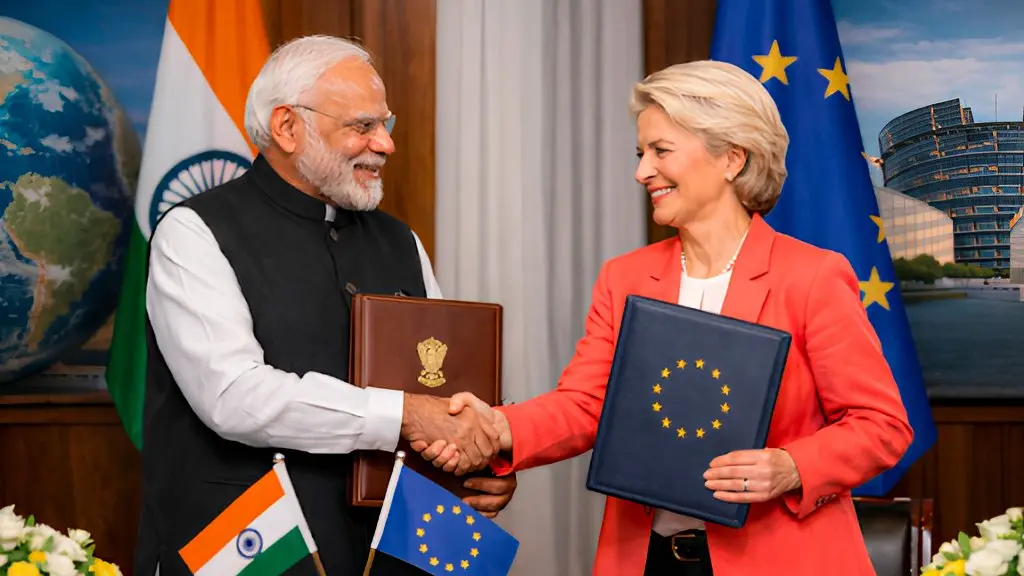
The Free Trade Agreement between India and the European Union has been officially signed after nearly nine years of intermittent negotiations, which Indian officials are calling the “mother of all agreements.” This deal opens up a market of 1.9 billion people and covers roughly 25% of global GDP, making it one of the largest trade agreements in recent history.
The EU, India’s biggest trading partner, recorded $135 billion in bilateral goods trade in 2023-24, and the FTA is expected to remove tariffs and non-tariff barriers on over 90% of Indian products. Labor-intensive sectors like textiles, leather, chemicals, electronics, and jewellery stand to gain the most, as they face limited competition from European manufacturers.
Currently, Indian exporters compete with duty-free and quota-free imports from least developed countries like Bangladesh, but this agreement is expected to remove that disadvantage and boost India’s share of the European market, though exact export growth is hard to predict.
The timing of the FTA is especially important in a global environment shaped by protectionist trade policies and geopolitical tensions. Under the Trump administration, unpredictable tariffs and policy shifts disrupted traditional trade flows, prompting countries to diversify partners and reduce risk.
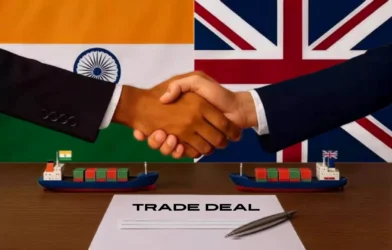
Prime Minister Narendra Modi has described the agreement as a strategic step that complements existing deals with Britain and the European Free Trade Association (EFTA), while promoting shared democratic values and the rule of law.
However, the deal has raised concerns in the United States. Treasury Secretary Scott Bessent criticized India’s oil trade with Russia, saying it indirectly supports the war in Ukraine, highlighting potential friction between Washington and New Delhi as India strengthens economic ties with Europe.
While the agreement offers tariff-free access for most Indian goods, it also brings challenges. European industries retain strong advantages in areas like automobiles, high-end machinery, and technology-intensive products. Indian firms may face pressure to upgrade their capabilities to meet EU quality and regulatory standards, which include strict environmental and labor rules.
Compliance costs could be high, especially for smaller exporters, and trade balances in some sectors might favor European producers. On the geopolitical front, strengthening ties with the EU while maintaining strategic relations with the US will require careful navigation, particularly given ongoing tensions around energy imports from Russia. At the same time, the FTA is expected to benefit sectors like chemicals and textiles, which employ large numbers of workers, potentially driving both economic growth and social gains domestically.
The India-EU Free Trade Agreement represents a landmark opportunity for India to expand exports, integrate further into global value chains, and establish itself as a major player in international trade. Its success will depend not just on removing tariffs and gaining market access, but also on India’s ability to manage industrial pressures, meet regulatory standards, and handle complex geopolitical dynamics. While being called the “mother of all deals” highlights its scale, the real impact will be determined by how effectively India leverages EU market access while balancing competing strategic and economic interests worldwide.
For more such a information : EQmint
LinkedIN page : Dr.Neeraj Sharma