
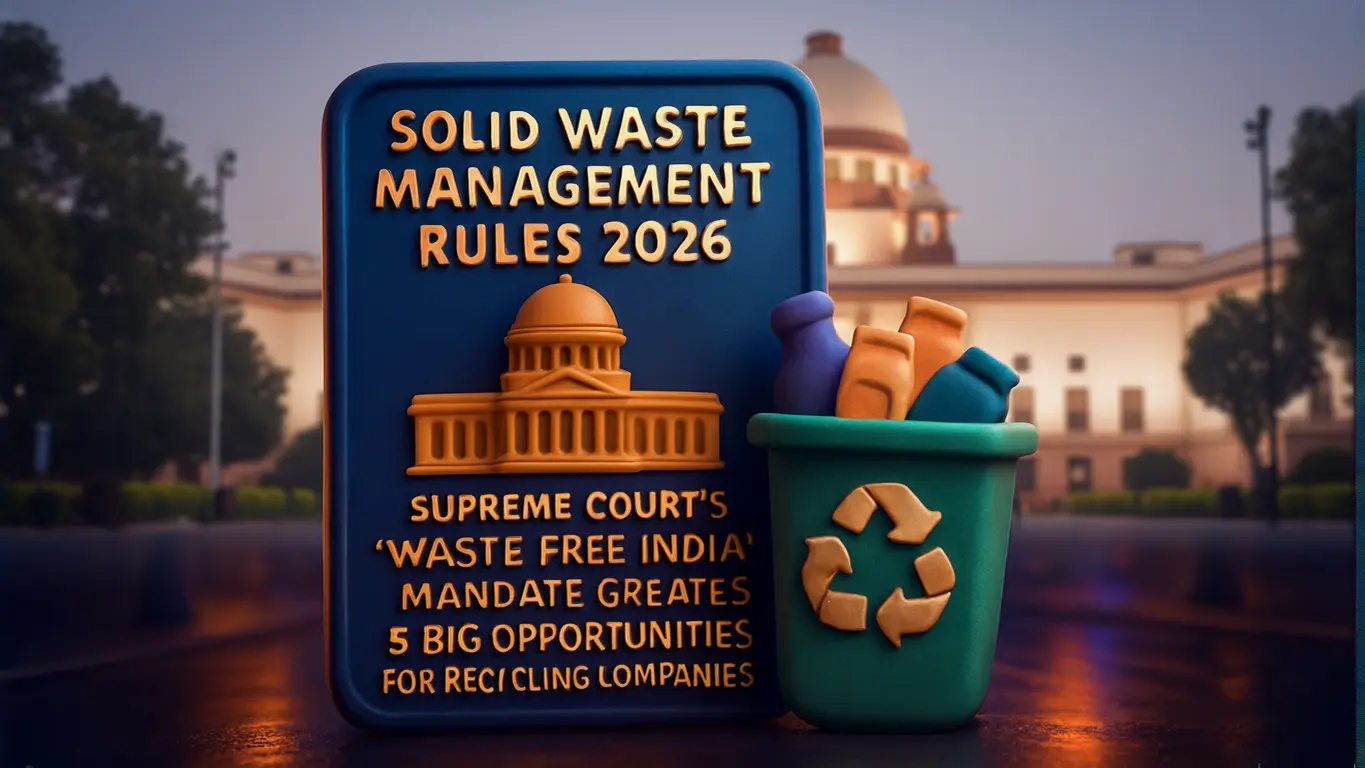
The Supreme Court has mandated strict nationwide enforcement of the Solid Waste Management Rules, 2026, with a three-tier penalty system. The ruling could unlock massive growth opportunities for India’s recycling and circular economy companies.
Author: Aditya Pareek | EQMint
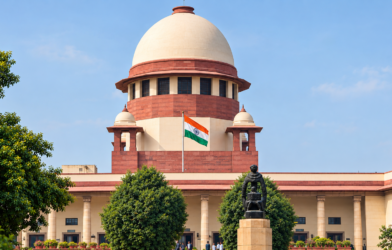
In a landmark move, the Supreme Court of India has issued sweeping nationwide directions to ensure strict enforcement of the Solid Waste Management Rules 2026. The court made it clear that non-compliance will no longer be treated as a routine administrative lapse but as a serious legal violation.
The ruling marks a turning point in India’s environmental governance and signals the beginning of a new era of accountability in waste management.
But beyond governance and regulation, this decision may reshape India’s recycling industry, opening massive opportunities for private waste management and circular economy companies.
A New Enforcement Era Begins
The court introduced a three-tier enforcement framework:
 Immediate fines for initial non-compliance
 Criminal prosecution for continued violations
 Liability extended to officials failing oversight duties
Bulk Waste Generators have been given a hard deadline of 31 March 2026 to comply.
This transforms waste management from a civic responsibility into a legal and financial mandate.
Why This Is Bigger Than a Court Order
For decades, India’s waste management challenges have stemmed from:
- Weak enforcement
- Limited infrastructure
- Lack of accountability
- Low segregation at source
The Supreme Court has now made waste compliance non-negotiable. This shift could unlock unprecedented demand for India recycling companies growth.
The New Compliance Economy
The updated rules introduce:
- Four-stream waste segregation
- Digital registration of waste generators
- Escrow accounts for environmental compensation
- Extended Bulk Waste Generator Responsibility (EBWGR)
- Multi-tier monitoring systems
This creates a compliance economy, where waste management becomes a structured industry rather than a municipal burden.
The Rise of India’s Circular Economy Companies
This is where companies like:
- Race Eco Chain
- Rudra Ecovation
- GEM Enviro Management
- Banyan Nation
enter the spotlight.
The Waste Free India Supreme Court order could significantly boost the demand for their services.
Why Recycling Companies Are the Real Winners
The Supreme Court’s directive requires:
- Material Recovery Facilities (MRFs)
- Segregated waste transport
- Scientific disposal systems
- Digital tracking and transparency
Municipal bodies alone cannot build this infrastructure fast enough.
Private India circular economy companies will likely become key implementation partners.
Race Eco Chain: Positioned for Green Growth
Companies like Race Eco Chain operate across plastic recycling and waste management ecosystems.
With stricter compliance requirements:
- Recycling volumes may increase
- Municipal partnerships may expand
- Corporate waste contracts may surge
The Solid Waste Management Rules 2026 could accelerate their growth trajectory.
Rudra Ecovation: Expanding Recycling Ecosystem
Rudra Ecovation has been actively expanding in recycling and sustainability solutions.
New compliance mandates may lead to:
- Higher demand for recycling services
- Stronger industry consolidation
- Increased ESG-driven investments
This strengthens the outlook for India recycling companies growth.
GEM and Banyan Nation: Circular Economy Leaders
Companies like GEM Enviro Management and Banyan Nation are already working with:
- FMCG companies
- Packaging producers
- Consumer brands
The new rules enforce Extended Bulk Waste Generator Responsibility, meaning corporations must now ensure waste processing.
This could significantly increase demand for plastic recycling and circular economy services.
Corporate India Now Legally Accountable
The introduction of EBWGR means:
- Corporates must manage waste lifecycle
- Digital waste reporting becomes mandatory
- Non-compliance triggers penalties
This shifts responsibility from municipalities to businesses.
The result? A massive opportunity for waste management service providers.
Education, Awareness and Behavioural Change
The Supreme Court has also ordered:
- Translation of rules into local languages
- Public awareness campaigns
- Integration into school curriculum
This signals a long-term behavioural shift in waste management practices.
Environmental Rights and Article 21
The court reaffirmed that:
 A clean environment is a fundamental right under Article 21.
This elevates waste management from policy to constitutional importance.
What Happens Next
Authorities must now:
- Conduct infrastructure audits
- Build waste recovery facilities
- Establish monitoring task forces
- Submit progress reports
India is entering a deadline-driven waste management era.
A New Industry Is Being Created
This ruling does not just enforce compliance.
It effectively creates a multi-billion-rupee waste management industry.
Demand will rise for:
- Recycling infrastructure
- Waste logistics
- ESG compliance solutions
- Data-driven waste tracking
The Waste Free India Supreme Court order could be a turning point for India’s sustainability sector.
Conclusion
The Supreme Court’s strict enforcement of the Solid Waste Management Rules 2026 marks a historic shift in India’s environmental governance. While the ruling focuses on compliance and accountability, it simultaneously unlocks significant growth opportunities for recycling and circular economy companies like Race Eco Chain, Rudra Ecovation, GEM, and Banyan Nation.
India’s journey toward a waste-free future has officially entered an execution phase — and the recycling industry may become one of the biggest beneficiaries.
For more such information visit EQMint
Disclaimer: This article is for informational and educational purposes only and does not constitute legal, environmental, or investment advice.