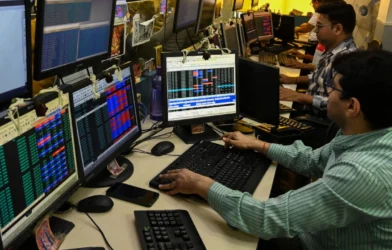

Indian stock markets opened sharply lower with the Sensex falling 500 points and Nifty dropping 150 points after a global sell-off triggered by the Dow. Rising oil prices above $85 amid Iran war tensions are fueling market worries.
Author: Aditya Pareek | EQMint
Indian equity markets opened sharply lower on Friday, with benchmark indices Sensex falling around 500 points and Nifty opening about 150 points lower. The weakness came after a sharp overnight sell-off on Wall Street and rising concerns over global oil prices amid escalating geopolitical tensions in the Middle East.
The fall in the Indian stock market today mirrors global risk aversion as investors react to a combination of factors, including the Dow Jones decline, surging crude oil prices, and growing fears of economic disruptions caused by the ongoing Iran conflict.
Global Sell-Off Sparks Market Pressure
The major trigger behind the drop in Indian markets was the overnight sell-off in U.S. equities. Wall Street faced heavy selling pressure as geopolitical tensions and rising oil prices spooked investors.
Reports indicate that the Dow Jones Industrial Average dropped sharply amid fears linked to the Iran conflict and rising energy prices.
When global markets experience such declines, emerging markets like India often follow the same trend due to interconnected investor sentiment.
The Dow sell-off global markets ripple effect has been visible across Asia and Europe as investors adopt a cautious approach toward risk assets.
Brent Crude Crosses $85, Adding to Market Worries
Another major factor weighing on the Indian stock market today is the sharp rise in global crude oil prices.
Brent crude surged above $85 per barrel, reaching levels not seen in months as the ongoing Middle East conflict threatens global oil supply.
Oil prices have been rising rapidly because:
- The Iran conflict has disrupted shipping routes.
- The Strait of Hormuz—one of the world’s most important oil transit routes—is under threat.
- Global energy supply concerns have intensified.
Analysts warn that Brent crude above $85 impact could have serious implications for global economies if the trend continues.
Why Rising Oil Prices Hurt the Indian Market
India is one of the world’s largest importers of crude oil, relying on foreign sources for around 80–85% of its oil needs.
When global crude prices rise sharply, several economic challenges emerge:
- Higher Import Bills
Rising oil prices increase the cost of India’s energy imports - Inflation Pressure
Higher fuel prices often push up transportation and manufacturing costs. - Currency Pressure
The Indian rupee can weaken due to higher oil payments. - Impact on Corporate Earnings
Several sectors such as aviation, logistics, and manufacturing face higher operational costs.
Because of these reasons, the Brent crude above $85 impact is often negative for the Indian stock market today.
Iran Conflict Driving Market Volatility
The ongoing geopolitical conflict involving Iran has created major uncertainty in global markets.
The war has disrupted shipping routes and raised fears about energy supply disruptions. Roughly 20% of the world’s oil supply normally passes through the Strait of Hormuz, making it one of the most critical energy corridors globally.
Any disruption in this route can lead to sharp oil price spikes and global market volatility.
Financial markets typically react negatively during geopolitical crises because investors move their money into safer assets such as gold and government bonds.
This shift explains why Sensex falls 500 points and Nifty opens lower today in response to global uncertainties.
Foreign Investors Turning Cautious
Another key factor behind the market decline is foreign institutional investor (FII) activity.
Foreign investors have recently been selling Indian equities due to geopolitical tensions and rising oil prices. Reports indicate that FIIs sold over ₹12,000 crore worth of Indian stocks in just two trading sessions, reflecting growing caution among global investors.
When FIIs pull out money, markets often face additional selling pressure.
However, domestic institutional investors have stepped in to absorb some of the selling, preventing the market from falling even further.
Sectors Under Pressure
The early market decline affected several sectors, especially those sensitive to rising fuel costs.
Among the sectors under pressure were:
- Aviation companies
- Oil marketing firms
- Banking stocks
- Infrastructure companies
Companies such as IndiGo, ICICI Bank, and Larsen & Toubro were among the stocks facing selling pressure during the early session.
Meanwhile, some defensive sectors like information technology showed relative resilience due to global demand for digital services.
How Global Markets Are Reacting
The Dow sell-off global markets trend is not limited to India. Markets worldwide have reacted negatively to the escalating conflict and rising oil prices.
Across global markets:
- U.S. indices including the Dow Jones, S&P 500, and Nasdaq declined sharply.
- European markets witnessed risk-off sentiment.
- Asian markets opened lower following Wall Street’s losses.
Analysts warn that if oil prices continue to climb or the geopolitical situation worsens, global markets could face prolonged volatility.
What Investors Should Watch Next
Market experts believe several key factors will determine the direction of the Indian stock market today in the coming days.
1. Oil Price Movements
If Brent crude continues rising above $85 or approaches $100, market pressure could intensify.
2. Developments in the Iran Conflict
Any escalation or resolution could quickly shift investor sentiment.
3. Global Market Performance
Wall Street’s next moves will strongly influence Asian markets.
4. Institutional Investor Flows
FII and DII activity will play a crucial role in determining market stability.
Investors are expected to remain cautious until there is greater clarity regarding global geopolitical developments.
Outlook for Indian Markets
Despite the short-term decline, many analysts believe that India’s long-term growth story remains intact.
India continues to benefit from:
- Strong domestic demand
- Government infrastructure spending
- Stable banking sector fundamentals
- Growing digital economy
However, global shocks like rising oil prices and geopolitical tensions can temporarily affect market sentiment.
As a result, volatility may remain high in the near term.
Conclusion
The sharp decline in the Sensex and Nifty reflects growing global market uncertainty triggered by the Dow sell-off and rising crude oil prices above $85. With geopolitical tensions in the Middle East continuing to escalate, investors are closely monitoring developments that could influence energy supply and economic stability.
While the Sensex falls 500 points and Nifty opens lower today, the long-term outlook for the Indian stock market today will depend on global oil prices, geopolitical developments, and investor confidence in the coming weeks.
For now, market participants remain cautious as the world watches how the Iran conflict and energy markets evolve.
For more such information visit EQMint
Disclaimer: This article is not an investment advice and is for educational purpose only