

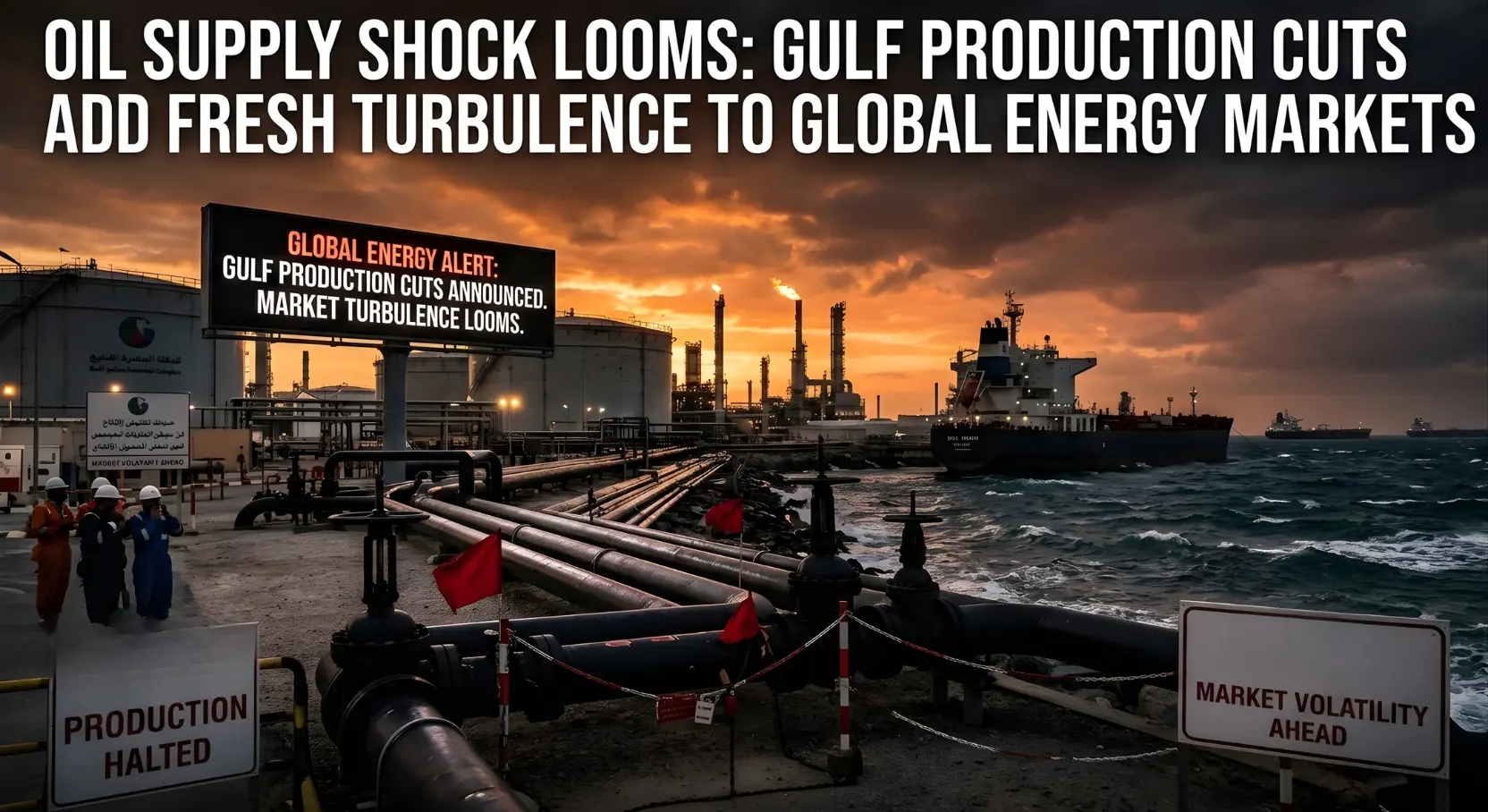
The global oil market is entering another phase of uncertainty as several Gulf producers begin cutting crude output amid rising geopolitical tensions and disruptions in key shipping routes. With exports becoming difficult and storage filling up, oil companies in the Middle East are slowing production, triggering concerns about tightening supply and rising prices. Experts warn that if the situation continues, it could push crude prices higher and create economic pressure on oil-importing countries, especially in Asia.
Author : Aashiya Jain | EQmint | Market News
A Fresh Storm in the Global Oil Market
The global oil market is once again facing instability as tensions in the Middle East begin to disrupt the normal flow of crude supplies. Energy markets have always been sensitive to geopolitical developments, and the latest developments in the Gulf region are a reminder of how quickly the balance between supply and demand can shift.
One of the key factors behind the current disruption is the growing uncertainty surrounding shipping routes in the region, particularly the Strait of Hormuz. This narrow waterway plays a vital role in global energy trade, as a large share of the world’s crude oil shipments pass through it every day.
With tensions escalating and tanker movements facing interruptions, oil producers are now adjusting their output levels to manage the situation.
Gulf Producers Begin Scaling Back Output
Major oil producers in the Gulf have already started reducing production in response to logistical challenges and export uncertainties. These cuts are largely precautionary, aimed at preventing excess supply from piling up when shipments cannot move smoothly.
The Kuwait Petroleum Corporation recently confirmed that it has reduced crude production as a temporary measure amid regional tensions and transportation disruptions. Kuwait typically produces around 2.6 million barrels of oil per day, making it a significant contributor to global supply.
Similarly, the Abu Dhabi National Oil Company has also adjusted its production strategy. While onshore operations remain stable, offshore output has been managed carefully to prevent excess crude from accumulating as export routes remain uncertain.
Energy analysts believe that if the disruptions continue for an extended period, other producers in the Gulf may also be forced to scale back production to maintain operational balance.
Rising Oil Prices Reflect Market Anxiety
The ripple effects of these developments are already visible in global energy markets. Crude oil prices have climbed sharply as traders react to the possibility of tighter supply.
Benchmark Brent Crude prices have surged close to the $90 per barrel mark, reflecting the growing nervousness among investors and traders. Market watchers say prices could climb further if supply disruptions intensify or if additional producers announce output cuts.
Higher oil prices typically have widespread economic consequences. Transportation costs rise, manufacturing expenses increase, and consumers ultimately face higher fuel prices at the pump.
Import-Dependent Economies Feel the Pressure
Countries that rely heavily on imported oil are likely to feel the strongest impact from these developments. Many Asian economies including India, China, Japan, and South Korea depend significantly on crude supplies from the Middle East.
For these nations, even a small disruption in Gulf exports can translate into higher energy costs and inflationary pressure. Rising oil prices also influence sectors such as aviation, logistics, and manufacturing, where fuel costs play a crucial role.
As a result, policymakers in these countries are closely monitoring the situation, aware that prolonged instability in the oil market could affect economic growth and consumer spending.
A Delicate Balance for Global Energy
The current developments highlight how deeply interconnected global energy markets have become. Events in a single region especially one as important as the Gulf can quickly reshape the supply outlook and influence prices worldwide.
If tensions ease and shipping routes return to normal, the market may stabilise in the coming weeks. However, if disruptions continue and more producers begin cutting output, the oil market could face an extended period of volatility.
For now, governments, investors, and energy companies across the globe are watching the situation closely, knowing that the next moves in the Gulf could determine the direction of oil prices in the months ahead.
For more such information visit EQMint
Disclaimer: This article is not an investment advice and is for educational purpose only