
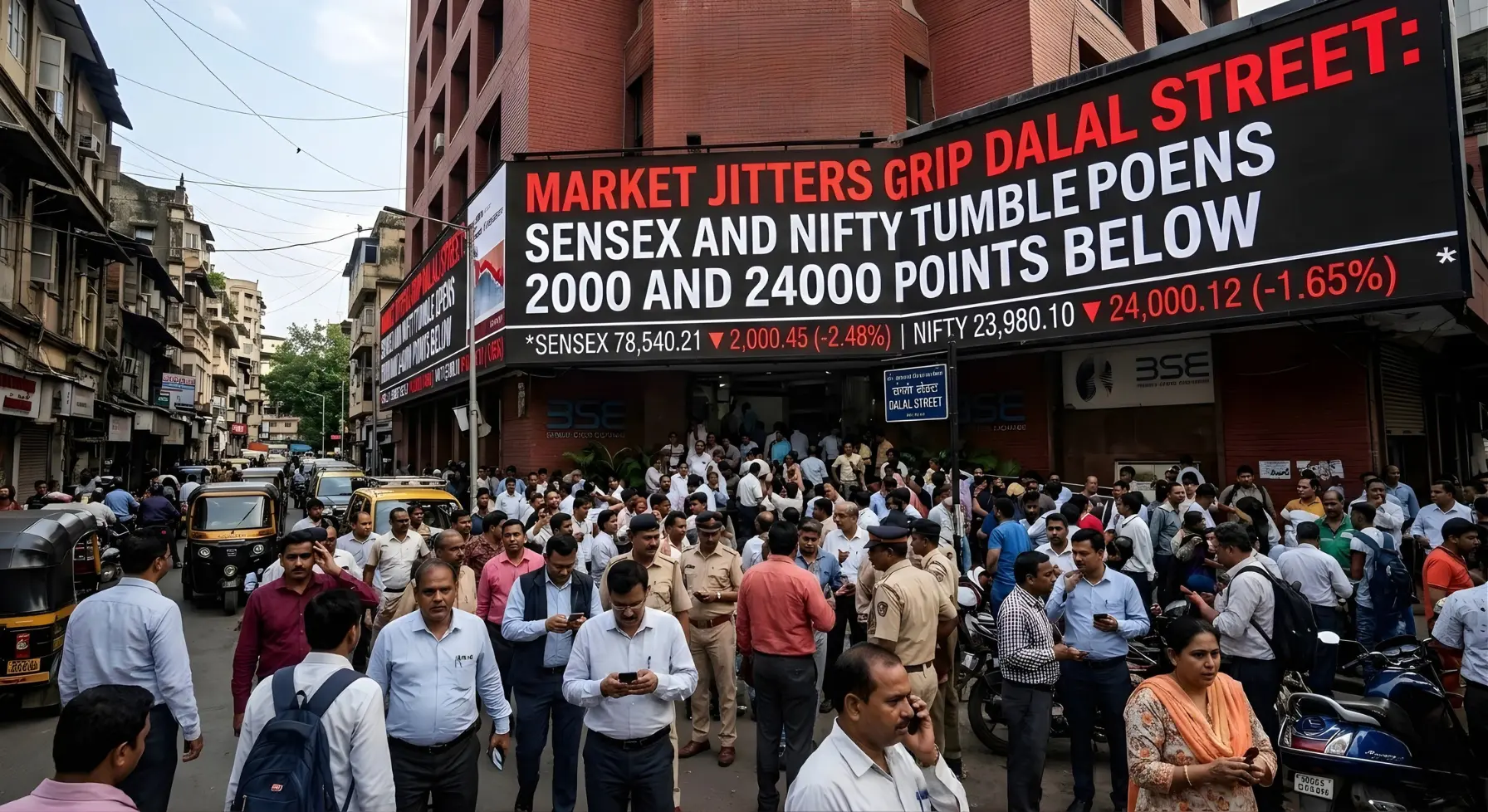
Indian stock markets witnessed a sharp decline on March 9, 2026, as benchmark indices Sensex and Nifty 50 fell significantly amid rising global tensions and surging crude oil prices. The sudden spike in oil prices, driven by geopolitical conflict in the Middle East, rattled investor sentiment and triggered widespread selling across sectors. The downturn wiped out lakhs of crores in investor wealth within minutes of trading, reflecting the deep impact of global events on domestic markets.
Author : Aashiya Jain | EQmint | Market News
A Turbulent Start for Indian Markets
Indian equity markets began the week on a weak note as heavy selling pressure dragged benchmark indices sharply lower. The BSE Sensex and Nifty 50 opened deep in the red on Monday, reflecting a wave of anxiety among investors.
The Nifty 50 slipped below the 24,000 mark, trading around 23,850, while the Sensex plunged more than 2,000 points during early trade, indicating one of the sharpest intraday falls in recent weeks. Such dramatic movements on Dalal Street rarely happen without strong global triggers, and this time, the catalyst came from outside India.
Oil Prices Trigger Global Market Nervousness
The market took a hit because global crude oil prices shot up real quick after things got tense in the Middle East. Prices for crude jumped like crazy passing $100 per barrel. That made everyone worry about inflation going up and the whole world economy getting shaky.
India buys a lot of its oil from other countries so it’s super sensitive to price jumps like this. When oil gets more expensive it pushes up India’s import bill and that can make prices rise across the board. Transportation manufacturing and logistics all feel the squeeze. Investors saw what was happening and they started selling off stocks across the board.
Massive Wealth Erosion in Minutes
The sudden drop in stock prices had an immediate impact on investor wealth. Within just ten minutes of trading, the total market capitalization of companies listed on the BSE dropped by approximately ₹12.39 lakh crore, bringing the overall valuation down to around ₹437 lakh crore.
This rapid erosion of market value reflects how sensitive financial markets are to global uncertainties. When geopolitical tensions escalate or commodity prices surge, investors often rush to reduce risk, leading to widespread selling.
Broad-Based Selling Across Sectors
The decline hit more than just a few stocks. Most sectors saw selling pressure as investors played it safe. Banking aviation and energy stocks got hit hard. State Bank of India and IndiGo were among the big losers in the session.
Other sectors like IT and financial services also weakened. This shows a broader shift in investor sentiment. When markets get volatile investors tend to move money out of risky assets and into safer options.
Global Factors Continue to Influence Dalal Street
The events of March 9 highlight a larger reality about modern financial markets domestic markets are closely linked to global developments. Rising crude prices, geopolitical conflicts, and shifts in global investment flows can quickly influence investor behaviour in emerging markets like India.
Apart from oil prices, analysts also pointed to foreign institutional investor (FII) selling and profit booking as contributing factors behind the market’s decline. When international investors withdraw funds from emerging markets, stock indices often experience downward pressure.
What Investors Should Watch Next
Market experts say sharp drops like this aren’t that unusual. Stock markets tend to get volatile in the short term especially when global events shake things up. But in the long run it’s usually about economic growth corporate earnings and what policies governments put in place.
So going forward investors will be keeping a close eye on global crude prices what’s happening in the Middle East and whether foreign money keeps flowing into Indian stocks. For now this big drop on Dalal Street is a reminder that in today’s connected world stuff happening thousands of kilometres away can hit financial markets here pretty fast.
For more such information visit EQMint
Disclaimer: This article is not an investment advice and is for educational purpose only