
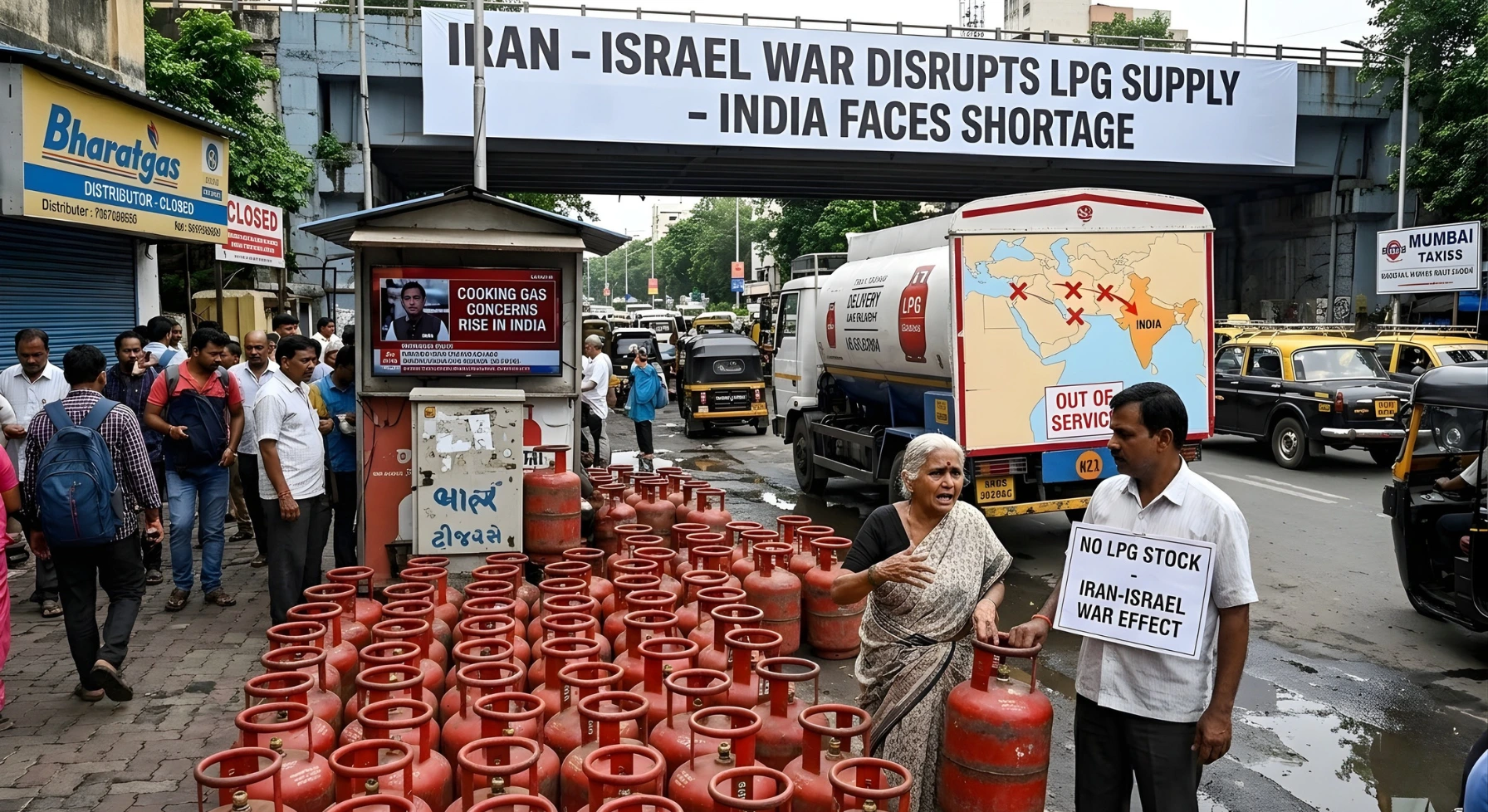
The ongoing conflict between Iran and Israel is beginning to affect everyday life in India in unexpected ways. Several hotels and restaurants in major cities such as Bengaluru, Chennai, and Mumbai have reported shortages of commercial LPG cylinders used for cooking. The disruption is linked to global energy supply challenges caused by the war in the Middle East. While the hospitality sector has raised alarms about possible shutdowns, the Indian government has stepped in to regulate natural gas supplies and prioritise household cooking gas to avoid a wider crisis.
Author : Aashiya Jain | EQmint | Market News
Global Conflict Reaches Local Kitchens
Wars fought thousands of kilometres away rarely feel close to home. But the ongoing conflict involving Iran and Israel has started to create ripple effects that are now visible in India’s hospitality industry. Hotels, restaurants, and food businesses in cities like Bengaluru, Mumbai, and Chennai have warned of a shortage of commercial LPG cylinders, the essential fuel used for large-scale cooking.
Industry groups say the situation is serious enough that some establishments may be forced to temporarily shut operations if supplies do not improve soon. In Bengaluru, for example, hotel associations have already warned that kitchens could stop functioning due to a sudden halt in LPG deliveries.
The crisis illustrates how interconnected global energy supply chains are. A geopolitical conflict in the Middle East can quickly affect businesses and consumers thousands of kilometres away.
Why LPG Supply Is Being Affected
The root cause of the problem is the disruption of energy shipments in the Middle East especially around the Strait of Hormuz one of the world’s most important oil and gas transit routes. A significant share of global energy shipments including LPG passes through this narrow waterway every day.
When tensions rise in the region shipping slows down and energy markets become unstable. Because India is among the largest importers of LPG in the world any disruption in international supply routes can quickly affect domestic availability.
With tanker traffic affected and shipments delayed supply chains have become strained especially for commercial LPG cylinders used by restaurants and hotels. As a result suppliers have struggled to maintain regular deliveries to businesses that rely heavily on cooking gas.
Hospitality Sector Raises Alarm
The shortage has triggered concern across the hospitality industry. Restaurant and hotel associations have urged the government to intervene quickly, warning that prolonged disruptions could force eateries to shut down temporarily.
Many restaurants depend entirely on commercial LPG cylinders to run their kitchens. Without a steady supply, cooking large volumes of food becomes nearly impossible. For smaller businesses and street food vendors, the situation could become even more challenging because they often have limited backup options.
Reports suggest that some establishments have started exploring alternatives such as electric induction stoves or temporary fuel substitutes, but these solutions are not always practical for large kitchens that operate at high capacity.
The shortage has also raised concerns about rising operating costs, as fuel prices have increased alongside supply disruptions.
Government Steps In to Prevent Crisis
The Indian government has stepped in to handle the situation and make sure households keep getting cooking gas. Authorities have put in place new rules to control how natural gas and LPG get distributed across different sectors.
A new Natural Gas (Supply Regulation) Order for 2026 gives priority to essential sectors like domestic cooking gas compressed natural gas for transport and LPG production. That means households will still get cooking gas without any breaks. But this focus on domestic supply has made things tighter for commercial users like restaurants and hotels.
The government has also told refineries and petrochemical units to boost LPG production and shift key hydrocarbon streams to strengthen the national LPG supply pool.
Officials say these steps are meant to protect millions of Indian households from a cooking gas shortage even if global disruptions keep going.
A Reminder of Global Energy Dependence
The current situation highlights the vulnerability of energy supply chains in an interconnected world. India relies heavily on imports for several energy resources including LPG crude oil and natural gas.
When geopolitical tensions disrupt international trade routes the effects can quickly ripple through domestic markets. The Iran-Israel conflict has already pushed oil prices higher and strained shipping routes in the Middle East.
These developments have raised concerns not only about LPG supplies but also about broader energy security and inflation.
What Lies Ahead
The government’s focus right now is on keeping LPG flowing to homes while handling tight supplies across the board. The hospitality industry is paying close attention to what happens in the next few weeks.
If global energy shipments settle down and supply chains get back on track the shortage could ease up fairly quickly. But if the conflict drags on and shipping keeps getting disrupted restaurants and hotels might keep feeling the squeeze.
This whole thing shows how global politics can have weird knock-on effects sometimes even hitting something as everyday as cooking gas in people’s kitchens.
For more such information visit EQMint
Disclaimer: This article is not an investment advice and is for educational purpose only