

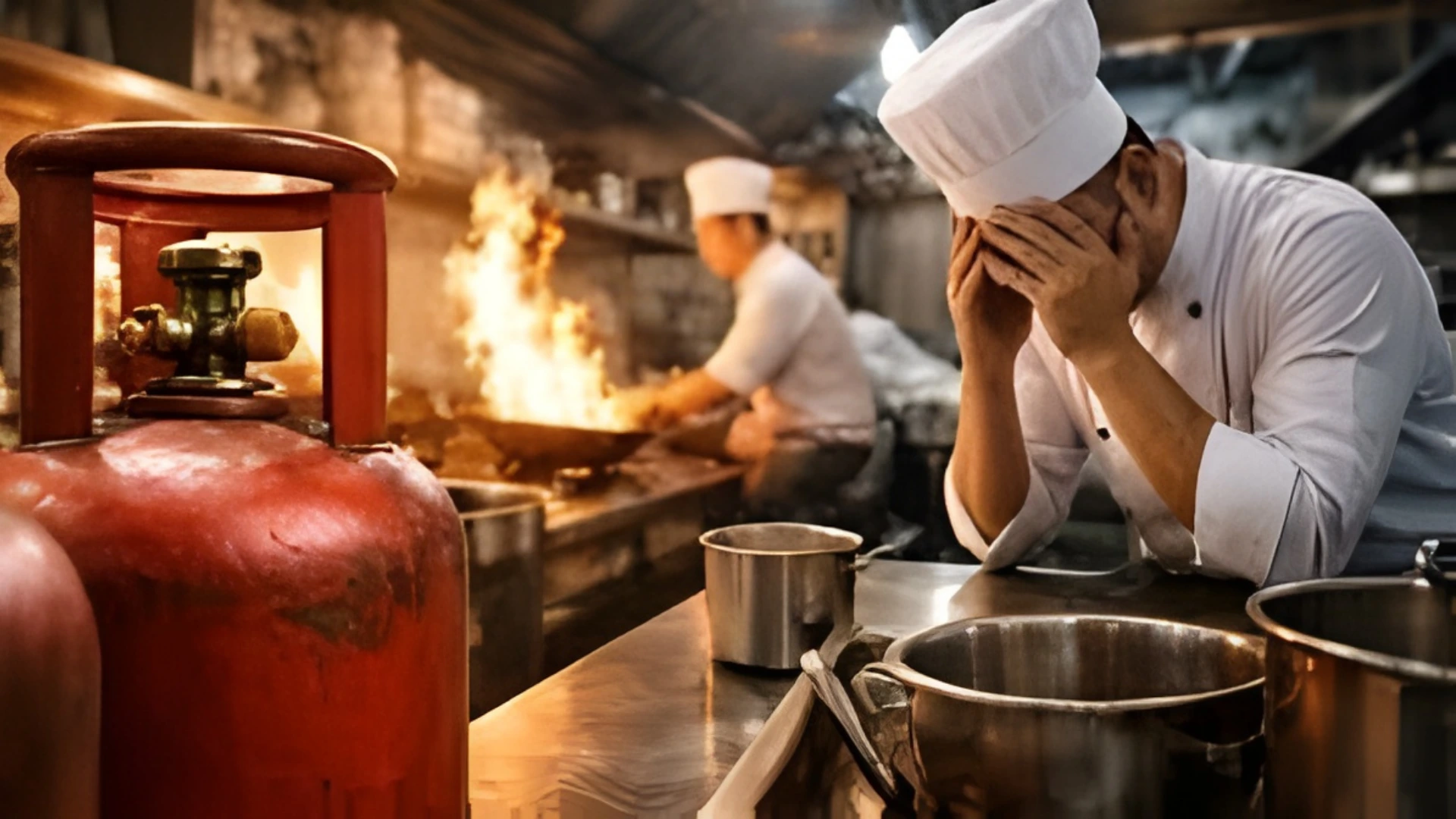
An ongoing LPG crisis in Mumbai has begun affecting restaurants, forcing several kitchens to rethink daily operations as cooking gas supply becomes uncertain. From operational disruptions to rising costs, restaurant owners say the shortage is impacting both food preparation and customer service.
Author: Aditya Pareek | EQMint
The recent LPG crisis in Mumbai has created unexpected challenges for the city’s food industry, with restaurant kitchens struggling to maintain operations amid disruptions in cooking gas supply.
For many restaurants, LPG cylinders are the backbone of daily kitchen operations. From preparing sauces and frying dishes to cooking large quantities of food during peak hours, reliable gas supply is essential.
However, recent shortages have forced restaurant owners and chefs to rethink how they operate their kitchens.
Restaurants Facing Operational Disruptions
Across Mumbai, several restaurants have reported delays and uncertainty in receiving their LPG cylinder deliveries.
For iconic and long-standing eateries, the situation has become particularly challenging because their kitchens rely heavily on high-volume cooking processes that depend on consistent gas supply.
Without adequate LPG supply, restaurants face problems such as:
- Delayed food preparation
- Limited menu offerings
- Reduced kitchen efficiency
- Increased operational costs
Many restaurant operators say even a short disruption in gas supply can significantly affect daily service.
Kitchens Forced to Adapt
Some restaurant kitchens have begun experimenting with alternative cooking arrangements to keep their operations running.
These adaptations include:
- Using additional electric induction cooktops
- Reducing menu items that require heavy gas usage
- Adjusting cooking schedules to conserve gas
However, such adjustments are not always practical for restaurants designed around traditional gas-based cooking systems.
Chefs say that while electric appliances can help in limited situations, they cannot fully replace LPG for large-scale commercial cooking.
Impact on Iconic Mumbai Restaurants
Mumbai’s restaurant culture is deeply rooted in legacy eateries that have been serving customers for decades.
For these establishments, the LPG shortage has highlighted how dependent the hospitality industry remains on uninterrupted gas supply.
Restaurant owners say that kitchens designed around LPG systems cannot easily transition to alternative cooking methods without significant investment.
As a result, some kitchens have had to manage limited gas supply carefully to ensure they can continue serving customers during busy hours.
Rising Costs Add to the Pressure
Apart from supply disruptions, rising LPG prices have also placed financial pressure on restaurants.
Cooking gas already represents a significant operational expense for restaurants, particularly those with large kitchens and high daily footfall.
Industry insiders say the combination of price increases and supply delays has created a difficult environment for restaurant operators.
For smaller eateries and family-run establishments, managing these rising costs while maintaining menu prices has become increasingly challenging.
Wider Impact on the Hospitality Industry
The LPG shortage in Mumbai reflects a broader issue affecting several sectors that depend heavily on cooking gas.
Industries such as:
- Hospitality
- Catering services
- Street food vendors
- Cloud kitchens
all rely on stable LPG supply to operate smoothly. Even small disruptions in supply chains can create ripple effects across the food ecosystem.
Restaurant Industry Calls for Stability
Restaurant associations and hospitality groups have urged authorities and suppliers to ensure stable LPG distribution for commercial kitchens.
Industry stakeholders say reliable gas supply is essential not only for business operations but also for maintaining food quality and service standards.
Restaurant owners also highlight that hospitality businesses contribute significantly to employment and the local economy.
Ensuring uninterrupted LPG availability would therefore help protect both businesses and jobs.
A Reminder of Infrastructure Dependency
The LPG crisis has also revealed how dependent modern urban food systems are on reliable infrastructure.
From fuel supply to logistics networks, restaurant kitchens depend on multiple systems working efficiently behind the scenes.
When one link in the chain is disrupted, it can quickly affect businesses that serve thousands of customers every day.
Conclusion
The ongoing LPG crisis in Mumbai has become a stark reminder of how essential cooking gas is for the restaurant industry.
For many kitchens, the flame represents more than just a cooking tool — it is the foundation of daily operations.
As restaurant owners adapt to the challenges of supply shortages and rising costs, the industry hopes that improved distribution and policy attention will help restore stability to the kitchens that keep the city fed.
For more such information visit EQMint