
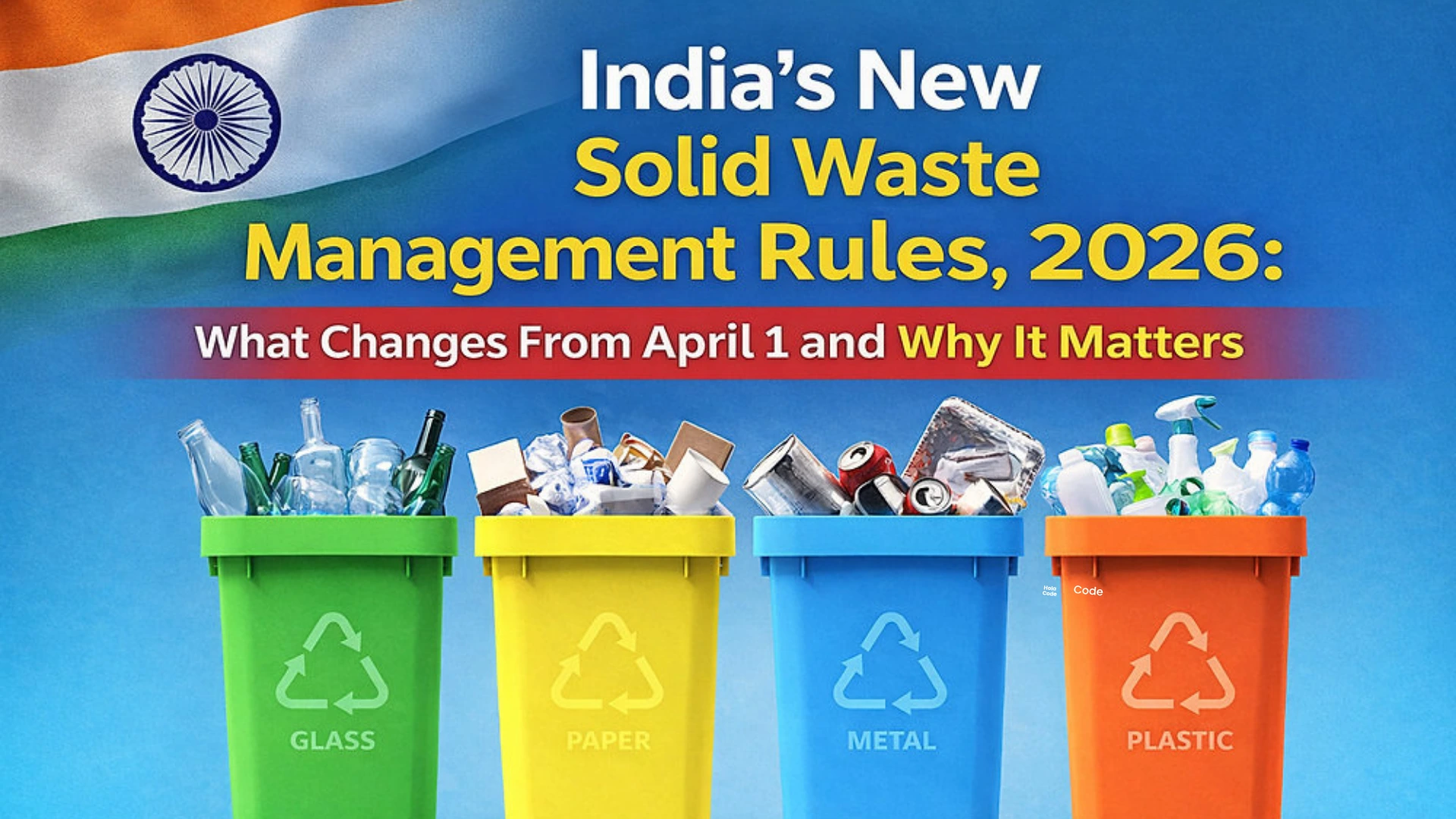
India has implemented new Waste Rules, 2026, making four-way waste segregation mandatory from April 1. Strict penalties and accountability measures aim to strengthen waste management and recycling.
Author: Aadarsh Patel | EQMint
New Delhi, March 31, 2026: India has rolled out the Solid Waste Management (SWM) Rules, 2026, making four-way segregation of waste mandatory for households, businesses, and institutions. The new framework replaces the 2016 rules and introduces stricter enforcement mechanisms.
Key Highlights
- Mandatory 4-way waste segregation at source
- Categories: wet, dry, sanitary, special care waste
- Rules effective from April 1, 2026
- Strict penalties under “polluter pays” principle
- Applies to households, businesses, and bulk waste generators
What Has Changed in the New Waste Rules
The new waste rules India 2026 bring a major shift in how waste must be handled:
4-Way Segregation System
Waste must now be separated into:
- Wet waste (food, organic matter)
- Dry waste (plastic, paper, metal)
- Sanitary waste (diapers, hygiene products)
- Special care waste (chemicals, medicines, hazardous items)
This replaces the earlier simpler segregation system and aims to improve recycling efficiency.
Strict Penalties for Violations
The rules introduce financial penalties and environmental compensation for non-compliance.
- Based on the “polluter pays” principle
- Applicable for improper waste handling
- Covers individuals, businesses, and institutions
Authorities can impose fines for:
- Mixing waste
- Improper disposal
- Non-registration or false reporting
Focus on Accountability and Monitoring
The new framework emphasizes end-to-end tracking of waste:
- Centralized digital portal for monitoring waste lifecycle
- Mandatory reporting and audits
- Faster approvals for waste processing facilities
This marks a shift toward a more data-driven waste management system.
Impact on Households and Businesses
Households
- Must segregate waste daily
- Encouraged to compost wet waste
Businesses & Bulk Waste Generators
- Required to process waste on-site where possible
- Subject to stricter compliance norms
- Higher penalties for violations
Bulk waste generators contribute nearly 30% of total waste, making them a key focus area.
Why This Matters
India generates massive volumes of waste daily, but a significant portion remains untreated.
The new rules aim to:
- Improve recycling rates
- Reduce landfill dependency
- Promote circular economy practices
- Increase accountability across stakeholders
Big Picture
The Solid Waste Management Rules, 2026 represent a major policy shift—from awareness to enforcement. With strict penalties and mandatory segregation, India is moving toward a more structured and sustainable waste management system.
Conclusion
The new waste rules make one thing clear: segregation is no longer optional.
With strict penalties and digital monitoring in place, compliance will be key for both citizens and businesses as India strengthens its environmental governance framework.
For more such information visit EQMint