
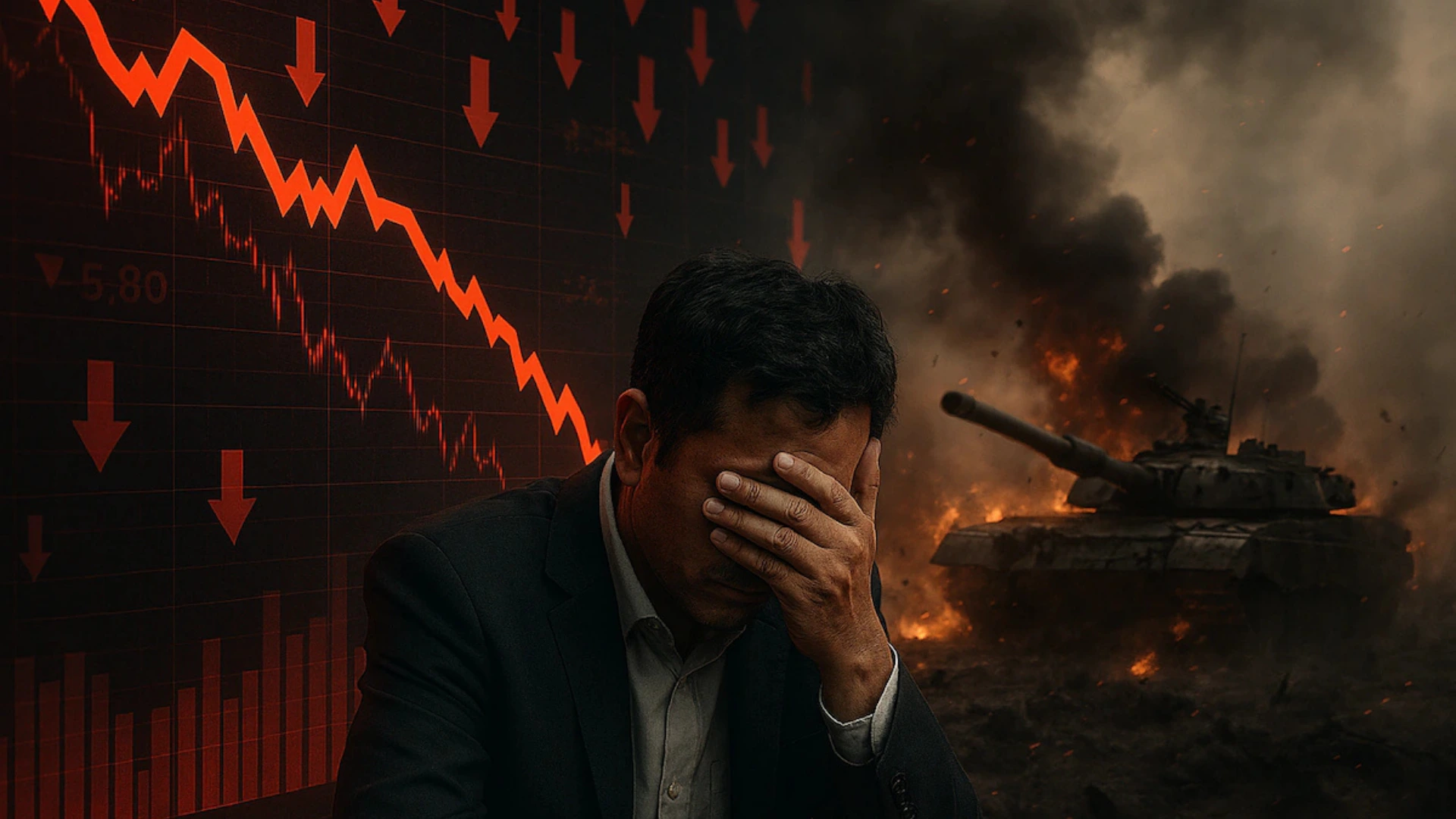
April 30, 2026 : Indian stock markets witnessed a sharp sell-off today, with the Sensex plunging over 1,000 points and the Nifty slipping below key levels. But this isn’t just a routine correction — it’s a reaction to a global crisis building rapidly.
Author: Aadarsh Patel | EQMint
From geopolitical tensions to soaring oil prices, multiple factors have combined to trigger panic across Stock market.
The Biggest Trigger: Oil Shock from Global Tensions
The primary reason behind today’s crash is the sharp spike in crude oil prices.
- Oil prices surged above $120 per barrel
- Concerns over supply disruption intensified
- Strait of Hormuz blockade fears escalated
Since India imports most of its crude oil, rising prices directly impact inflation and economic stability .
US-Iran Conflict: The Global Risk Factor
Escalating tensions between the US and Iran have shaken global markets.
- War fears increasing uncertainty
- Global trade routes under threat
- Investors shifting to safer assets
This geopolitical risk has triggered widespread selling across equities.
Stock market : Rupee Hits Record Low
The Indian rupee weakened sharply, adding further pressure.
- Rupee crossed historic lows against the US dollar
- Import costs increased significantly
- Corporate margins expected to be impacted
A weak currency often leads to reduced investor confidence.
FII Selling Accelerates the Fall
Foreign Institutional Investors (FIIs) have been pulling money out of Indian Stock market .
- Continuous selling pressure
- Reduced liquidity in the market
- Increased volatility
This has amplified the downward momentum.
Inflation & Interest Rate Fears
Rising oil prices bring another major concern — inflation.
- Higher fuel costs push overall inflation up
- Central banks may adopt tighter policies
- Interest rate fears impact equity valuations
Broad-Based Selling Across Sectors
Today’s Stock market fall was not limited to a few stocks.
- Banking, auto, and IT stocks declined
- Midcap and smallcap stocks also fell
- Market-wide sentiment turned negative
Almost all sectors ended in the red, showing the scale of panic.
What Should Investors Do Now?
Short-Term
- Expect continued volatility
- Avoid panic selling
Long-Term
- Focus on fundamentals
- Use dips as buying opportunities selectively
Key Takeaways
- Oil prices are the biggest trigger right now
- Global geopolitical tensions are driving sentiment
- Weak rupee and FII selling are worsening the fall
Conclusion
Today’s market crash is not just about numbers — it reflects global uncertainty spilling into Indian markets. While short-term volatility may continue, long-term investors should stay focused on fundamentals rather than reacting to panic-driven movements.
For more such information visit EQMint
Join our Whatsapp channel for timely updates: Whatsapp
Disclaimer: This article is not an investment advice and is for educational purpose only.