
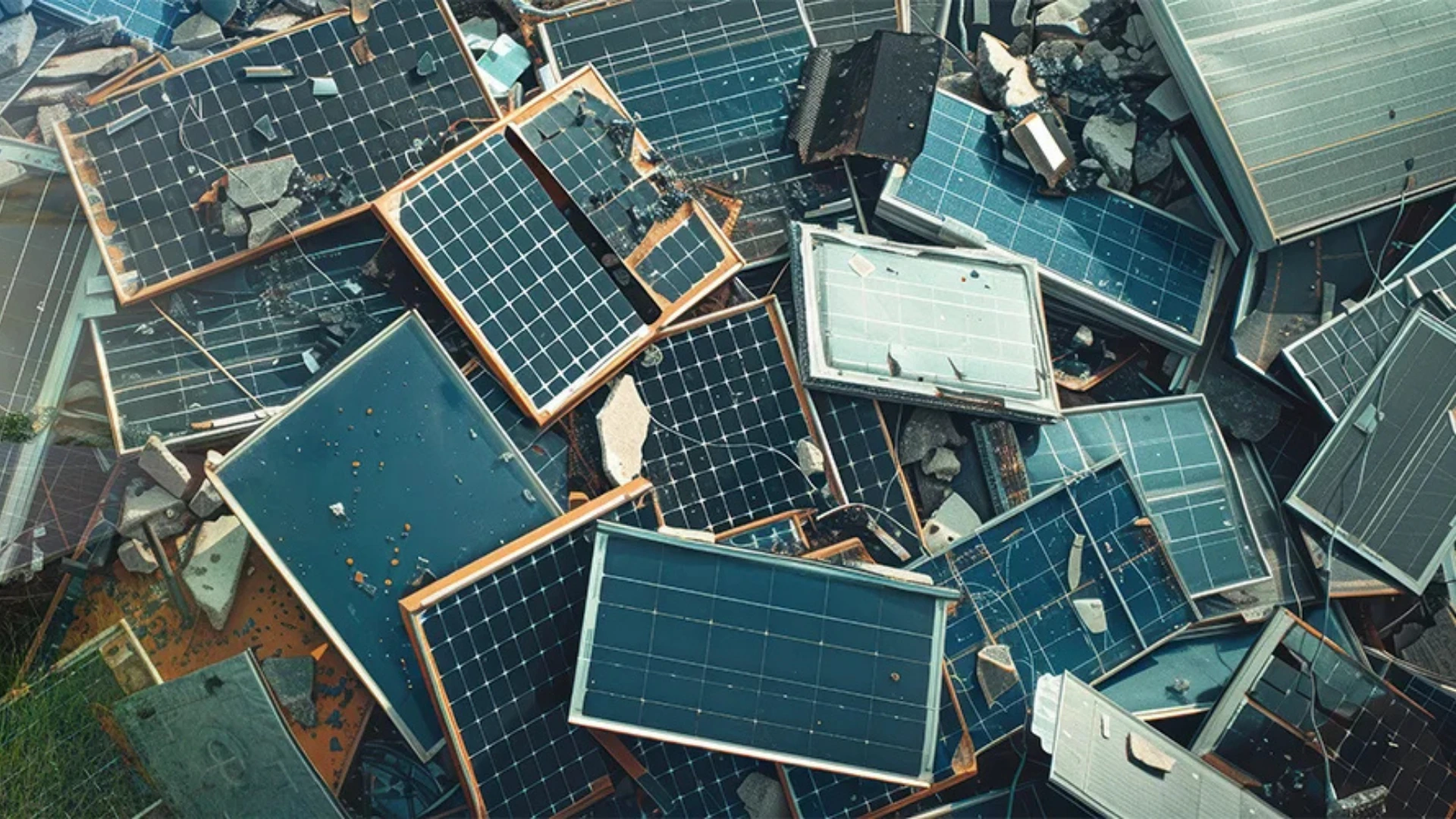
June 5, 2026: Solar panel waste in India is emerging as a major environmental concern as the country rapidly expands its renewable energy capacity. While solar power is helping India reduce dependence on fossil fuels, experts warn that millions of solar panels installed today could eventually create a new wave of electronic waste if proper recycling systems are not developed.
Author: Aadarsh Patel | EQMint
India has set ambitious renewable energy targets and has become one of the world’s fastest-growing solar markets. However, most solar panels have a lifespan of around 20 to 25 years. As early-generation installations approach the end of their operational life, the volume of discarded panels is expected to rise significantly.
Why solar panel waste is becoming a concern
A typical solar panel contains:
- glass
- aluminum
- silicon
- copper
- silver
- polymers and other materials
While many of these materials can be recovered and reused, inadequate recycling infrastructure can lead to valuable resources being lost and environmental risks increasing.
Experts believe that without a structured collection and recycling ecosystem, solar panel waste in India could become a challenge similar to the country’s growing electronic waste problem.
Recycling infrastructure remains limited
At present, India’s solar recycling ecosystem is still at an early stage.
Key challenges include:
- limited recycling facilities
- high recycling costs
- lack of large-scale collection systems
- absence of mature circular economy models
- low awareness regarding end-of-life solar management
As solar installations continue to increase, these challenges are expected to become more prominent.
Opportunity for a circular economy
The rise of solar panel recycling could also create a significant economic opportunity.
Recovered materials such as:
- aluminum
- glass
- copper
- silver
- silicon
can be reused in manufacturing, reducing dependence on raw material imports and supporting sustainable production practices.
Several countries are already developing advanced solar recycling technologies, and India may need to accelerate similar efforts to avoid future waste management challenges.
EQMint analysis on Solar panel waste in India
The growth of renewable energy is essential for India’s energy transition, but sustainability cannot end with power generation alone.
As solar capacity expands, policymakers, manufacturers and recyclers will need to focus on the entire lifecycle of solar assets. The next decade could see solar waste management become one of the most important environmental challenges within the clean energy sector.
Companies that build efficient recycling, recovery and circular economy solutions for solar panels could emerge as key beneficiaries of India’s green transition.
For more such information visit EQMint
Join our Whatsapp channel for timely updates: Whatsapp