
Author: Aadarsh Patel | EQMint
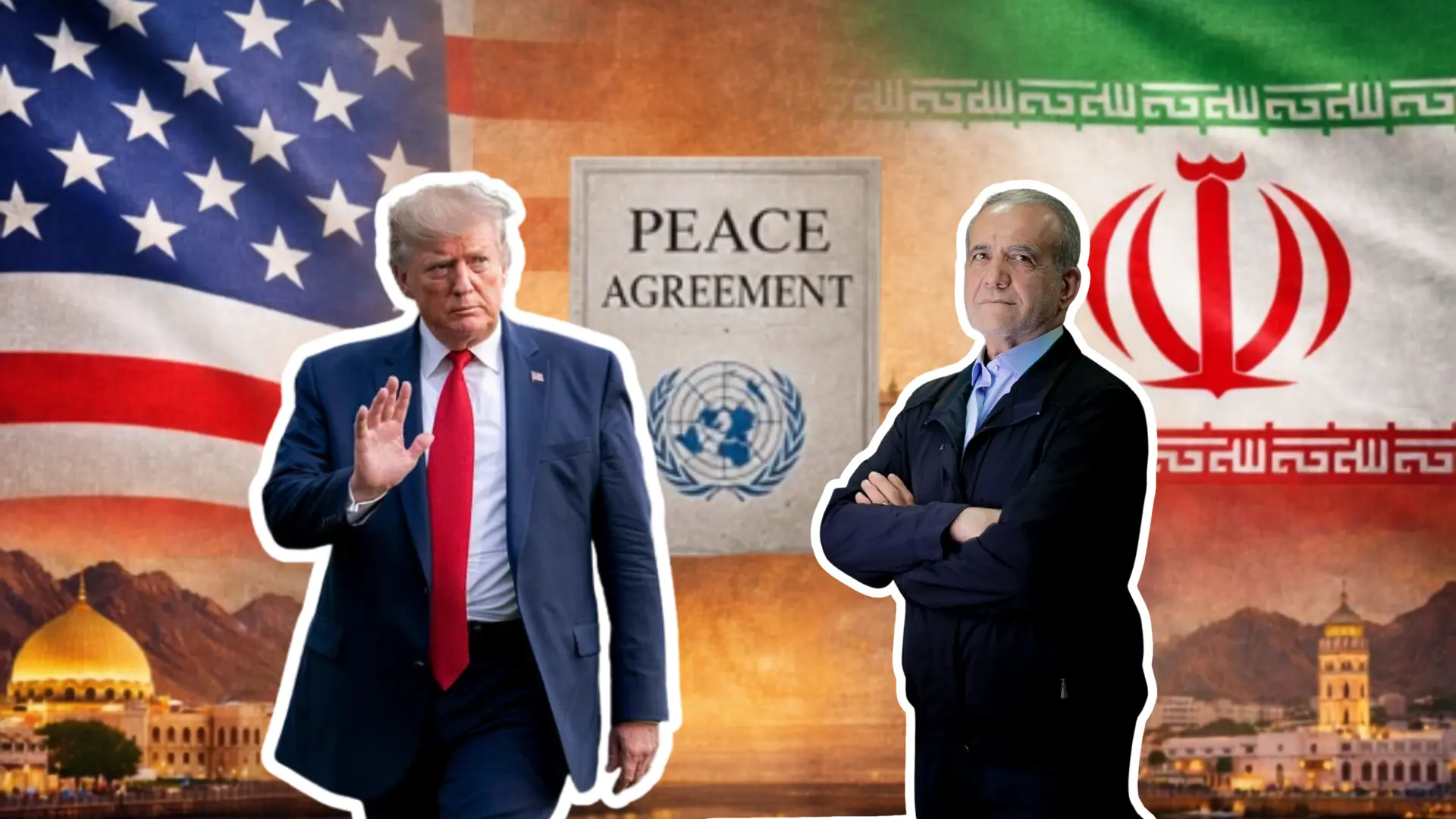
June 18, 2026, the United States and Iran signed a landmark 14-point “Islamabad Memorandum of Understanding” to halt their five‑month Middle East war. Brokered by Pakistan (with Qatar, Saudi Arabia, Turkey and others supporting) and announced just after President Trump’s G7 visit, the pact calls for an immediate and permanent ceasefire, an end to U.S. naval blockades, and the reopening of the Strait of Hormuz to commercial shipping. It institutes a 60‑day window for negotiators to hammer out a final peace deal, and includes significant economic incentives: an oil export waiver and release of Iran’s frozen funds, plus a new $300 billion private reconstruction fund pledged by Gulf and global investors.
Key points: The Islamabad Memorandum enshrines (1) a permanent halt to hostilities on all fronts; (2) respect for each nation’s sovereignty; (3) a commitment to negotiate a full settlement within 60 days; (4) reopening Hormuz toll‑free while Iran maintains administrative control; (5) U.S. withdrawal of any naval blockade and forces near Iran; (6) U.S.-led planning of up to $300 billion for Iranian reconstruction (mainly private investment); (7) eventual termination of all U.S. and UN sanctions in the final deal; (8) Iran’s reaffirmation not to pursue nuclear weapons and downblend stockpiles (with future talks on enrichment in the final accord); (9) a status quo on Iran’s nuclear program (no new sanctions or deployments); (10) immediate U.S. waivers to allow Iranian oil, gas, banking and trade; (11) transfer of Iran’s frozen assets to its central bank for Iranian‑approved projects; (12) an executive monitoring mechanism to ensure compliance; (13) initiation of final peace talks on remaining issues after key confidence measures are implemented; and (14) endorsement of the final comprehensive deal by a UN Security Council resolution.
Each point of Islamabad Memorandum was read out publicly when the U.S. released the agreement text. In practice, the pact extends the fragile April ceasefire for 60 days as the basis for a lasting settlement. Oil and shipping markets reacted immediately: Brent crude slid about 2% to ~$78/barrel as the Hormuz blockade ended, and global energy forecasts now foresee a supply glut once full flow resumes.
Key Provisions of the Islamabad Memorandum
- Permanent Ceasefire: Military strikes on all fronts will immediately and permanently stop, including in Iran, Lebanon (Hezbollah), and elsewhere. Both sides pledge not to interfere in each other’s internal affairs.
- Hormuz and Naval Blockade: Iran will instantly reopen the Strait of Hormuz to civilian shipping (under Iran-Oman co-administration). The U.S. will immediately lift its naval blockade of Iran’s ports. Reopened shipping must be “toll-free” for 60 days, with a new discussion on long-term transit management involving Iran, the U.S. and Oman. (UK and international forces are on standby to assist Hormuz security.)
- Economic Package: Regional allies (especially Gulf states) will work with the U.S. to create a $300 billion private investment fund for Iranian reconstruction. More than half of this has already been pledged by companies from the U.S., Gulf, Asia, Africa and South America. Notably, this is private-sector capital only; Trump emphasized “we’re not putting up 10 cents” of U.S. money. This fund is meant as a carrot for Iran to implement the deal and finalize a lasting peace (it goes live once the final agreement is signed).
- Sanctions Relief & Financial Flows: The U.S. agrees to terminate all U.S. and UN sanctions on Iran according to a schedule in the final deal. Even before that, it will issue waivers (special licenses) to allow Iranian oil and gas exports, banking transactions, aviation, remittances and other trade. Tehran’s frozen overseas assets (tens of billions held in the U.S., Europe and South Korea) will be transferred to an Iranian Central Bank account designated for Iranian-approved projects. The one-page MoU notes that asset release and sanctions lifting are tied to compliance and final settlements.
- Nuclear and Military Programs: Iran reaffirms it will not pursue a nuclear weapon and agrees to downblend or dilute its enriched uranium stockpile. The parties will resume comprehensive talks over Iran’s nuclear program (including enrichment levels) during the final 60-day negotiations. In the interim, the deal simply restates the April status quo: Iran’s nuclear sites remain as they are, with no new nuclear sanctions or deployments by the U.S. and partners. The 14-point framework omits any immediate curbs on Iran’s ballistic missiles or regional alliances – these “deferred issues” are reserved for the final deal.
- Monitoring and Final Talks: An executive commission (likely U.N. or jointly led) will monitor implementation and mediate any disputes. After key steps (Hormuz reopening, partial sanctions relief) are in place, negotiators will meet solely on the remaining issues to craft a comprehensive end-of-war treaty. Both sides explicitly commit to finalize a full peace “no later than 60 days,” after which the UN will endorse the final accord with a Security Council resolution.
In sum, the Islamabad Memorandum is largely a ceasefire extension and confidence-building framework. It scores major concessions for Iran (lifting of the oil embargo, $300B funds, diplomatic engagement) in exchange for immediate peace and a pledge to confront its nuclear ambitions later. Experts note it leaves most hard issues unresolved – making the final 60-day talks crucial.
Verification & Enforcement Mechanisms
The Islamabad Memorandum establishes a verification regime and enforcement triggers to keep peace. Both sides agreed to a formal monitoring mechanism (likely involving U.N. or third-party observers) to ensure neither side violates the ceasefire. For example, Iran’s reopening of Hormuz will be overseen “toll-free” for 60 days, after which any transit fees or restrictions must be jointly decided. The U.S. commitment to withdraw its blockade and forces near Iran will also be verifiable (all previous sanctions lifts under U.S. law require Congressional notification).
Crucially, the Islamabad Memorandum is enforceable by its own terms: Trump publicly vowed to “bomb the hell out of” Iran if it violates the agreement. He warned Iranian officials they could be targeted anew if they fail to honor the pact. Similarly, Iran’s supreme leader and President have signaled they consider compliance a point of honor. Iranian Foreign Minister Abbas Araghchi told Lebanese leaders that Israeli attacks must cease immediately under the pact, implicitly threatening to withdraw its own support if violations continue.
The 60-day timeline also functions as a ticking-clock: if talks stall, the interim ceasefire lapses, risking a return to full hostilities. This built-in schedule (reinforced by public comments from U.S. and Pakistani leaders) adds leverage on both sides to negotiate in good faith. The final deal will likely contain more formal inspection (IAEA involvement) and UN resolutions to codify compliance.
Stakeholders & Reactions
United States: President Trump hailed the agreement as a “great settlement” and insisted it included reopening Hormuz and peace in Lebanon. He stressed Iran must honor its commitments or face resumed U.S. strikes. Vice President Vance described the pact as “very general” and about 1.5 pages long, and emphasised that final details (e.g. sanctions lift) require full U.S. congressional review. Senior U.S. officials are divided: hawkish voices in the Trump administration are wary of giving Iran such windfalls, while pragmatists argue the deal ends an unwinnable war.
Iran: President Masoud Pezeshkian said the Islamabad Memorandum was an “important step” toward ending the conflict. The Iranian government underscored that no nuclear deal was finalized yet – only that negotiations would resume. Iran’s state media celebrated the reopening of Hormuz, and Foreign Ministry spokesman Esmaeil Baqaei confirmed the presidents’ signatures. Hardliners in Tehran have so far stayed muted, likely weighing public relief against sovereignty concerns. Supreme Leader Mojtaba Khamenei (whom Pakistani PM Shehbaz Sharif praised for his “statesmanship”) is expected to watch closely whether U.S. sanctions actually ease and whether the reconstruction fund materializes.
Pakistan: Prime Minister Shehbaz Sharif (the chief mediator) hailed the deal as “landmark,” and confirmed both sides signed it on his mediation. He announced Iran would immediately open Hormuz and the U.S. its blockade. Shehbaz congratulated Trump, praised Iran’s leadership, and thanked Qatar, Saudi Arabia, Turkey and Egypt for their roles. President Asif Ali Zardari also welcomed the pact as historic, noting the Iran war had “inflicted immense suffering” and disrupted global energy. Pakistan’s military chief Asim Munir was specifically lauded for brokering the breakthrough.
Israel: Israeli leaders reacted angrily. Prime Minister Benjamin Netanyahu said Israel will continue fighting Iran’s proxies “with or without” a deal. He stressed the pact was the U.S.’s and not binding on Israel, and pointedly noted he had refused Iran’s demand that Israel withdraw from Lebanon. Defense Minister Yair Lapid (the incoming PM) tweeted that the deal was “one of the most shocking failures” of Israel’s security policy. Former PM Ehud Barak blamed Netanyahu for dragging Israel into a war it hadn’t planned to win. Israel’s military resumed limited strikes in Lebanon after the deal (killing a Hezbollah fighter), illustrating that Israel views the Islamabad Memorandum as not covering its conflict in Lebanon.
Lebanon / Hezbollah: Hezbollah said it would not resume operations as long as the ceasefire held – but only if Israel stops attacking. A Hezbollah source told Reuters the group “has not carried out any operations” since the deal and urged Israel to respect Lebanese sovereignty. Hezbollah’s leaders hinted they would not allow Iran to finalize a deal if Israel remains in Lebanon: one warned Iran delayed signing to see if Israel abided by ceasefire terms. Meanwhile, displaced Lebanese families began cautiously returning south after months of war.
Gulf States & Regional Allies: Gulf Arab reactions have been muted but positive. Saudi Arabia, the UAE and Qatar had quietly supported diplomacy (even hosting discussions), and now look to capitalize. Qatar’s foreign minister helped broker talks. Saudi Arabia and other Gulf states – which have seen Iranian drones strike their territory – will monitor compliance closely. They also stand behind the $300B investment pledges (mostly from Gulf firms). Importantly, the pact calls on Gulf state partners to aid Iran’s rebuild, aligning their long-term interests with stability.
Europe and Others: Western governments largely welcomed the deal. UN Secretary-General Guterres “welcomes” the agreed ceasefire and Hormuz reopening, calling it a “critical step” toward peace. EU leaders (von der Leyen, Merkel/Merz, Starmer, Macron, Meloni) all urged swift, full implementation and reiterated “Iran must never get a nuclear weapon”. The UK offered naval support for Hormuz escort. China and Russia (not quoted extensively) are assumed content with reduced conflict.
U.S. Congress: Though not formally part of negotiations, Congressmen in both parties have demanded oversight. Senate and House leaders insisted Trump submit any deal for review. Some Republicans backed a recent resolution (passed 4 June) to end unauthorized Iran war; in parallel, some hawks now warn against rapid sanction lift. The final deal (per point 14) requires a UN resolution, which may include Congress-negotiated language.
Economic Impacts
Oil & Markets: The immediate effect has been a relief rally in oil and trade flows. With Hormuz reopened, an estimated 20% of global oil transit returns; traders saw Brent fall about 2% (to ~$78/bbl) and WTI to ~$75 after the pact. This erased all war‑premium costs: prices are back to early March levels. Agency forecasts (IEA) now predict a significant oil surplus in 2027 once Persian Gulf exports normalize. OPEC has responded by modestly boosting output (some members already had cut Iran’s 2026 demand estimates by 500,000 bpd).
Iranian Economy: In Iran, markets cheered. The rial strengthened on news of sanction waivers, and inflation is expected to slow. Tehran will soon monetize some foreign reserves. Crucially, banking corridors reopen: Iranian banks can reconnect to SWIFT and repatriate trade receipts. Euroclear and foreign insurers, dormant for 7 months, may resume clearing and cover shipments by July. Private investors (domestic and diaspora) are already eyeing real estate and industry stockpiles for investment.
Reconstruction & Trade: The proposed $300B fund – primarily for energy, infrastructure and manufacturing – would dwarf the legacy 2016 JCPOA relief. If realized, it could supercharge Iran’s growth (by 2030, economy 10–15% larger than under sanctions). Gulf state investors see this as in their interest: a stable, oil-exporting Iran boosts regional demand (and they secure construction contracts). International oil majors and trading houses are drafting plans to restart Iranian oil, gas, and petrochemical deals; U.S. companies are angling for big energy projects if sanctions lapse.
Global Economy: For global trade, the end of the Hormuz blockade is a boon. Shipments through Hormuz (some 19 million barrels/day before war) will recommence, easing supply chokepoints. Global stock indices ticked up (especially energy and shipping). World Bank and IMF have projected a 0.3–0.5% lift in global GDP if oil supply normalizes. Maritime insurance premiums for Gulf routes will drop, and world trade volumes will rise.
Security Implications
Maritime Security: The deal mandates the Strait be open “toll-free”, a major win for global shipping. It implicitly requires demining and safe passage operations; NATO/UK warships may escort convoys briefly under UN auspices. Once reopened, traffic levels (tankers, container ships) should revert to pre-war norms. An international monitoring mission (UK-led) is expected to oversee Hormuz’s reopening (as mentioned by Macron). Iran, however, retains final administrative control with Oman, raising questions about fees, inspections and possible sabotage (Pakistani PM and Turkey’s Erdogan warned all parties to stay vigilant against provocations).
Nuclear & Military Balance: Politically, Tehran’s pledge not to produce nukes combined with resumed talks means the long-feared nuclear breakout is off the table for now. U.S. forces will likely withdraw major assets from Iranian borders; any new deployments or bases are barred. Israel’s campaign in southern Lebanon, however, remains contentious: Iran demands a full cessation there (as part of its “all fronts” condition), but Israel has clearly stated it will not abandon its Lebanon campaign. This disconnect means Lebanon could easily reignite.
Proxy Warfare: The pact implicitly addresses proxies: by ending hostilities, Iran’s allies (Hezbollah, Houthis, Shiite militias) are also expected to stand down. Hezbollah’s leader said his group will respect the ceasefire if Israel does. The Houthis (who have struck Gulf shipping) have not been mentioned, but presumably Iran would restrain them. If respected, this dramatically reduces tensions from Islamabad to the Red Sea.
Regional Stability: The biggest impact is an immediate reduction of war risk in the Arabian Gulf. GCC states (Kuwait, Bahrain, Oman) which had suffered missile and drone strikes by Iran now breathe easier. GCC leaders can now refocus on long-term security pacts (per expert analysis) instead of managing daily conflict. The reopening of Hormuz and lifting of oil sanctions also lowers the incentive for alternative shipping routes (the UAE route via pipeline to Fujairah had been expedited). Security analysts note, however, that the U.S. “umbrella” over Gulf states is now tarnished; long-term Gulf planning (joint air defense, maybe NATO membership talks) will accelerate.
Implementation Challenges and Outlook
Verification and Trust: The interim deal places enormous trust on enforcement. Any alleged violation (e.g. a future Iranian missile test or U.S. naval incident) could unravel the truce. Trump’s public threats underscore the fragility: he warned he could “resume attacks” if Iran misbehaves. Iranian hardliners will similarly scrutinize any U.S. foot-dragging on sanctions relief. To manage this, a joint “executive office” (likely involving Pakistan and others) will field complaints. However, without immediate third-party inspectors, much depends on political will.
Israel-Lebanon Front: The war in Lebanon looms as the most immediate test. Netanyahu has already refused to withdraw Israeli forces from southern Lebanon and keeps “right to respond”. If clashes resume there, Iran will face domestic calls to retaliate against Israeli targets (despite the ceasefire). Some U.S. officials acknowledge Lebanon was a key sticking point: the final accord will likely need language accepting Israel’s temporary presence or some confidence measure for Hezbollah.
Political Backlash: Domestically, both sides may face pushback. U.S. hawks (and Israel’s lobby) might pressure Trump to renege or tighten terms. In Congress, legislators could reassert oversight or threaten sanctions until final steps. In Iran, ultra-conservatives may argue that the deal buys off the enemy too cheaply; if promised reconstruction funds don’t flow fast, nationalist anger could mount.
Nuclear Negotiations: The most delicate upcoming task is defining Iran’s future nuclear program. The framework only affirms “no bomb,” but disputes remain: how much uranium enrichment, inspection quotas, or centrifuge caps will be imposed? If Iran perceives the process as one-sided (a fear some experts express), it might resume a breakout. Conversely, U.S. hardliners might balk at letting Iran enrich any uranium at all, complicating consensus.
Worst-case Scenario: If either side backtracks, the war could reignite. For example, Israel might launch a major strike on Iran or renew Lebanon operations, nullifying the peace. Alternatively, Trump could revoke the deal (he indicated dissatisfaction on June 17) and restart hostilities. Either scenario would send oil prices spiking anew and erode global confidence.
Best-case Scenario: If scrupulously implemented, this ceasefire could transition into a stable deterrence. A permanent peace treaty (endorsed by the UN) would settle one of the gravest conflicts of the 2020s. Iran’s economy would rebound (the dambroken capital and trade swiftly returning), and Gulf security pacts would pivot to cooperative defense (perhaps a formal alliance including Iran). Hamas, Assad and other battlegrounds could likewise seek resolution under the new regional equilibrium.
Likely Outcome: Analysts expect a mixed near-term: the ceasefire will largely hold as long as both governments stay committed to a final settlement. Trump will likely press Congress to codify sanction waivers quickly (he’s said he’ll send it for review) and may conditionally approve oil sales to test Iranian good faith. Iran will begin limited exports under U.S. waivers, kickstarting its economy. However, Israel’s separate Lebanon war remains unresolved; observers warn continuing skirmishes there could threaten the peace. Over the next 60 days, diplomatic focus will be on bridging that gap and finalizing a detailed arms/missile compromise.
Table: Pre- and Post-Islamabad Memorandum Metrics
| Metric | Pre-MoU (before 6/18/26) | Post-MoU (after 6/18/26) | Source/Notes |
|---|---|---|---|
| Brent Crude Oil Price | ~$79–80/barrel (June 14) | ~$77.9/barrel (June 18) | Prices fell ~2% |
| WTI Crude Oil Price | ~$76.1/barrel (June 14) | ~$75.0/barrel (June 18) | Fell ~2.3% |
| Hormuz Status | Blockaded by U.S. Navy | Reopened (toll-free 60d) | Pact calls for reopening |
| Iranian Oil Exports | ~0 (sanctions) | Allowed under waivers (60d) | Immediate US waivers |
| Frozen Iranian Assets | ~$70+ billion (blocked) | Being released to CBI account | US to free funds |
| Sanctions (U.S./UN) | Full UN & US sanctions | Scheduled for termination (final) | UN/US sanctions lifted in final deal |
| IHS/Ship Transit Hours | ~0 (Hormuz closed) | Resumed (19 MMbpd transit) | Prewar ~19M bpd; now resuming |
| Global Oil Supply Outlook | Tight (shortage risk) | Glut in 2027 (IEA projection) | IEA expects surplus after Hormuz reopening |
Outlook
The Islamabad Memorandum represents a historic, if fragile, de‑escalation of the U.S.–Iran war. It brings immediate peace to a region teetering on full-scale war, reassures global energy markets, and sets in motion a multi-track diplomacy. Success now hinges on implementation: verifying Hormuz demining, executing sanction waivers, and keeping Jerusalem and Hezbollah from derailing progress.
If both governments abide by their word, this interim pact will pave the way for an enduring agreement. U.S. and Iranian diplomats must quickly tackle the toughest points – nuclear limits, missile programs and the Lebanon front – in the coming weeks. For now, world powers from the UN to the EU have urged all sides to honor the pact fully. Were the treaty to fail, the region would likely relapse into chaos. But if it holds, it could end one of the Middle East’s deadliest conflicts, stabilize oil markets, and reframe U.S.-Iran relations for years to come.
Sources: Official statements and news reports from Reuters, Business Standard, AP News, and regional outlets (Dawn) provided details of the MoU text and reactions. (Further background from the official Islamabad MoU text and negotiators’ accounts.)
For more such information visit EQMint
Join our Whatsapp channel for timely updates: Whatsapp
Disclaimer: This article is for educational purpose only.