

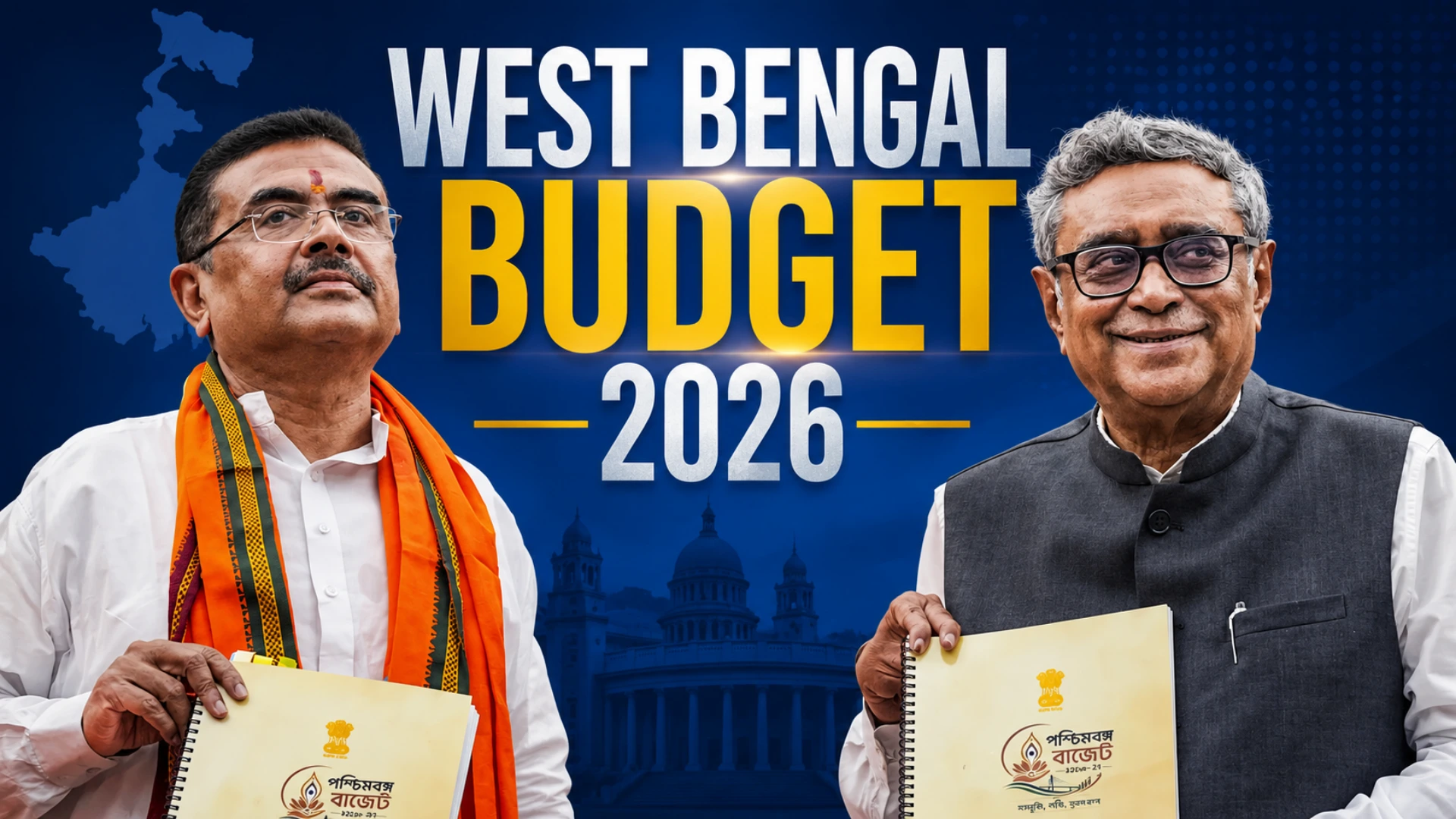
June 24, 2026:The title of West Bengal Budget 2026-27 signifies that it is not just an exchequer statement, but the first comprehensive budget of the BJP government after it ended 15 years of one-party rule by the Trinamool Congress in the state. The ₹4.38 lakh crore budget, presented by Finance Minister Swapan Dasgupta, is the BJP government’s first budget of its own, but what will it signal about the economic shape of the new Bengal state? In this regard, the budget is no small matter, the policy decisions to be incorporated will dictate Bengal’s immediate course and its ability to shape long-term economic growth.
Author: Tavisha Kanodia | EQMint | Budget 2026
Change follows change; higher welfare spending on old incumbents must be accompanied by new investment and employment generation. Much depends on how well the BJP state government balances the need for higher welfare spending with the need to promote private investment and job creation for a growing population, but the true test will come as implementation starts. The West Bengal budget speaks to how the BJP administration sets its objectives in these regards, and it appears as though it is trying to pursue both at the same time.
Welfare Remains at the Centre of the West Bengal Budget
There was much anticipation that stringent economic reforms would come at the cost of neglecting the poor. Alice-in-Wonderland has been transformed into a bear; the land of the 20-point plan into a land of welfare. The opposition has yet to see any second-tier city. Oppositional pain is but an image, and the emphasis elsewhere is on macroeconomics. This is not the case anymore. The new government, of course, has resorted to different forms of human development. It has allocated 36,000 crore to its flagship social support scheme, Annapurna Yojana, and 550 crore for free bus travel for women, has raised the remuneration of its Anganwadi and Asha workers, is increasing support for para-teachers, and has initiated financial assistance programmes aimed at unemployed youth. This is no different from the socialist approach of the 1980s.
The point is that large sections of the population in the new Bengal still depend on government support; so much has made a transition, the reality requires a more pragmatic approach. The key here is that welfare spending can be a means of stimulating household consumption, thereby bringing a multiplier effect to local economies. The government has retained several social schemes; it appears to have realized that reforms must be on par with social protection.
Employment and Investment Take Centre Stage
A bold, unprecedented declaration, aimed at ‘threatening’ unemployment among the youth, forms part of the most publicized part of the budget: that the government will fill a lakh vacancies in state jobs, including 20,000 posts for police and 50,000 for teaching. 33 per cent of the posts will be reserved for women. This is an attempt to boost the participation of state workers in the workforce. An industrial incentive scheme of Rs. 5,000 crore is proposed for attracting new industries into the state.
The state government has further announced a proposal to revive the Calcutta Stock Exchange and to facilitate the operation of shops and restaurants after 9pm. Overall, the emphasis on investment ecosystem and a better business environment indicates that the state government is trying to reestablish Bengal as a business-friendly destination.
Infrastructure as the Foundation for Future Growth
Infrastructure investment has been a key component of the state’s plan for high-growth economy, which sees a significant boost with the introduction of a greenfield airport near Secundra-Betla in the outskirts of Kolkata, an integrated deep-sea port in Purba Medinipur, and an expansion of aviation infrastructure in North Bengal. Alongside infrastructure development, the state is aligned with two major, flagship government institutions, IIT and IIM to be set up in North Bengal to spur the development of new growth-centres.
The government’s agenda also outlines various other initiatives, such as a “gig economy bill”, “days-off for migrant labour workers”, “government partnership in health care” and “agriculture/ agrarian sector” to make progress towards a more inclusive development. If the government can manage to put this plan into action, then the West Bengal Budget 2026-27 will be more than a mere “political statement”; it will be a real, pragmatic move towards a competition-ready, inclusive state economy, built for the future.
For more such information visit EQMint
Join our Whatsapp channel for timely updates: Whatsapp
Disclaimer: This article is not an investment advice and is for educational purpose only.