
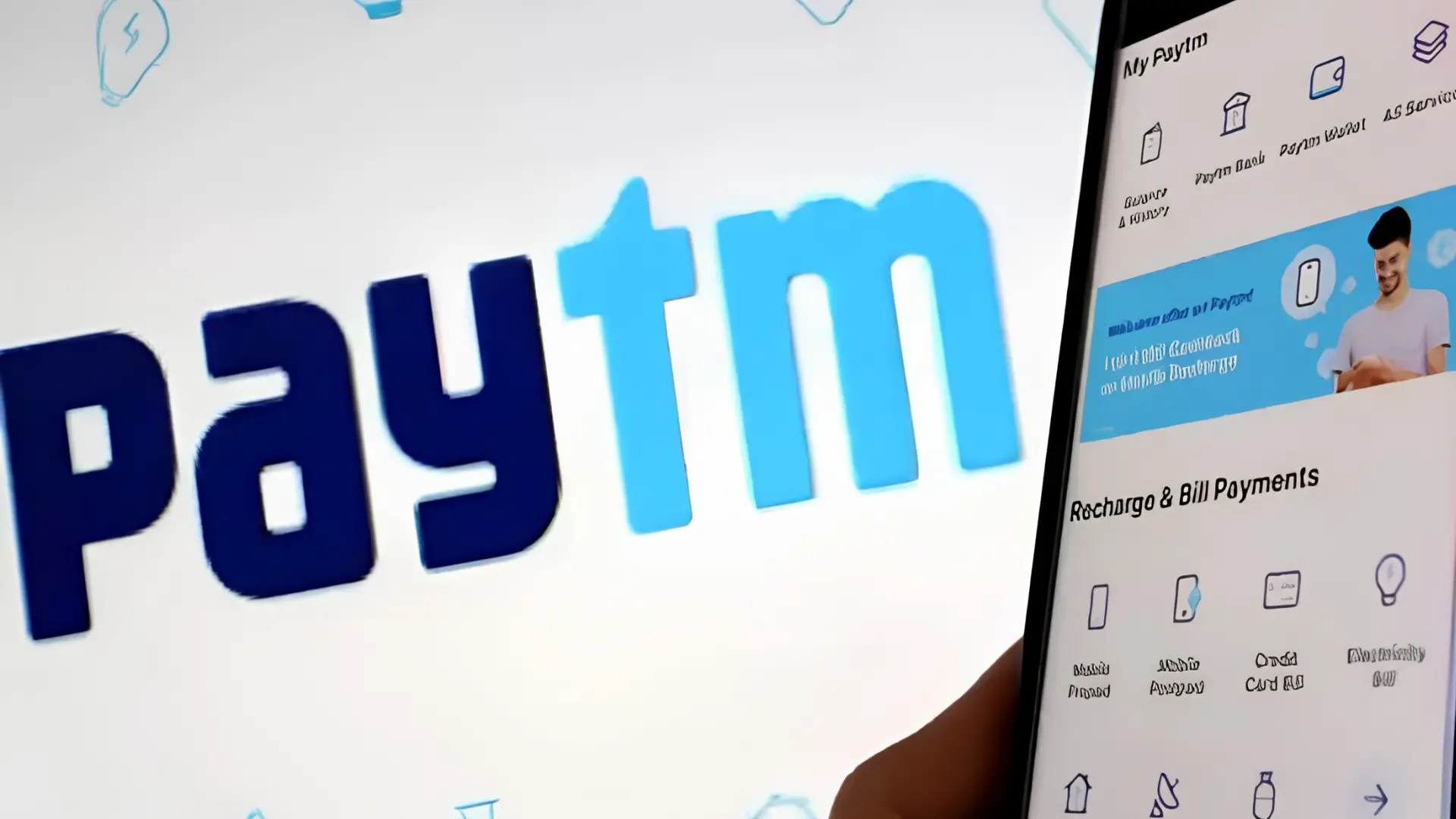
July 02, 2026: Paytm Share Price, run by One97 Communications, has staged one of the most dramatic turnarounds on the Indian market. After the RBI shut down Paytm Payments Bank in early 2024 and the stock crashed toward 310, it has recovered to around 1,090 to 1,120 by mid-2026, helped by a genuine financial reset: One97 posted its first-ever full-year profit in FY26, around 552 crore, reversing a 663 crore loss the year before, with four straight profitable quarters behind it.
Author: Aditya Pareek | EQMint
So has the worst passed? On the business, the evidence says the bleeding has largely stopped. On the stock, real risks remain, from the no-fee UPI model to a strengthening PhonePe and continued selling by early investors. The recovery is real, but it is not the same as a one-way bet from here. To be clear, EQMint does not predict share prices, and this is an analysis of what has changed, not a target.
The question in the title is the one every searcher is really asking. The honest answer has two halves: the company has fixed a lot, and the stock still carries genuine uncertainty. Both are true.
Here’s what actually changed in the business, what the real risks still are and how to think about Paytm without anyone pretending to know the price.
How bad did Paytm Share Price get, and why
Start with the crisis, because the recovery only makes sense against it. In January 2024 the RBI barred Paytm Payments Bank from taking fresh deposits, and by early 2024 effectively wound down its operations over compliance failures. For a company whose brand was built on payments, it was an existential blow.
The stock collapsed from its already-bruised levels toward 310, a fraction of its 2021 IPO price of 2,150. Beyond the immediate hit, the episode raised the deeper question every fintech faces: how fragile is a business that depends on regulatory goodwill it cannot fully control? That fear, as much as the financial damage, is what crushed the valuation.
What actually changed in the business
Take the position the doom narrative missed. Paytm did not just survive, it restructured into a leaner, profitable company. The FY26 numbers are the proof, not the spin.
| Metric | The turnaround |
| FY26 net profit | About 552 crore, the first-ever annual profit |
| FY25 to FY26 swing | From a 663 crore loss, a ~1,215 crore turnaround |
| Profitable quarters | Four consecutive, through Q4 FY26 |
| Q4 FY26 revenue | About 2,264 crore, up ~18% year on year |
| Financial services revenue | Up ~52% year on year, the fastest segment |
The turnaround rested on a few concrete moves. Financial services distribution, lending, insurance and wealth, became the fastest-growing engine, growing earnings without Paytm taking the credit risk itself. Payment processing margins expanded. AI-led cost discipline cut indirect expenses by around 16%. And a large base of merchant subscription devices, soundboxes and card machines, built a stream of recurring revenue. Together these turned a cash-burning payments app into a profitable platform business.
This is the genuine good news, and it’s why the stock re-rated so hard off the bottom. A company posting its first annual profit and four straight profitable quarters is a different animal from the one the market left for dead in 2024.
The risks that have not gone away
Be equally honest about what still threatens the story, because a recovered stock is not a risk-free one. Several real overhangs remain.
The no-fee UPI problem. Simple UPI payments earn no fee in India, so Paytm’s core payment volume doesn’t directly make money. The business leans on merchant services and financial distribution instead. When rumours of a UPI fee surfaced in June 2026 and the finance ministry quickly denied them, the stock fell sharply in a day, a reminder of how sensitive the model is to this single unresolved question.
A stronger rival in PhonePe. PhonePe leads UPI with a far larger transaction share, has faced none of Paytm’s regulatory heat, and is heading toward its own IPO at a richer valuation multiple than Paytm commands. The competitive gap in core payments is real and not closing quickly.
Early investors still selling. Big backers have been trimming stakes through block deals, with Ant Group, Elevation Capital and SAIF among those reducing holdings in 2025 and 2026. Persistent large-block selling can cap a stock even when the business improves, because it adds supply the market must absorb.
The regulatory scar. The Payments Bank episode showed how exposed a fintech is to regulatory action. Paytm and its founder have since settled an ESOP-related matter with SEBI, and while the company has cleaned up, the market still applies a caution premium to a business with this history.
What analysts say, and why it’s not a prediction
Here’s where the keyword question meets reality. People search for a Paytm share price prediction, so it’s worth being clear about what exists and what doesn’t.
Brokerages publish their own price targets, and as of mid-2026 the reported analyst consensus sat around 1,400, with a wide range from roughly 1,010 at the low end to about 1,740 at the high end, and some firms like Goldman Sachs maintaining a buy view. That spread of over 700 between the lowest and highest target is the real message. Even the professionals who do this full-time, with models and access, disagree sharply on where the stock goes.
EQMint is not a SEBI-registered adviser and does not predict prices or issue buy or sell calls. The honest takeaway from the analyst range is not a number to anchor on, but the opposite: the width of the disagreement tells you how much genuine uncertainty still surrounds this stock, even after the turnaround. Anyone offering you a confident single target is overstating what can be known.
So has the worst passed?
Take a clear, balanced position, since that’s what the question deserves. On the business, the worst very likely has passed. The company is profitable, leaner, growing in financial services and no longer burning cash the way it was. The existential phase, will this company survive, looks to be over.
On the stock, the answer is more careful. The easy recovery, from crisis lows back toward four-figure levels, has already happened, and a buyer today is not buying the bombed-out turnaround story but a re-rated stock that must now keep delivering to justify its price. The remaining risks, no-fee UPI, PhonePe, investor selling and regulatory sensitivity, are real and unresolved. The next phase depends on execution and on questions outside Paytm’s control, not on simply surviving.
The honest framing for an investor. The story has shifted from survival to execution, which is genuine progress. But survival being secured is not the same as the stock being cheap or the path being clear. Judge it on the business momentum continuing and the risks resolving, decide based on your own research and risk appetite, and ignore anyone, including any tipster, who claims to know the price. EQMint certainly doesn’t.
FAQ
What is the current state of Paytm’s business in 2026?
One97 Communications, Paytm’s parent, posted its first-ever full-year profit in FY26 of around 552 crore, reversing a 663 crore loss the previous year, with four consecutive profitable quarters. The business has moved from cash-burning to profitable.
Why did Paytm’s share price crash?
In January 2024 the RBI barred Paytm Payments Bank from taking fresh deposits over compliance failures and effectively wound it down. The stock fell toward 310, far below its 2021 IPO price of 2,150, on both the financial hit and fears about regulatory dependence.
Has Paytm recovered?
On the business, largely yes. It is profitable, leaner and growing in financial services. The stock has recovered to around 1,090 to 1,120 by mid-2026 from its lows, though it remains below the IPO price and still carries real risks.
What is the Paytm share price target for 2026?
Brokerages publish their own targets, with a reported consensus around 1,400 and a wide range from roughly 1,010 to 1,740 as of mid-2026. The width of that range reflects genuine uncertainty. EQMint does not predict prices or issue recommendations.
What are the main risks for Paytm Share Price now?
Simple UPI payments earn no fee, so the model leans on other revenue; PhonePe is a stronger, less regulated rival heading to its own IPO; early investors keep selling large blocks; and the Payments Bank episode left a lasting regulatory caution premium.
Why does no-fee UPI matter for Paytm?
Because Paytm processes huge UPI volume that earns no direct fee, so it must monetise through merchant services and financial distribution instead. When a UPI fee rumour surfaced in June 2026 and was denied, the stock fell sharply, showing how sensitive the model is.
Is Paytm profitable now?
Yes. One97 Communications reported its first full-year profit of around 552 crore in FY26 and has strung together four consecutive profitable quarters, a roughly 1,215 crore swing from the prior year’s loss.
Should I buy Paytm shares?
EQMint is not a SEBI-registered adviser and does not make buy or sell recommendations. The business has turned around, but the stock has already re-rated and carries real risks, so any decision should rest on your own research and risk appetite.
EQMint is not a SEBI registered investment adviser. This article is for informational purposes only and is not investment advice, and does not predict share prices or recommend buying or selling any stock. Share prices and figures change continuously, so verify current data before acting, and consult a SEBI-registered professional for personalised advice.
For more such information visit EQMint
Join our Whatsapp channel for timely updates: Whatsapp