
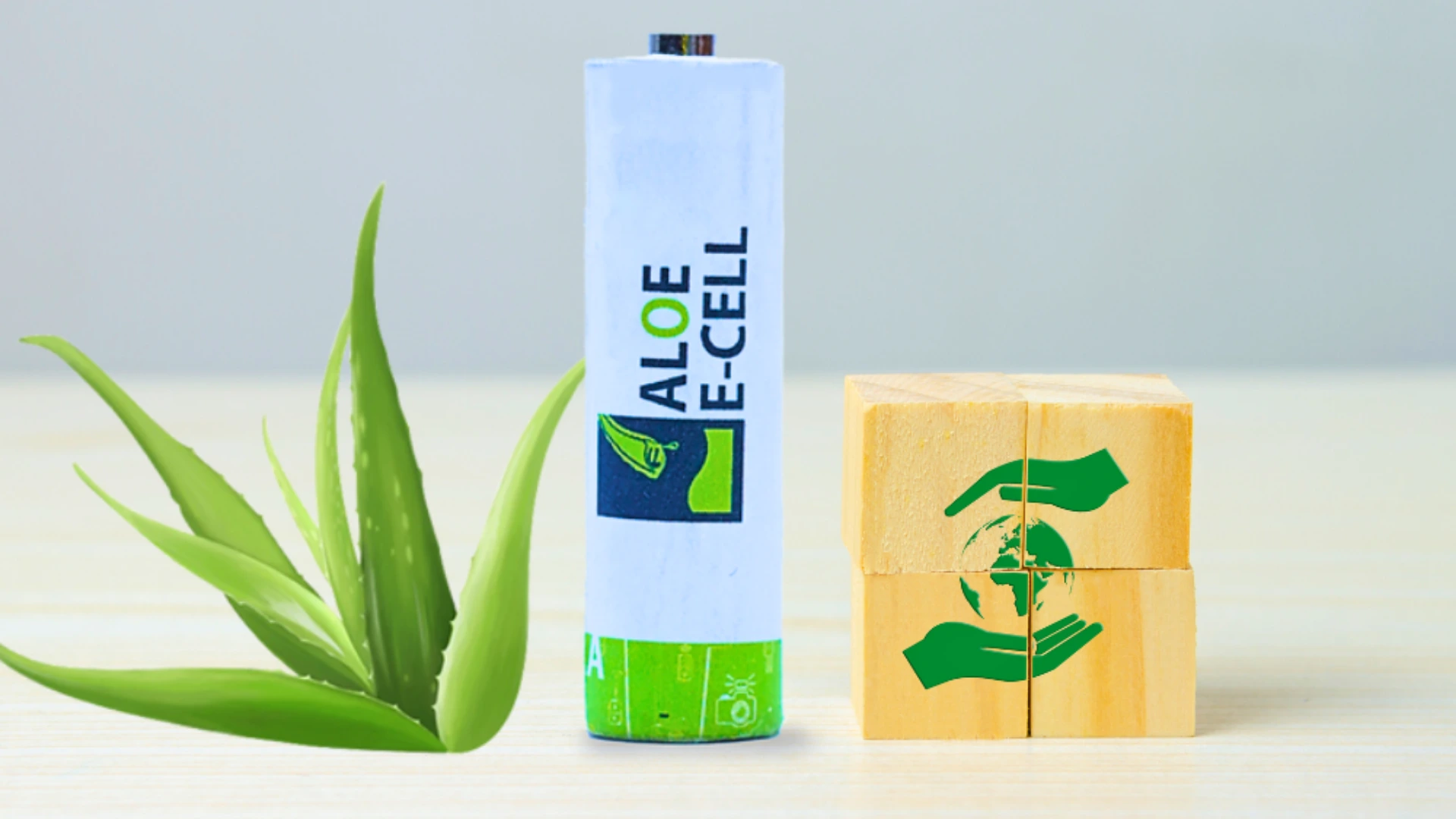
Synopsis: India dumps billions of dry-cell batteries every year, most of which ends up in landfills. Discussions about sustainable technology often focus on electric vehicles and lithium-ion batteries, but one Indian startup has chosen to tackle a non-talked problem—single-use dry-cell batteries. Aloe E-cell is attempting to build an entire circular ecosystem around it. Its journey gives important lessons in entrepreneurship, innovation, and sustainable business strategy, highlighting key challenges that every tech-related startup must overcome before becoming an established industry.
July 3, 2026: Building a Business Around an Invisible Problem
Every year, billions of disposable batteries power clocks, remotes, toys, flashlights, and countless household devices. Once used, many of these are discarded with regular waste, creating a growing environmental challenge. According to Aloe E-cell, nearly 2.3 billion dry-cell batteries are discarded annually in India, making battery waste one of the country’s less visible but persistent environmental concerns. (Aloe E-Cell)
Author: Tavisha Kanodia | EQMint | EQMint Originals
Instead of competing directly in the lithium-ion market, Aloe E-cell deliberately focused on this overlooked segment. It placed itself around a problem that had received little commercial attention: making disposable batteries more sustainable while simultaneously addressing battery disposal.
This shows an entrepreneurial strategy seen among disruptive startups—rather than entering the biggest market, they identify an underserved one where innovation enters to make a change.
Innovation Beyond the Product
The company’s most distinctive feature is not simply its aloe vera-based electrolyte. According to Aloe E-cell, the innovation lies in redesigning part of the battery chemistry while simultaneously creating a circular lifecycle around the product. The company describes its model as “Make, Track, Recycle,” where batteries are manufactured, collected after use, and recycled into micronutrient fertilisers rather than being discarded in landfills. (Aloe E-Cell)
Instead of viewing recycling as an afterthought, Aloe E-cell has integrated waste management into its business model from the beginning. If successfully scaled, this approach could reduce raw material wastage while contributing to a more circular manufacturing ecosystem.
However, commercial success will ultimately depend not only on environmental credentials but also on whether customers perceive the batteries as reliable, affordable, and widely available.
Scaling Through Trust Rather Than Advertising
Unlike many consumer startups that initially focus on mass retail, Aloe E-cell has built credibility through institutional partnerships and government engagement. The company has received the National Startup Award and has showcased its technology at international innovation platforms. More recently, it stated that its batteries are being procured by over 100 government departments and ministries through the Government e-Marketplace (GeM), including organisations such as Indian Railways and defence establishments. (Aloe E-Cell)
Founder Nitin Mewara has consistently framed the company’s mission around solving an environmental challenge rather than merely selling batteries. The company states that its vision is to create “a Better Battery World where technology and nature work together to drive sustainable progress.” (Aloe E-Cell)
This illustrates another entrepreneurial lesson: for deep-tech startups, institutional validation often becomes a more effective growth strategy than traditional consumer marketing.
The Road Ahead: Opportunity Meets Scrutiny
The battery industry is dominated by established global manufacturers with decades of manufacturing experience, large-scale distribution networks, and highly optimised production costs. For any new entrant, technological novelty alone is rarely sufficient to secure long-term success.
Some technology enthusiasts and industry observers have also questioned whether the company’s environmental and performance claims require greater independent scientific validation before they can be widely accepted. While Aloe E-cell highlights advantages related to sustainability and battery chemistry, publicly available peer-reviewed evidence evaluating long-term commercial performance remains limited. (Reddit)
This does not diminish the importance of the innovation; rather, it reflects the reality faced by many climate-tech startups. Scaling breakthrough technologies requires not only inventive engineering but also transparent testing, regulatory confidence, and sustained market acceptance.
Ultimately, Aloe E-cell’s greatest innovation may not be the battery itself. It is the attempt to transform a traditionally linear industry into a circular one—where manufacturing, consumption, collection, and recycling become part of a single business model.
Bibliography
- Aloe Ecell – Sustainability Commitment. Aloe Ecell Sustainability
- Aloe Ecell – Official Website. Aloe Ecell Official Website
- Aloe Ecell – Circular Ecosystem. Make–Track–Recycle Ecosystem
- Aloe Ecell – Aloe Vera Battery Technology. Aloe Vera Battery
For more such information visit EQMint
Join our Whatsapp channel for timely updates: Whatsapp
Disclaimer: This article is not an investment advice and is for educational purpose only.