
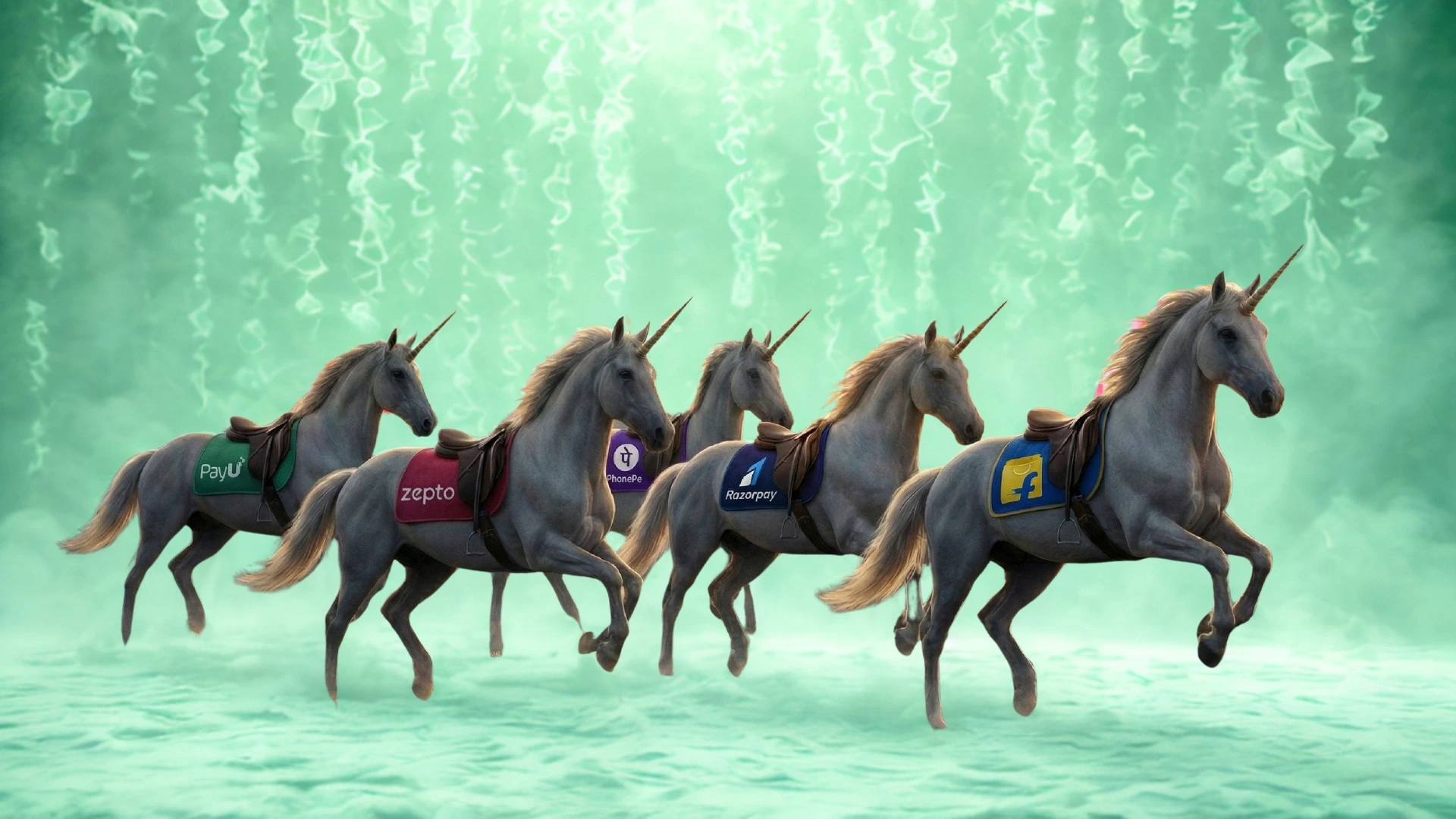
India has produced around 130 unicorns as of mid-2026, privately held startups valued at 1 billion dollars or more, together worth over 394 billion dollars and having raised more than 118 billion. But if you search Indian Unicorns, you’ll see wildly different counts: 118, 131, 132, even 61. None is wrong, they just count differently.
Author: Aadarsh Patel | EQMint
Some include startups that have since gone public or been acquired, some count only those still private, and some drop companies that fell below a billion after a down round. That’s why this is billed as the real list: it explains what’s actually being counted, gives the marquee names with their latest valuations, and tracks the newest entrants with their last raises. As of mid-2026 India ranks third globally for unicorns, behind the US and China, and 2026’s new club members are led by AI and fintech.
The count confusion is the first thing to clear up, because a list means nothing if you don’t know what it’s counting. So this tracker starts there, then gives you the names and numbers.
Here’s the honest 2026 picture: why the counts differ, the biggest unicorns by valuation, the new entrants of 2026 with their last raises, and what the list reveals about the ecosystem.
Why every unicorn list shows a different number
This is the part other lists skip, and it’s the most useful thing to understand. The word unicorn sounds precise, but the counting isn’t, so trackers land on different totals for defensible reasons.
| What a tracker counts | The number it lands on |
| Every startup that ever reached 1 bn | Highest, around 132 |
| Cumulative, minus obvious drop-offs | Around 130 to 131 |
| Only those still privately held today | Lower, some cite ~118 |
| Only currently private and above 1 bn | Lowest, Hurun cites ~61 |
The gaps come from three things. Exits: companies like Flipkart, Zomato, Nykaa, Swiggy and others became unicorns then listed or were acquired, so some trackers keep them on an ever-reached list while others remove them. Down rounds: a few startups fell below a billion when valuations reset, and get dropped or kept depending on the tracker. And private-only definitions: strict lists like Hurun count only companies still private and still above a billion, which is why their India number is far lower. So when you see a headline count, the real question is always what did they count. This list uses the widely cited cumulative figure of around 130, and flags status where it matters.
The biggest Indian unicorns by valuation
The marquee names, by approximate valuation as of mid-2026. Valuations are last-round or estimated marks and move with each raise, secondary sale or down round, so treat them as indicative.
| Company | Approx. value | Sector | Status note |
| OYO | ~$9 bn | Travel / hospitality | IPO-bound |
| Zerodha | ~$9 bn | Fintech / broking | Self-assessed, bootstrapped |
| Dream11 | ~$8 bn | Gaming | Private |
| Zepto | ~$7 bn | Quick commerce | Private |
| Razorpay | ~$7.5 bn | Fintech | Private |
| Meesho | ~$4 to 5 bn | Ecommerce | Listed / IPO phase |
| PhysicsWallah | ~$2.8 bn | Edtech | IPO phase |
| Unacademy | ~$3.4 bn | Edtech | Private, down from peak |
A note on the top end. The five most valuable unicorns alone account for a large chunk of total club value, while a long tail of 40-plus companies sits in the 1 to 2 billion range. Fintech is the deepest sector, with over a dozen unicorns worth more than 40 billion combined, spanning payments, credit, wealth and insurance.
The new unicorns of 2026, with last raises
The startups that crossed a billion dollars in 2026, with the funding round that got them there. This is the part to refresh each quarter as new names join.
| Company | Value | Last raise | Sector / month |
| Juspay | ~$1 bn+ | Series funding | Fintech infra, Jan |
| Neysa | ~$1.4 bn | $600M Series B | AI infra, Feb |
| KreditBee | ~$1.5 bn | ~$220 to 280M Series E | Lending, Apr |
| Skyroot | ~$1.1 bn | $60M Series C | Space tech, May |
| Sarvam AI | ~$1.5 bn | $234M Series B | AI, Jun |
| Square Yards | ~$1 bn+ | $95M Series C | Proptech, Jun |
The pattern in the 2026 class is unmistakable. AI and deeptech dominate the new entrants, with Neysa and Sarvam reaching a billion in under three years, some of the fastest unicorn journeys India has seen, while Skyroot became India’s first private space unicorn. The pace, five to six new unicorns for the year, matches 2025 but stays far below the 2021 boom, when 45 startups joined in a single year.
What the list reveals about the ecosystem
Take a step back, because the list is more than a leaderboard. The composition tells you where Indian startups actually are in 2026.
Concentration at the top. A handful of names hold most of the value, while dozens cluster just above a billion. The club is top-heavy.
Bengaluru dominates. The city is home to well over 50 unicorns, more than the next few hubs combined, followed by Delhi NCR and Mumbai. Pune, Chennai and Hyderabad are emerging in deeptech and SaaS.
Fintech and ecommerce anchor, AI rises. Ecommerce and fintech remain the largest cohorts by count, but AI is the fastest-growing entry sector and commands premium valuations and speed to unicorn.
Maturity over mania. The slow, steady pace of new unicorns, plus the rise of IPOs and acquisitions as exits, signals an ecosystem that has shifted from growth-at-any-cost toward profitability and durability. Fewer unicorns minted is not weakness, it’s discipline.
A word on unicorn valuations
Be honest about what these numbers mean, since the word billion carries weight. A unicorn valuation is a private mark set at the last funding round, not a market price. It reflects what one set of investors paid for a slice at one moment, and it can be stale or optimistic.
Several one-time unicorns have quietly slipped below a billion in down rounds without fanfare, and a self-assessed valuation, like Zerodha’s, rests on the company’s own estimate rather than an external round. So read any unicorn list as a snapshot of private optimism, useful for tracking the ecosystem, not as a verified price tag. For a retail investor, the practical point is that most of these are private and not directly investable until they list, at which point the public market, not the last private round, decides what they’re really worth.
How this list is maintained
This tracker is refreshed each quarter. Every update adds new unicorns to the 2026 entrants table with their last raise, refreshes marquee valuations after major rounds, moves any newly listed or acquired company to a status note, and updates the headline count and combined value. Because trackers differ, individual valuations and the total count should be cross-checked against a primary source before use, since private marks change quietly and often.
FAQ
How many unicorns does India have in 2026?
Around 130 on the widely cited cumulative basis, as of mid-2026, collectively valued at over 394 billion dollars. Counts vary from 118 to 132 across trackers, and stricter private-only lists like Hurun cite about 61, because they count differently.
Why do unicorn counts differ so much?
Because trackers count different things. Some include startups that later went public or were acquired, some count only those still private, and some drop companies that fell below a billion in a down round. Always check what a given list is counting.
Which is the most valuable Indian unicorn?
Among private unicorns, OYO and Zerodha are near the top at around 9 billion dollars each, followed by names like Dream11, Razorpay and Zepto. Valuations are last-round marks and shift with each raise.
Which startups became unicorns in 2026?
As of mid-2026, Juspay, Neysa, KreditBee, Skyroot, Sarvam AI and Square Yards, led by AI and deeptech. Neysa and Sarvam reached a billion in under three years, and Skyroot became India’s first private space unicorn.
What is the last raise of the 2026 unicorns?
Neysa raised a 600 million dollar Series B, KreditBee around 220 to 280 million in Series E, Skyroot a 60 million Series C, Sarvam a 234 million Series B and Square Yards around 95 million in Series C. Juspay entered via a funding round in January.
Can I invest in Indian unicorns?
Most are privately held and not directly investable by retail investors until they list on the stock exchange. Once a unicorn goes public through an IPO, the public market rather than its last private round decides its value.
Which city has the most unicorns in India?
Bengaluru, with well over 50 unicorns, more than the next hubs combined. Delhi NCR and Mumbai follow, while Pune, Chennai and Hyderabad are emerging, particularly in deeptech and SaaS.
Is a high unicorn valuation the same as being profitable?
No. A unicorn valuation is a private funding mark, not a measure of profit or a market price. Many unicorns are loss-making, and some have slipped below a billion in down rounds. Treat the number as investor optimism, not verified worth.
EQMint is not a SEBI registered investment adviser. This list is for informational purposes only and is not investment advice, and does not recommend any specific company or investment. Unicorn counts and valuations are compiled from third-party trackers including Inc42, Tracxn, Venture Intelligence and Hurun, vary by source and methodology, and change continuously, so verify any specific figure before relying on it.
For more such information visit EQMint
Join our Whatsapp channel for timely updates: Whatsapp