
July 11, 2026: India has gone from zero private space companies in 2020 to nearly 400 by 2026, but here’s the honest answer to who is going to orbit: no Indian private company has reached orbit yet, and that milestone is days or months away, not behind us.
Author: Aadarsh Patel | EQMint
Two startups have flown suborbital rockets, Skyroot’s Vikram-S in 2022 and Agnikul’s Agnibaan in 2024, and Skyroot’s Vikram-1, targeted to launch around mid-2026, aims to be the first privately built Indian rocket to actually place a satellite in orbit. Meanwhile satellite startups like Pixxel already have hyperspectral spacecraft operating in orbit, launched on other rockets. So the sector splits into those racing to build the rockets and those already using space. This is the map of who is doing what, and who genuinely gets to orbit first.
The excitement around Indian private space is real and earned, but it’s often reported as if the race is already won. It isn’t. India is on the cusp of its first private orbital launch, which is a more interesting place to be than past it.
Here’s the honest guide: how the sector opened up beyond ISRO, who is building rockets versus using space, and who is genuinely closest to orbit in 2026.
How India got a private space sector at all
Start with what changed, because five years ago this article couldn’t exist. Until 2020, India’s space story was entirely ISRO’s story, a government monopoly. Then reforms opened the sector to private companies, and the Indian Space Policy 2023 formalised it, repositioning ISRO from sole operator to technical enabler.
The mechanics matter. A body called IN-SPACe now authorises private space activity, and private firms can access ISRO facilities and data. That single shift, from ISRO does everything to ISRO enables others, unlocked the sector. In five years India went from no private space firms to nearly 400, spanning launch vehicles, satellites, propulsion and space-data services. The government wants the space economy to grow from around 8.4 billion dollars to 44 billion by 2033, capturing 8 to 10% of the global market.
The race to orbit, who is building rockets of spacetech startups India
Take the position that matters for the headline question. Building a rocket that reaches orbit is the hardest thing in this sector, far harder than building a satellite, and only two Indian private companies are genuinely close.
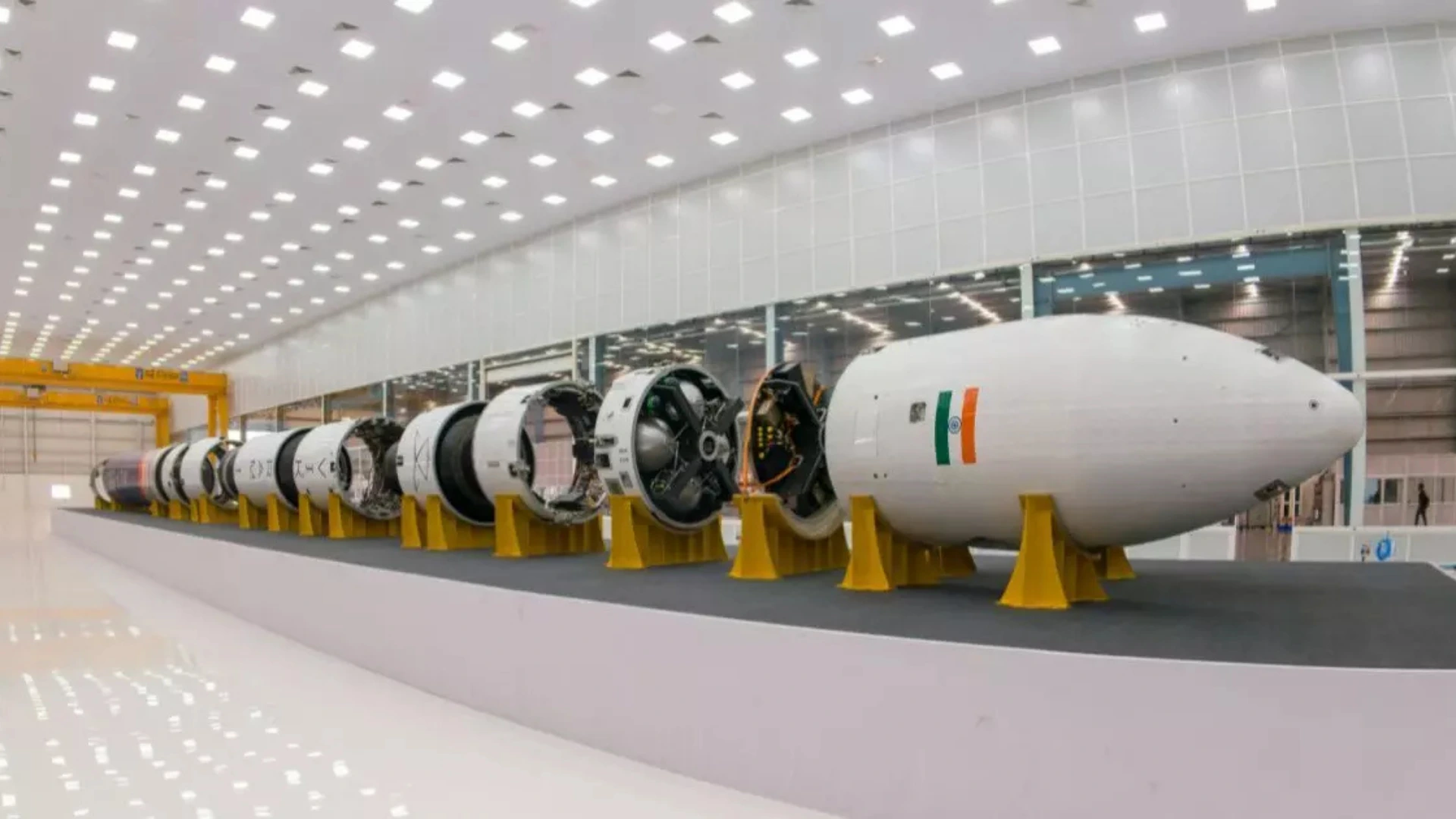
Skyroot Aerospace, the frontrunner: Founded in 2018 by former ISRO engineers, Skyroot launched Vikram-S, India’s first private rocket, on a suborbital hop in November 2022. It became India’s first spacetech unicorn in May 2026 at a 1.1 billion dollar valuation, backed by GIC and Sherpalo Ventures. Its Vikram-1, a 23-metre rocket that can carry up to 350 kilograms to low-Earth orbit with over 90% domestic components, was dispatched to the Sriharikota spaceport and is targeted to become India’s first private orbital launch. Skyroot markets it as a space taxi, dedicated, scheduled launches for small-satellite clients rather than shared rides.
Agnikul Cosmos, the close challenger: The Chennai startup flew its Agnibaan sub-orbital demonstrator from India’s first private launchpad in 2024, powered by a single-piece 3D-printed engine, a genuine engineering feat. Its first orbital attempt, Flight 02, is targeted for 2026, and it plans to attempt first-stage recovery, aiming at reusability. Agnikul is slightly behind Skyroot in launch readiness but pushing a technically ambitious approach.
The honest status: as of mid-2026, both have flown suborbital, neither has reached orbit, and Skyroot’s Vikram-1 is the furthest along. The first private Indian company to orbit will join a tiny global club, currently led by SpaceX and Rocket Lab, that no other country’s private sector has cracked at scale.
Already in space, the satellite and data startups
Here’s the nuance the who-gets-to-orbit framing can obscure. You don’t need your own rocket to be in orbit. Satellite startups build spacecraft and fly them on whatever rocket is available, ISRO’s, SpaceX’s or others, so several Indian companies already have hardware operating in space.
Pixxel, eyes in orbit: Backed by Alphabet, Pixxel operates the Firefly hyperspectral satellite constellation, all six satellites launched and operating in orbit as of 2025, capturing high-detail spectral imagery for agriculture, mining, climate and defence, paired with its Aurora AI analytics platform. Pixxel is arguably India’s most successful space startup by the measure of actually having a working constellation up there.
Dhruva Space, the full-stack builder: Covered in EQMint’s deeptech piece, Dhruva builds satellites, ground stations and launch-integration services end to end, won a large government grant for a standardised satellite platform, and aims to industrialise satellite manufacturing at scale.
Digantara and GalaxEye, the specialists: Digantara builds space situational awareness, tracking orbital debris and objects, a service the crowded orbit increasingly needs. GalaxEye develops multi-sensor radar-and-optical imaging satellites. These are the specialised niches that make the ecosystem more than a rocket race.
The sector is a stack, not a single SpaceX
Take a clear position on the shape of it, because commentators keep asking who is India’s SpaceX. That framing misreads the ecosystem. India’s private space sector is developing as a specialised stack, not a race for one company to dominate everything.
| Layer | What they do | Example builders |
| Launch vehicles | Rockets to orbit | Skyroot, Agnikul |
| Satellites / imaging | Build and fly spacecraft | Pixxel, Dhruva, GalaxEye |
| Space awareness | Track debris and objects | Digantara |
| Propulsion / systems | Engines, subsystems | Bellatrix Aerospace |
| Data / analytics | Turn space data to insight | SatSure, Pixxel Aurora |
So the useful question isn’t who is India’s SpaceX, it’s who leads each layer. Skyroot leads launch, Pixxel leads imaging, Digantara leads space awareness. A diverse, specialised ecosystem may prove more resilient than betting everything on one champion.
The ISRO relationship, the quiet key
Be honest about the thing that makes this sector uniquely Indian. These startups are not fighting ISRO, they’re built on top of it. ISRO’s decades of expertise, facilities and talent are the foundation the private sector stands on.
Many founders are former ISRO engineers. Startups launch from and test at ISRO facilities, access its data, and benefit from IN-SPACe authorisation. ISRO’s repositioning from monopoly to enabler is the single biggest reason the sector exists. There’s even a strategic urgency to it: ISRO has faced recent launch setbacks, which makes independent private launch capacity more valuable to the country, not less. The private sector and ISRO are partners in expanding India’s total space capacity, not rivals dividing a fixed pie. That collaborative model is India’s distinct path, different from the more adversarial private-versus-agency dynamic elsewhere.
The honest caveats
Balance the excitement, because space is unforgiving and hype runs ahead of hardware. Real risks remain. Reaching orbit is genuinely hard, and a maiden orbital launch can fail, that’s normal in rocketry, and a failure wouldn’t mean the sector has failed. Timelines slip constantly in space, so any target date should be read as approximate. The economics are unproven, most of these startups are pre-revenue or early, and building a sustainable launch or satellite business is a different challenge from a successful test flight. And capital, though flowing, is tiny next to what global space leaders raised.
The honest bottom line. India’s private space sector is real, fast-growing and on the verge of a genuine milestone, its first private orbital launch, but it hasn’t crossed that line yet as of mid-2026. The right way to watch it is with excitement and precision: celebrate that Skyroot and Agnikul are within reach of orbit, recognise that Pixxel and others are already doing valuable work in space, and remember that the sector’s strength is a specialised stack built in partnership with ISRO, not a single SpaceX-in-waiting. The most interesting chapter, the first Indian private company to orbit, is being written right now.
FAQ
Has any Indian private company reached orbit?
Not yet as of mid-2026. Two startups have flown suborbital rockets, Skyroot’s Vikram-S in 2022 and Agnikul’s Agnibaan in 2024, but no private Indian company has placed a satellite in orbit. Skyroot’s Vikram-1 aims to be the first.
Which is India’s leading spacetech startup?
It depends on the layer. Skyroot Aerospace leads private launch and is India’s first spacetech unicorn. Pixxel leads satellite imaging with a working hyperspectral constellation in orbit. Dhruva Space, Agnikul, Digantara and others lead other niches.
What is Skyroot’s Vikram-1?
A 23-metre, three-stage rocket that can carry up to 350 kilograms to low-Earth orbit with over 90% domestic components. It is targeted to become the first privately built Indian rocket to reach orbit, marketed as a dedicated space taxi for small satellites.
How is the private space sector different from ISRO?
ISRO is the government space agency, repositioned since 2020 from sole operator to technical enabler. Private startups now build and fly their own rockets and satellites, using ISRO facilities and data, authorised by IN-SPACe. They are partners, not rivals.
Which Indian space startups already have satellites in orbit?
Pixxel operates its six-satellite Firefly hyperspectral constellation in orbit, launched on other rockets. Satellite startups do not need their own launch vehicle, they fly their spacecraft on available rockets from ISRO, SpaceX or others.
How big is India’s space economy?
Estimated at around 8.4 billion dollars, with a government target of 44 billion by 2033, aiming for an 8 to 10% share of the global space market. India had nearly 400 private space startups as of early 2026.
Who is India’s SpaceX?
No single company, and that framing misreads the sector. India’s private space ecosystem is a specialised stack, Skyroot in launch, Pixxel in imaging, Digantara in space awareness, rather than one dominant player. A diverse ecosystem may prove more resilient.
What is Agnikul Cosmos known for?
The Chennai startup flew a sub-orbital rocket in 2024 powered by a single-piece 3D-printed engine, and launched from India’s first private launchpad. Its first orbital attempt, Flight 02, is targeted for 2026, with plans to attempt first-stage recovery for reusability.
EQMint is not a SEBI registered investment adviser. This article is for informational purposes only and is not investment advice, and does not recommend any specific company or investment. Company names illustrate the sector, launch dates and technical details are based on public reporting and can change or slip, so verify current information before relying on it.
For more such information visit EQMint
Join our Whatsapp channel for timely updates: Whatsapp