
Author: Nishtha Mehrotra | EQMint
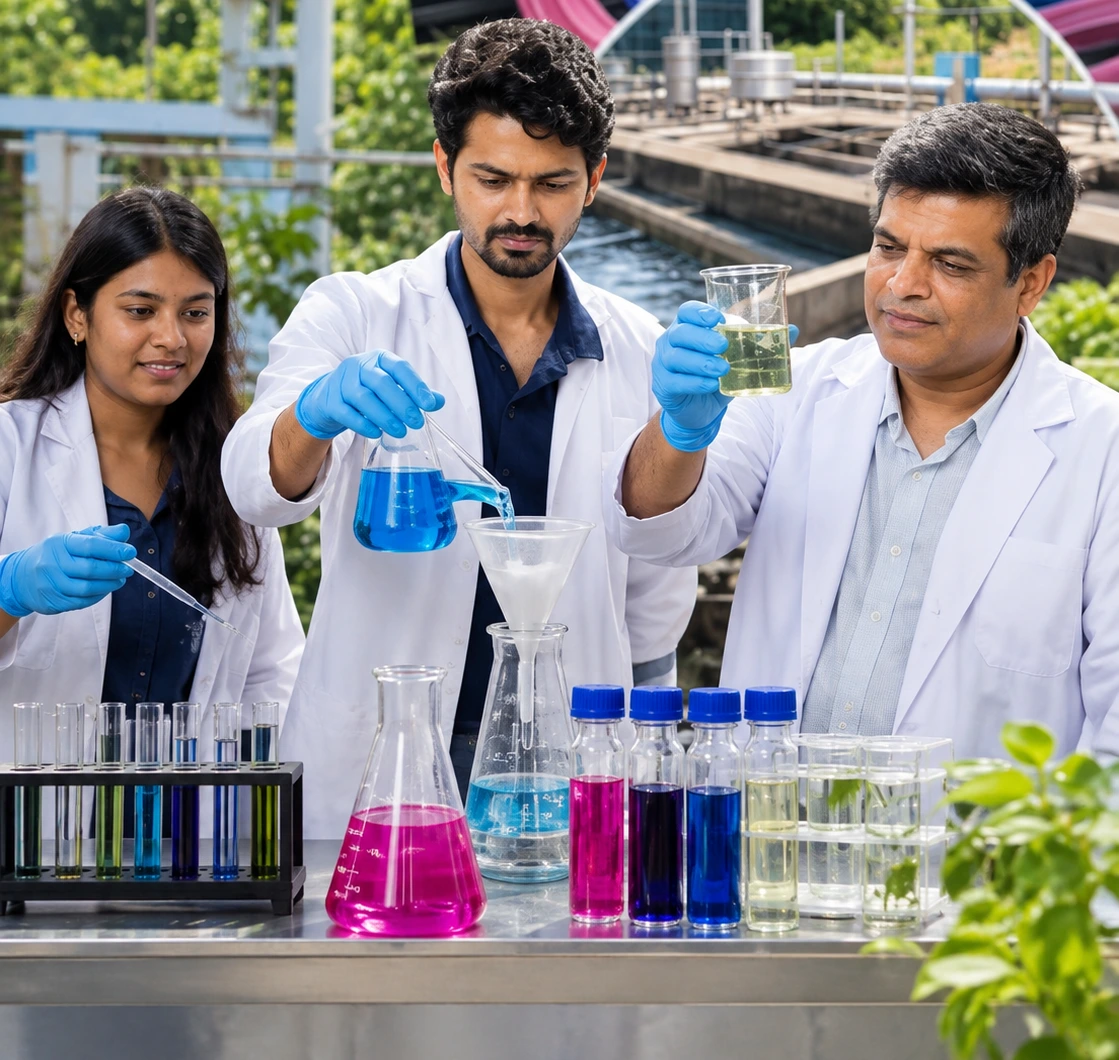
Researchers at IIT Guwahati have developed a biological method to treat textile wastewater containing toxic azo dyes using a novel bacterium, Brevundimonas sp. AJZ05.
The study found that the bacterial strain could degrade 98.50% of Direct Blue-6 (DB-6) under optimised laboratory conditions. DB-6 is a synthetic dye commonly used in textile processing and is known for its resistance to conventional breakdown.
The bacterium was isolated from a textile effluent discharge site and produces azoreductase, an enzyme that breaks the azo bond responsible for the dye’s colour and chemical stability.
Researchers also found that the compounds produced during the degradation process were non-toxic, suggesting that the treatment goes beyond simply removing colour from wastewater.
The biological approach could provide a more sustainable alternative to conventional chemical and physicochemical treatment methods, which can be energy-intensive and may generate secondary pollutants.
Disclaimer: This article is for information purposes only and is not investment advice.
For more such information, visit EQMint
Join our WhatsApp channel for timely updates: Whatsapp