

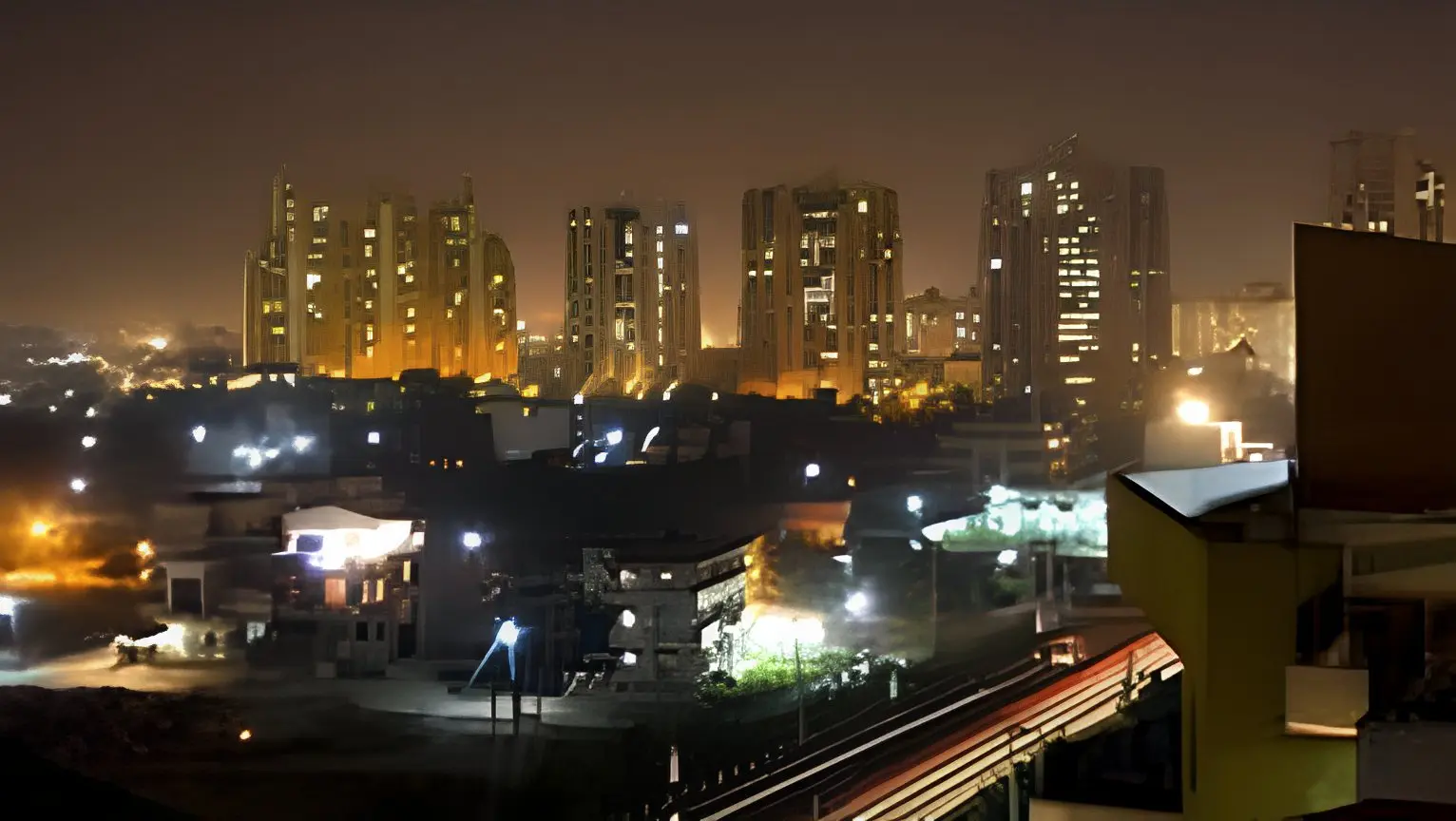
A recent social media post sparked a lively debate by claiming that Gurugram one of India’s fastest-growing urban hubs could become the next Singapore thanks to its corporate presence, wealth, and infrastructure. The assertion drew admiration from some, but strong pushback from many who pointed out glaring gaps in civic planning, urban governance, and everyday quality of life. This clash of opinions highlights larger questions about India’s urban ambitions and what it truly takes to match a global city-state like Singapore.
Author : Aashiya Jain | EQMint | Business News
The Viral Claim: “Gurgaon Has It All”
The debate ignited when Jasveer Singh, co-founder and CEO of KnotDating, posted on X (formerly Twitter) that Gurugram is uniquely positioned among Indian cities to evolve into a Singapore-like urban powerhouse. According to Singh, the city’s modern skyline, concentration of Fortune 500 headquarters, strong talent pool, and high real estate demand already mirror many features that made Singapore a global success story.
Singh described Gurugram as a relatively “young” city barely 20 years old as a major urban centre that has made remarkable strides by attracting international investment, corporate headquarters, and affluent residents. High-rise luxury towers and premium neighbourhoods are increasingly reshaping the city’s landscape, and in some parts of the real estate market, prices have surged significantly in recent years.
Reality Check: Singapore vs. Gurugram
The social media enthusiasm was met with equal parts admiration and skepticism online. Many residents and professionals who have lived and worked in both Gurugram and Singapore argued that the comparison oversimplifies major differences in urban planning, civic systems, and daily life.
Commenters pointed out that while Singapore is known globally for its cleanliness, strict civic discipline, efficient public transport, and meticulously maintained public spaces, Gurugram still struggles with issues that everyday residents face such as traffic congestion, potholes, poor stormwater drainage, and inconsistent waste management. Many argued these are not superficial cosmetic concerns but fundamental markers of how cities function at scale.
One social media voice emphasized that access to basic amenities like public parks remains limited in many neighbourhoods a contrast with Singapore’s extensive, high-quality urban green spaces. Others highlighted frequent air pollution, erratic civic services, and driving behaviour that they believe reflects a deeper gap in urban governance.
Real Estate Boom: Progress and Pitfalls
There is no question that Gurugram’s real estate market has grown rapidly some data suggest housing prices have climbed by up to 150% since 2019, outpacing many other Indian cities.
Major developments, including mixed-use corridors like the Dwarka Expressway and Southern Peripheral Road, have fueled demand for premium homes, while international luxury brands and high-end projects continue to gain traction. Overall investment including residential, commercial, and mixed-use developments has poured into the city, drawing both homebuyers and long-term investors.
Yet such growth also underscores the complexity of urban evolution: rising prices can be a double-edged sword. While they signal strong demand and wealth concentration, they also raise questions about affordability, equitable access, and long-term sustainability, particularly for middle-income and public-sector workers.
Singapore’s Success Story: More Than Tall Towers
Comparing Gurugram with Singapore inevitably leads to a deeper reflection on what being Singapore actually means. Singapore’s ascent from a port city with limited natural resources to a global economic hub rests on decades of strategic planning, governance discipline, integrated transport systems, environmental sustainability, and inclusive urban design.
Singapore consistently ranks among the top global cities on smart infrastructure, public safety, clean streets, reliable public transport, and quality of life indices a blend of factors that goes beyond luxury real estate and corporate presence. Meanwhile, Gurugram like many fast-growing Indian cities is still grappling with core challenges in civic management, public mobility, and environmental health that are deeply tied to everyday experiences of its residents.
A Debate Worth Having
The social media post may have been a bold assertion, but the conversation it sparked reflects a broader aspiration among millions of urban Indians: to build cities that offer world-class living standards, economic opportunities, and sustainable environments.
The real question is not whether Gurugram can become Singapore overnight but what specific steps, investments, governance reforms, and community partnerships would be necessary to transform its promise into reality.
As the city continues to grow and evolve, this debate could help prioritise issues that matter most to residents from better civic services to smarter planning and inclusive growth.
In other words, the aspiration may be real but the journey ahead requires more than skyscrapers and buzzworthy declarations.
For more such information : EQMint
Resource Link : HT