

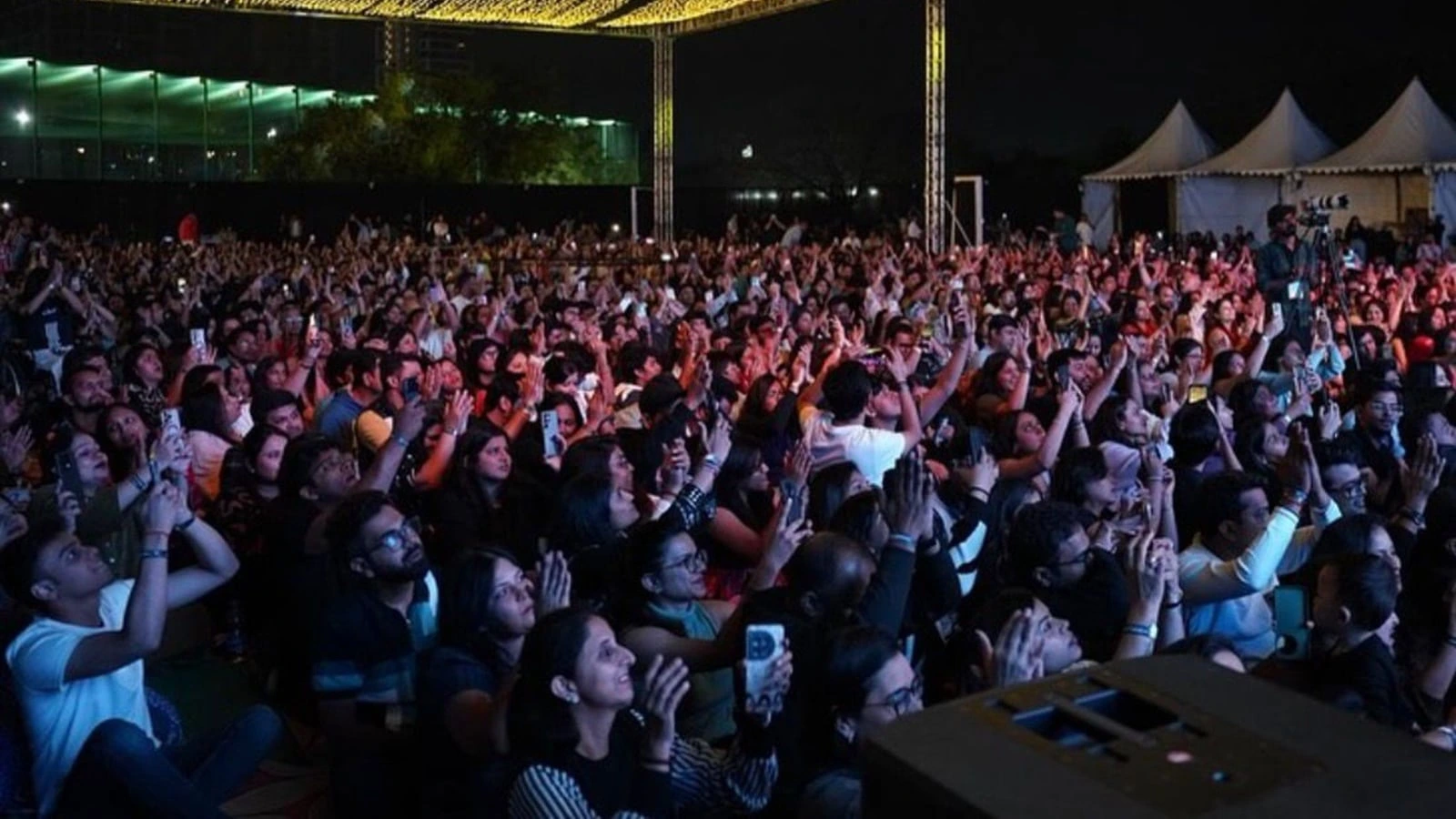
Across India’s cities, a surprising cultural shift is underway: young people are swapping late-night raves and boozy parties for nights filled with devotional song, rhythm, and shared energy. Known as bhajan clubbing, this emerging trend blends traditional bhajans (devotional songs) with the electrifying vibe of a concert or club but importantly, without alcohol or drug-induced highs. It’s a new form of spiritual expression that speaks directly to a generation seeking meaning, connection, and mindful living.
Author : Aashiya Jain | EQmint | Entertainment News
The Rise of a Spiritual Nightlife
Imagine stepping into a space that feels like a nightclub low, ambient lighting, immersive sound, and a crowd buzzing with anticipation but instead of EDM drops, you hear the rhythmic chants of “Shri Krishna Govind Hare Murari,” “Hare Rama Hare Krishna” and other age-old mantras set to contemporary beats and live bands. Young Indians are turning up at these events in droves, not for alcohol, but for a collective devotional experience that feels as energizing as it is uplifting.
This isn’t a fringe experiment. Ticketed bhajan clubbing nights are selling out quickly, much like mainstream concerts. Organisers have reported record turnouts, while social media buzz around keywords like “modern kirtan” and “sober rave India” has spiked dramatically a sign that this spiritual nightlife is resonating deeply with Gen Z and young millennials across urban centres.
What Bhajan Clubbing Actually Is
At its heart, bhajan clubbing keeps the devotional essence of bhajans and kirtans while reshaping the setting and style. Traditionally, these songs have been sung in temples or family gatherings, grounded in ritual and continuity. What young Indians are doing now is deterritorialising that spirituality moving it out of formal spaces and into cafés, banquet halls, and ticketed events where everyone participates, not just listens.
Participants might sit cross-legged on mats, clap hands, raise their voices in unison, or sway to the music. The emphasis is on shared experience and presence, rather than passive observation. In these gatherings, devotional music becomes a celebration a way to feel connected to something larger than oneself while enjoying the community around them.
Why Young People Are Drawn to It
A New Kind of Spiritual Fulfilment
Gen Z often gets stereotyped as chasing nightlife or digital validation. Yet, when they show up at bhajan clubbing events, they express something very different a genuine search for grounding, connection, and emotional resonance. After years of hyperconnected living, pandemic-induced isolation, and a culture of superficial highs, many young Indians are craving experiences that feel authentic and soul-nourishing.
Psychologists and cultural commentators point out that activities like collective chanting can have real emotional and neurological benefits. Rhythmic vocalisation and shared musical participation are known to reduce stress hormones and enhance feelings of belonging, often more effectively than isolated meditation or passive consumption of devotional content.
A Social Alternative to Traditional Nightlife
Bhajan clubbing is also a clean, sober night out. Instead of bars and booze, you find chai, buttermilk, and herbal refreshments. There are no hangovers, only memories of human connection and collective uplift. This resonates with young people who want community, joy, and meaning without sacrificing their mental well-being.
Blending Tradition with Modern Expression
One of the most striking things about this trend is how it honours tradition without being bound by it. Devotional songs once associated only with temples are now reimagined with fusion sounds, live instruments like guitar and tabla, and even electronic accents. Young organisers and musicians like the duo Backstage Siblings have played a vital role in popularising this sound. Viral performances of devotional staples set to modern rhythms have helped the movement grow from intimate circles to large urban gatherings.
Beyond the Dance Floor: A Cultural Shift
Bhajan clubbing is more than a musical fad it reflects larger changes in how spirituality is experienced today. For many young Indians, faith is no longer only about fixed rituals or inherited traditions. Instead, spirituality becomes participatory, flexible, and deeply personal. Young attendees decide the playlist, shape the environment, and bring a fresh energy that’s as much social as it is sacred.
At these gatherings, people from different backgrounds stand shoulder-to-shoulder. Some are there for the music, some for spiritual connection, and many for both. It’s a rare space where introspection meets collective joy and where ancient devotional practices find new life in contemporary culture.
What This Means for Indian Youth Culture
Bhajan clubbing tells us something telling about today’s youth: they are not rejecting spirituality, but redefining it. They want spaces that let them be present, intentional, and connected without abandoning music, community, or joy. They are creating a new cultural vocabulary that honours the past while speaking directly to their present needs.
In an era where younger generations often feel disconnected or overwhelmed, bhajan clubbing offers a sense of belonging and shared purpose. Whether this trend becomes a long-lasting part of India’s cultural landscape or evolves further, one thing is clear: young India is reshaping spirituality on its own terms and it’s doing so with rhythm, reverence, and collective beat.
For more such a information : EQmint
Resource Link : TH