
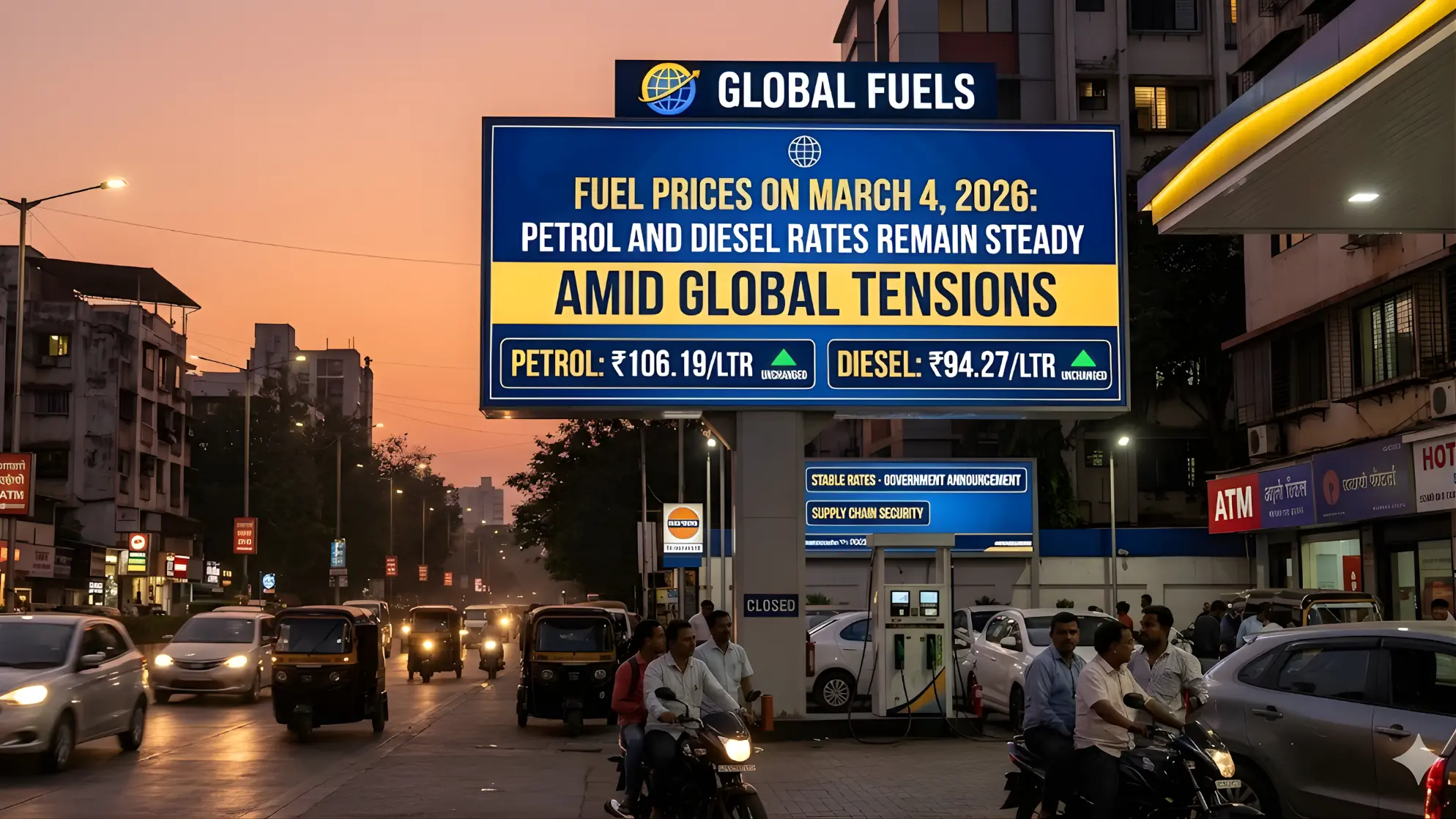
On March 4, 2026, petrol and diesel prices across India remained largely unchanged for the day, despite mounting concerns over rising global crude oil costs triggered by geopolitical tensions in the Middle East. Motorists in major cities such as Delhi, Mumbai, Kolkata and Chennai continued to pay high rates at the pump reflecting not only international market pressures but also domestic taxation and fuel pricing mechanisms. This article breaks down today’s new fuel prices, explores the reasons behind current trends, and explains what these costs mean for everyday Indians.
Author : Aashiya Jain | EQmint | Market News
Current Petrol Prices Across Major Cities
As of Wednesday morning, petrol prices in key Indian cities were recorded at the following levels:
- New Delhi: ₹94.77 per litre
- Mumbai: ₹103.54 per litre
- Kolkata: ₹105.41 per litre
- Bengaluru: ₹102.99 per litre
- Chennai: ₹100.80 per litre
- Hyderabad: ₹107.46 per litre one of the highest among major metros
- Jaipur: ₹104.69 per litre
- Lucknow: ₹94.69 per litre
- Ahmedabad: ₹94.49 per litre
- Noida: ₹94.88 per litre
(Prices sourced from multiple updated fuel price listings across India for March 4, 2026)
These figures demonstrate how petrol remains a costly commodity in urban India, with differences across states driven by factors like local taxes, value-added tax (VAT) variation, and logistics costs.
Diesel Prices Hold Their Ground
Unlike petrol, diesel prices showed minimal changes and remained more stable throughout the day. Current diesel rates in important cities include:
- New Delhi: ₹87.67 per litre
- Mumbai: ₹90.03 per litre
- Kolkata: ₹92.02 per litre
- Chennai: ₹92.39 per litre (slight variation)
- Bengaluru: ₹90.99 per litre
- Hyderabad: ₹95.70 per litre
- Chandigarh: ₹82.45 per litre
(Latest diesel data reflects today’s rates under the dynamic pricing mechanism)
These diesel prices underline a consistency that has been visible in India’s daily fuel revision mechanism, which often updates rates in response to global pricing movements and currency fluctuations.
Why Prices Stayed Flat Today
Despite significant unrest in the Middle East where conflict between countries like Israel, the United States and Iran is influencing global crude markets Indian petrol and diesel rates have remained stable for now. There are a few reasons for that:
- Fuel Pricing Policy: India’s pricing mechanism supports daily revisions, but refiners and government bodies sometimes absorb global price shocks temporarily to protect consumers. This helps avoid abrupt rises at the pump.
- Imported Crude Stocks: India imports about 88% of its crude oil, and fluctuations in international oil do have an eventual impact but there’s often a time lag before supply cost changes reflect in retail fuel prices.
- Tax Components: Central excise duty and VAT form a significant portion of retail fuel costs, often leading to stable pump prices even if global crude trends spike or dip.
Analysts suggest that while global crude has climbed due to geopolitical risk, firms, and regulators may be cautious about passing on full price hikes directly to consumers immediately.
How Global Tensions Affect Fuel Prices
Crude oil markets reacted strongly to Middle Eastern developments with Brent crude nearing the influential USD 80 per barrel mark. A level that historically pressures downstream fuel prices. Sustained conflict can disrupt shipping routes and oil supply chains tightening availability and making fuel more expensive internationally.
As India relies heavily on imports these global swings eventually make their way into domestic pricing. Yet for March 4 2026 consumers experienced no sudden hike in fuel costs. This does not mean prices won’t adjust in coming days. It simply reflects how pricing adjustments are measured cautiously amid economic and political uncertainties.
At the Pump: What Motorists Are Feeling
For the average driver in Delhi or Pune or Hyderabad today’s fuel rates are high by historical standards. Diesel still costs a bit less than petrol in most cities. Petrol above ₹100 per litre has become the new normal in many urban centers.
These prices affect not just travel costs. They also impact daily expenses across sectors like logistics transport services and delivery industries. All of these businesses factor fuel costs into their pricing and operations.
Final Thoughts
Today’s petrol and diesel prices remind us that fuel costs are shaped by a complex interplay of global oil markets, geopolitical tensions, domestic pricing policies and taxation structures. While India’s rates remained unchanged on March 4, 2026, ongoing international developments particularly in oil producing regions could shape fuel pricing in the coming weeks. For consumers, staying informed about daily updates offers the best insight into what lies ahead at the petrol pump.
For more such information visit EQMint
Disclaimer: This article is not an investment advice and is for educational purpose only