
Author: Aditya Pareek | EQMint | General News
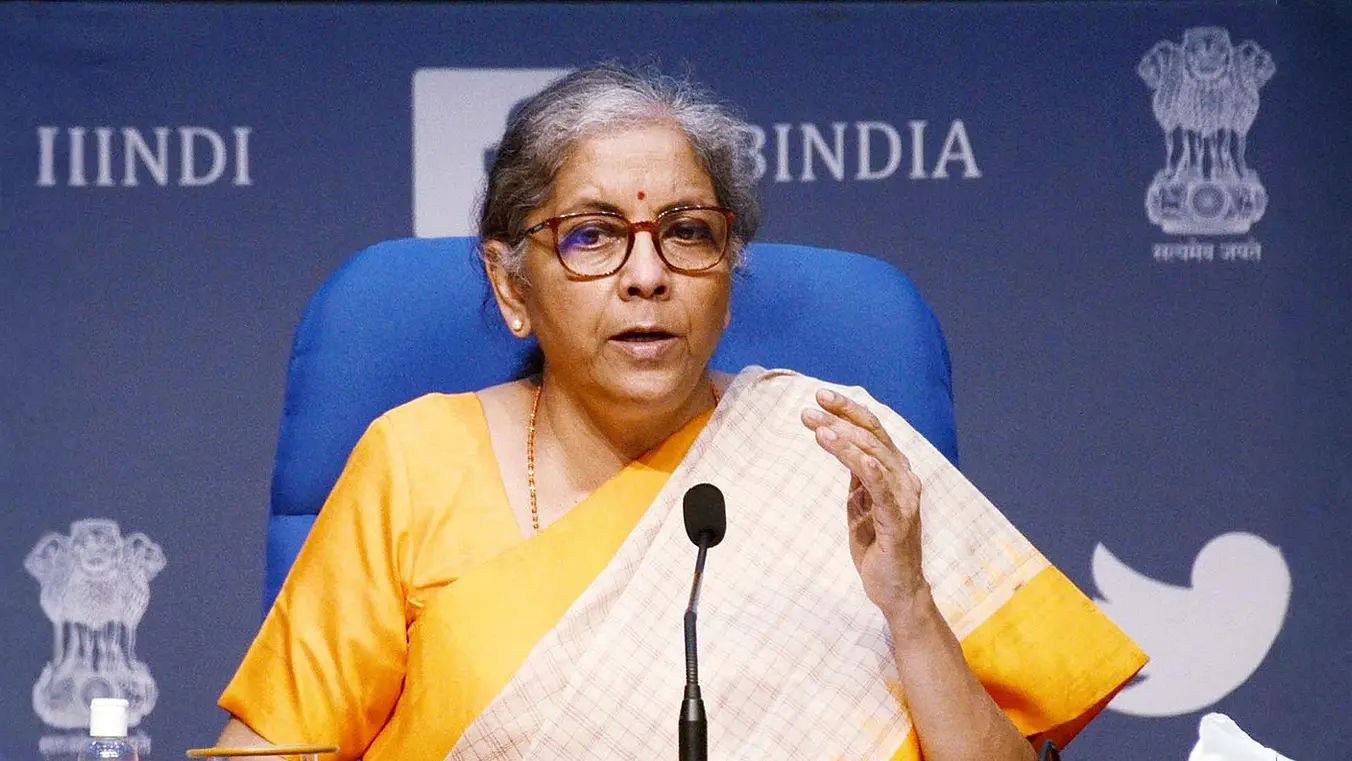
New Delhi, October 2025: Finance Minister Nirmala Sitharaman has affirmed that the benefits of the recent Goods and Services Tax (GST) rate reductions are successfully reaching end consumers across India. Speaking at a joint press conference alongside Commerce and Industry Minister Piyush Goyal and Electronics & IT Minister Ashwini Vaishnaw, Sitharaman said the government’s review of key consumer goods shows a clear and measurable impact from the tax cuts, with lower retail prices and increased consumer sentiment.
Sitharaman highlighted that the government has been closely monitoring 54 key items to ensure that companies and traders are passing on the rate reduction benefits to the public. These items span essential commodities, daily-use goods, and household products that directly affect consumer budgets.
“For every item I have monitored that affects the day-to-day life of citizens, the weighted average of the reduction is being passed on — and in some cases, even more,” Sitharaman said. “The impact of these new GST rate cuts is remarkable.”
Consumers Feel the Impact Across Sectors
Sitharaman noted that the tax cuts, which came into effect from September 22, the first day of Navratri, have coincided with a visible shift in market pricing and consumer spending patterns.
According to Sitharaman, reductions from 12 percent to 5 percent, and in some categories from 28 percent to 18 percent, have created a positive multiplier effect — easing household costs, improving demand, and boosting small business turnover.
While acknowledging that a few high-end categories such as Portland cement witnessed a slower-than-expected pass-through, the overall picture remains encouraging. “Wherever margins were tight, the adjustments are still under process, but across food items, electronics, and FMCG products, the change is evident,” she said.
Consumer feedback collected by the Finance Ministry also points to rising satisfaction, with many retailers reporting stronger festival-season sales compared to the previous year. Sitharaman credited state-level coordination and vigilance committees for helping track compliance and ensuring that traders and online platforms reflect updated prices quickly.
Piyush Goyal: ‘Biggest GST Reform Since Independence’
Describing the move as “historic,” Commerce Minister Piyush Goyal said the GST rate rationalization marks the “biggest reform in indirect taxation since Independence.”
“This step will go a long way in boosting demand, driving investments, and creating a multiplier impact on the economy,” Goyal said.
He emphasized that the new GST structure was designed after months of stakeholder consultations, targeting products that have the most direct impact on household budgets. “The goal was simple — make essentials more affordable, while also supporting industry competitiveness,” he added.
Goyal noted that e-commerce platforms and large retailers have swiftly implemented the revised tax rates, with automated pricing systems ensuring that consumers immediately benefit from the cuts. Several digital marketplaces have confirmed that the effective prices of popular consumer goods have dropped between 5–10 percent since late September.
“It’s heartening to see platforms like Amazon, Flipkart, and major offline chains passing on every rupee of tax benefit to buyers,” Goyal remarked. “This shows the maturity of India’s consumer ecosystem and the spirit of compliance.”
Record Festive Sales, Rising Consumer Confidence
The GST rate reductions came just as India entered its festive season — traditionally a period of high consumer activity. According to Electronics and IT Minister Ashwini Vaishnaw, the results have been striking.
“During Navratri, we recorded 20–25 percent higher sales in categories like smartphones, air conditioners, washing machines, and set-top boxes compared to the previous year,” he said.
Vaishnaw attributed this surge to a mix of lower GST rates, stable inflation, and improved disposable income. “Consumers are buying more, and manufacturers are seeing better volume growth — it’s a virtuous cycle in action,” he added.
He also emphasized the role of the reforms in curbing food inflation. Over the past four months, India has witnessed deflation in food prices, a trend that economists attribute partly to GST relief and supply chain stability. “When the cost of logistics and manufacturing falls due to lower indirect taxes, it ultimately reflects in food prices,” Vaishnaw said.
Boost for Manufacturing and Employment
Highlighting the broader economic benefits, Vaishnaw announced that India’s second semiconductor fabrication plant has officially begun production, signaling a new phase in the country’s electronics manufacturing push.
The expansion of electronics manufacturing, according to him, has created direct employment for nearly 25 lakh people, with indirect jobs spanning logistics, components, and assembly units. “This sector continues to grow at a double-digit rate, and GST reforms have made India even more competitive in global supply chains,” he said.
The alignment of GST rates with global benchmarks has also made India a more attractive destination for technology and manufacturing investors. “Lower taxes reduce compliance burdens and make exports more competitive,” Vaishnaw added.
Analysts Call It a Timely Economic Stimulus
Economists and policy experts have largely welcomed the GST reforms as a timely intervention aimed at stimulating consumption during a period of global uncertainty.
With crude prices stabilizing and inflation under control, India’s focus has shifted to reviving demand-led growth. The GST cuts, experts say, will help sustain momentum in consumer sectors like housing, electronics, automobiles, and FMCG through FY2026.
“By reducing taxes on everyday goods, the government has effectively injected liquidity back into the economy,” said an economist at a leading policy think tank. “It’s a direct, visible way of boosting disposable income without increasing fiscal strain.”
Future GST Reforms on the Horizon
When asked about future rate revisions, Sitharaman said the GST Council remains committed to simplification and rationalization. “Our intent is to make GST as transparent and predictable as possible,” she said. The Council continues to explore ways to streamline compliance for small businesses, especially in Tier-2 and Tier-3 cities.
Sitharaman also hinted that upcoming reforms could target further digitization and automation of filings, reducing the gap between tax input credits and output liabilities — an area that has seen steady improvement over the past two years.
Conclusion
The recent GST rate cuts have not only lowered prices but have also rekindled optimism among consumers and industry leaders alike. By balancing affordability with fiscal discipline, the government appears to have struck the right chord — making essential goods cheaper, supporting demand, and boosting India’s manufacturing ambitions.
As Finance Minister Nirmala Sitharaman summarized, “The real measure of reform is not just in announcements, but in outcomes. Today, those outcomes are visible in every household purchase and every checkout counter across India.”
For more such updates visit EQMint
Disclaimer: This article is based on information available from public sources. It has not been reported by EQMint journalists. EQMint has compiled and presented the content for informational purposes only and does not guarantee its accuracy or completeness. Readers are advised to verify details independently before relying on them.