
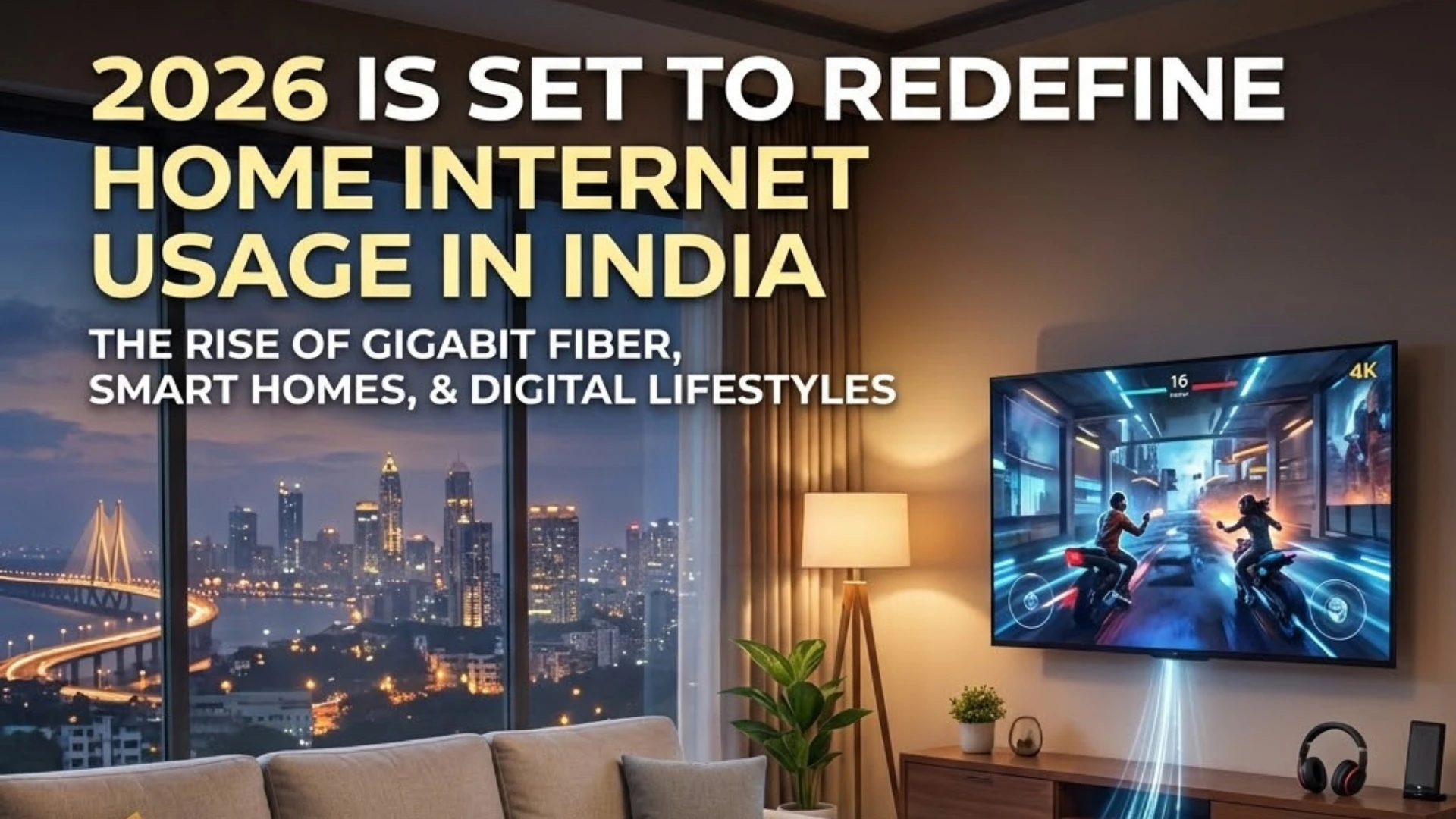
Indian homes are evolving into smart digital ecosystems powered by fiber broadband, enabling seamless connectivity across devices. However, balancing productivity, security, and digital wellness is becoming crucial in this hyper-connected era.
Author: Aditya Pareek | EQMint
Indian Home Internet of 2026 are unrecognizable from a decade ago. From being a simple living space, they have transformed into a bustling digital ecosystem. With fiber-powered connectivity reaching even tier-2 and tier-3 cities, households now juggle dozens of devices. The days of single-screen families are long gone.
Today, smartphones, laptops, smart TVs, and IoT gadgets like voice assistants and security cameras are staple devices in most homes. This shift promises convenience but brings real challenges: excessive screen time eroding family bonds, cyber threats lurking in every app, and productivity dips from unmanaged bandwidth. Yet, smart fiber technology offers a path forward, enabling households to balance connectivity with wellness.
Home Internet as Digital Ecosystems
The post-pandemic rise of hybrid work models and edtech platforms has paved way for a thriving smart home market in India, poised to grow at a CAGR of 30% to reach $19.31 billion by 2030. The convenience that follows interconnectedness is remarkable. Lights dim on voice command, door locks secure via apps, and thermostats adjust based on occupancy. Fiber broadband underpins it all. Speeds go up to 1 Gbps, preventing buffering during family movie nights or group video calls.
But harmony requires more than raw speed. It demands intelligent, lag-free execution. Routers with Smart Wi-Fi management prioritize traffic – work calls over gaming, learning apps over social media. This ensures that no one device hogs the network. For working professionals, this means uninterrupted meetings alongside fitness trackers syncing workout data. Families thrive when homes evolve from passive spaces to proactive digital hubs.
Screen Time and Digital Wellness
Excessive screen exposure is the silent disruptor in these ecosystems. Recent studies reveal that Indian kids spend over 230 minutes every day on devices, more than twice the WHO-recommended limit. Fatigue, sleep disruption, and diluted focus affect adults too, especially with remote work blurring office-home boundaries.
Advanced fiber networks bring balance to this mix. Dedicated apps integrated with home routers can track usage patterns, nudging users toward breaks. Features like scheduled pauses halt access during dinner or bedtime, fostering routines that prioritize real-world interactions. This cultivates mindful habits amongst users across all age groups.
Safe and Controlled Internet Access
The expansion of digital services throughout the country faces unique challenges in the form of rising phishing scams, inappropriate content, data breaches, and malware, affecting students, working professionals and home users alike.
However, controlled access via router-level filters blocks threats at the source, scanning traffic for malware before it reaches gadgets. Modern fiber networks also offer parental controls, which prove to be extremely useful for households with children. Age-based profiles restrict sites, apps, and download speeds per device. Parents can also use separate network configurations for homework hours, and guest network for visitors.
Working professionals benefit from such setups as well. They can allocate bandwidth to secure VPNs for client data, avoiding leaks. Multi-layered security, including guest networks, isolates IoT devices from personal ones, preventing hacks on cameras or bulbs.
Harnessing Wi-Fi for Productivity, Wellness, and Routines
Controlled, monitored Wi-Fi elevates daily life. As QoS (Quality of Service) prioritizes urgent tasks, productivity soars: video conferences get VIP bandwidth, downloads queue off-peak. Wellness integrates through habit-building automations, such as dimming screens after hitting usage limits, or suggesting stretches via connected wearables.
Family routines strengthen, too. Weekday “focus hours” boost efficiency in work and studies, while weekends unlock fun time. AI-driven insights recommend custom plans for various scenarios, like capping social media for students before exams.
In 2026, Indian homes are ready to embrace internet as a family ally, not adversary. By adopting safe, smart controls, modern fiber networks are crafting digital lives that uplift rather than overwhelm. The future is connected, and conscious.
Attributed to – Ravi Karthik, Chief Growth Officer, ACT Fibernet
For more such information visit EQMint