

Author: Aditya Pareek | EQMint | Business News
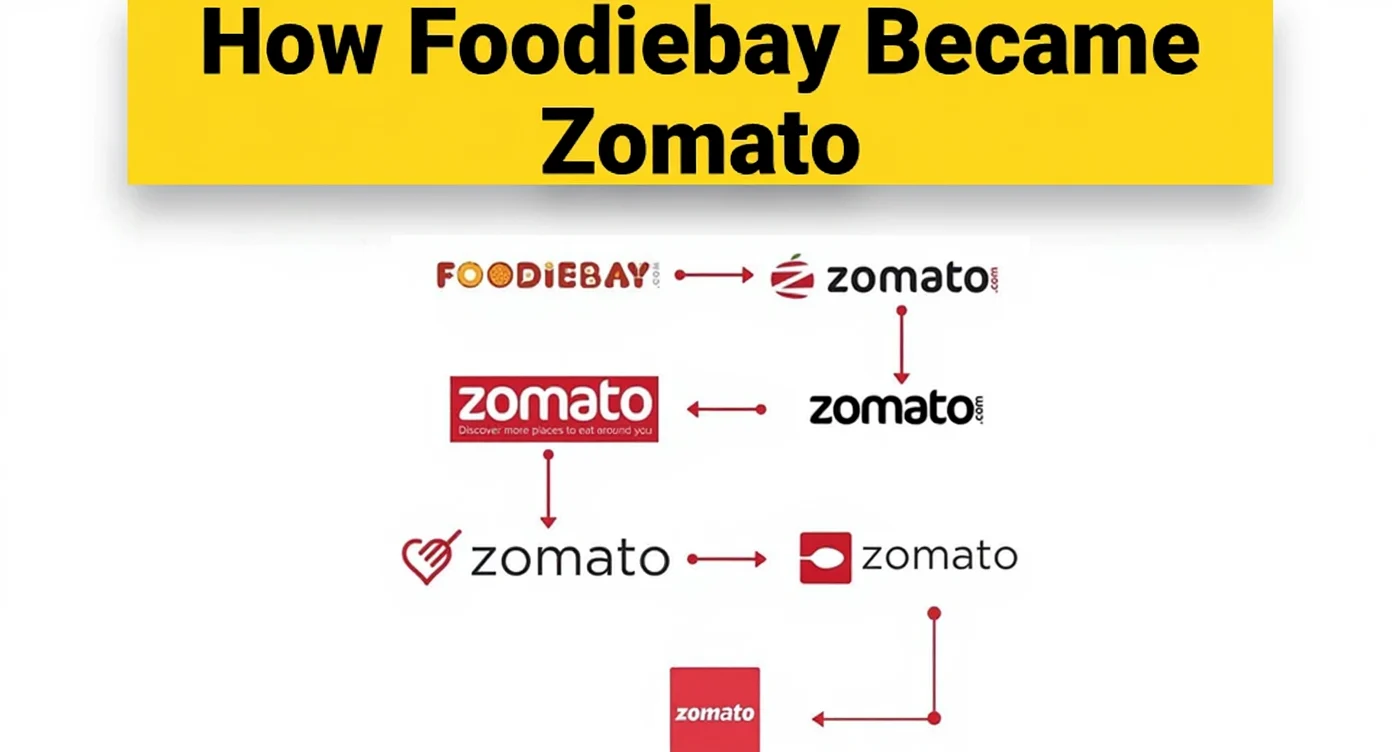
When Zomato is mentioned today, it instantly brings to mind food delivery riders zipping through Indian streets, bright red branding, and a digital ecosystem that has redefined how the country eats. But the company’s journey didn’t begin with this iconic identity. In fact, when Deepinder Goyal and Pankaj Chaddah launched the platform in 2008, it had a very different name — Foodiebay.
What led to the transformation from Foodiebay to Zomato is not just a story about branding. It’s a lesson in vision, timing, and the courage to evolve before the market forces you to.
The Early Days: Foodiebay Was Built for Listings, Not Scale
In 2008, the founders launched Foodiebay as a simple restaurant-listing platform. It solved a very real problem — office goers struggling to find menus in corporate cafeterias. The early product was functional, descriptive, and very literal. The name “Foodiebay” fit that world perfectly: a space where food lovers could dock, browse, and discover.
But as the platform grew across cities, the founders realised something deeper. The name was too tied to what they were — not what they wanted to become.
A Trademark Wake-Up Call
By 2010, Foodiebay’s popularity surged. With scale came attention — including from global companies. One concern stood out: the similarity between Foodiebay and eBay.
The resemblance wasn’t intentional, but it could create legal complexity in the future. A global brand like eBay held strong trademarks, and as Foodiebay expanded, this overlap posed a risk.
Deepinder Goyal quickly understood that the brand needed a new identity — one that was unmistakably original.
The Rebrand: Enter “Zomato”
The shift from Foodiebay to Zomato wasn’t just a way to avoid legal trouble. It was a strategic reboot of the company’s vision.
The founders wanted a name that:
- wasn’t descriptive or limiting
- wasn’t tied to a single product category
- could evolve into a global brand
- was short, snappy, and easy to remember
That’s how the new identity “Zomato” was born.
A playful twist on tomato — a globally understood food symbol — the new name was sharp, bold, and limitless in meaning. Importantly, it didn’t box them into listings or reviews.
It gave them room to explore everything food could touch.
A Name That Opened Doors to a Bigger Vision
The rebrand turned out to be one of the most significant decisions in the company’s history. With a fresh identity, Zomato began unlocking new opportunities:
 From restaurant listings to food delivery
The new name allowed them to shift from a directory to an active marketplace.
From India-focused to global aspirations
“Zomato” was culturally neutral — easy to pronounce in any country.
From a website to an ecosystem
The brand could now include dine-out products, payments, reservations, loyalty programs, cloud kitchens, and more.
From a functional brand to an emotional one
Zomato evolved from being a utility to a relatable personality — witty, conversational, and memorable.
A Lesson in Startup Evolution
The story of how Zomato got its name highlights a vital principle: startups must choose identities that can grow faster than the business itself.
Too often, early-stage founders select names based on what the company does today. But Zomato’s founders realised early on that they were building something bigger than listings. The name change became a signal — internally and externally — that they were preparing to lead India’s foodtech future.
The Identity That Built a Category
From Foodiebay to Zomato, the brand’s evolution is a reminder that naming isn’t just a branding exercise. It’s a strategic decision that shapes how customers perceive your ambition.
Today, Zomato is not just a company; it is a category-defining brand.
But that transformation began the day they let go of what they were — and chose a name that could carry what they wanted to become.
For more such updates visit EQMint.
Disclaimer: This article is based on information available from public sources. It has not been reported by EQMint journalists. EQMint has compiled and presented the content for informational purposes only and does not guarantee its accuracy or completeness. Readers are advised to verify details independently before relying on them.