
Author: Aditya Pareek | EQMint | Business News
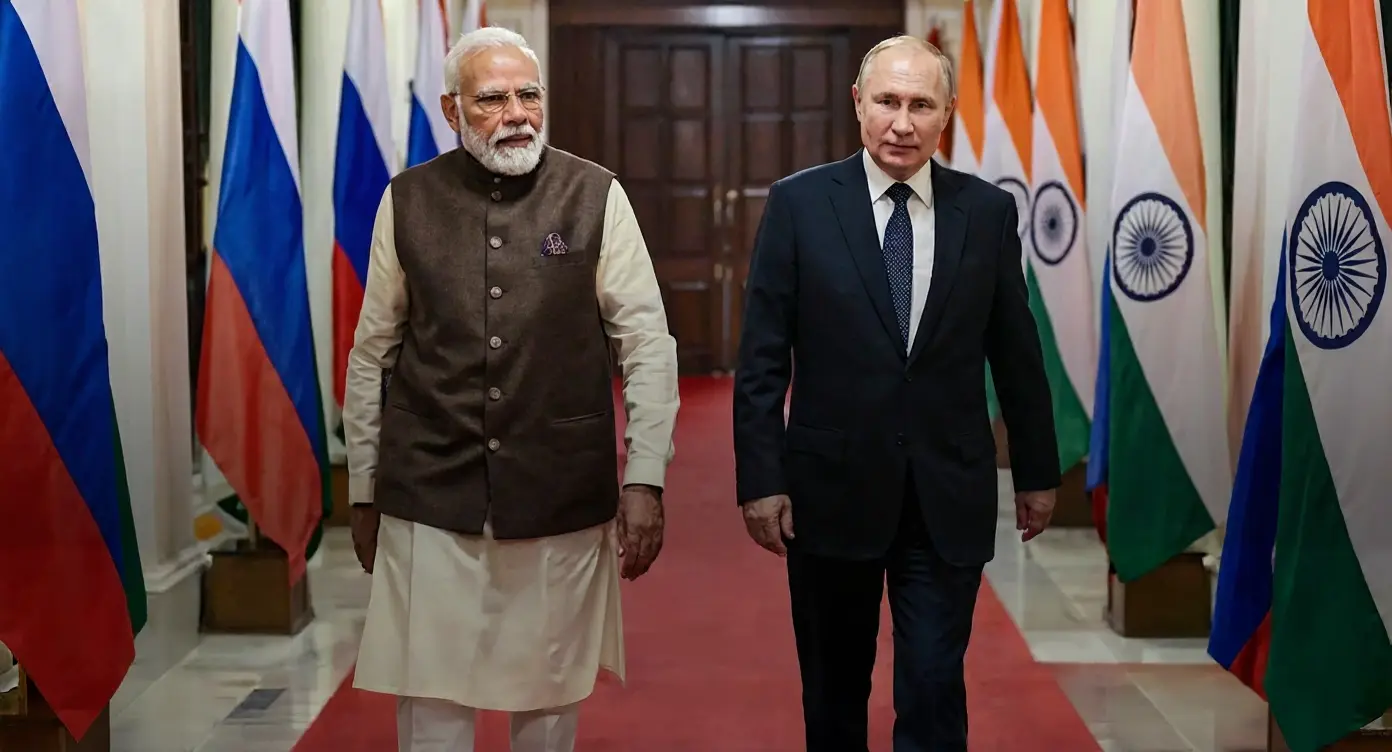
The economic relationship between India and Russia has entered a defining new chapter after the recent summit held in New Delhi. The meeting, which saw meaningful agreements and long-term commitments, moved beyond diplomacy and focused heavily on trade, energy cooperation, currency mechanisms, and joint industrial development. The results indicate that both countries are shifting towards a pragmatic, business-oriented partnership shaped by economic necessities and changing global dynamics.
A Trade Partnership on the Rise
The biggest headline from the summit was the ambitious goal of pushing bilateral trade to the USD 100 billion mark by 2030. Currently, trade stands much lower, giving both sides a substantial runway to expand commercial engagement. Unlike earlier years where hydrocarbons dominated the trade basket, the new roadmap supports diversification into agriculture, pharmaceuticals, machinery, nuclear energy technology, and digital services.
For India, this is not only about import security but also export expansion. Indian companies see Russia as a wider market for processed food, medical drugs, textiles, and electrical machinery. The long-term plan ensures that businesses on both sides will benefit from trade stability rather than fluctuating short-term deals.
Energy and Fertiliser Supplies: The Backbone of Cooperation
Energy continues to remain the most crucial pillar of the India–Russia economic relationship. Russia has reaffirmed its promise of uninterrupted crude oil supply to India. Considering the volatility of global energy prices and geopolitical uncertainties, this assurance gives Indian industries much-needed predictability.
The summit also brought a major breakthrough in fertiliser supply. Indian fertiliser companies and Russian chemical producers are working to jointly build urea production facilities in Russia. This single move can reduce India’s reliance on volatile global fertiliser markets, ensuring that farmers and agri-based industries receive steady and affordable supplies.
This cooperation reflects a shift from short-term purchase agreements to long-term strategic investments.
Expanding Beyond Commodities: Industrial and Financial Cooperation
A major transformation in the Indo-Russian dynamic is the push toward industrial collaboration. Russia has shown interest in joint manufacturing of defence components, aerospace technologies, and critical minerals processing. These sectors not only promise trade gains but technological capability development within India.
The financial relationship between the two countries is also evolving. A significant development is the increasing preference for settling trade in national currencies. Instead of relying on the US dollar, companies are exploring rupee–rouble settlement frameworks. This move reduces currency risk, strengthens financial cooperation, and offers a layer of protection against external sanctions.
Russian banks have shown rising interest in facilitating Indian goods exports and are improving settlement mechanisms for Indian exporters. This signals deeper financial integration.
Strategic Advantages for India
For India, the renewed economic cooperation carries clear advantages:
- Energy Security: Guaranteed access to oil and petroleum products supports India’s industrial, transport, and power sectors.
- Agricultural Strengthening: Fertiliser supply stability protects the food economy and reduces dependency on volatile global suppliers.
- Export Expansion: New sectors such as medicine, machinery, and processed foods now gain wider Russian market access.
- Technological Collaboration: Joint industrial projects reduce India’s technological dependence on Western nations.
- Financial Autonomy: Rupee–rouble mechanisms reduce vulnerability to currency-related shocks.
This arrangement positions the relationship beyond mere commodity trade and turns it into a long-term economic strategy.
Challenges in Implementation
However, while the vision is promising, both nations face a set of challenges:
- Managing Trade Imbalance: India imports much more from Russia than it exports, requiring structural measures to boost Indian exports.
- Currency Volatility: If the rupee or rouble fluctuates significantly, settlement agreements may face operational hurdles.
- External Pressure: Western nations closely monitor India–Russia ties, especially energy trade, which may create diplomatic complexities.
- Execution Delays: Industrial ventures, logistics corridors, and joint projects require long-term investments and administrative clarity.
These challenges do not diminish the potential, but they will determine how fast agreements translate into real business outcomes.
Long-Term Outlook: A Pragmatic Economic Axis
The latest Indo-Russian developments are defined by practicality rather than sentiment. Both nations are responding to global economic shifts. Russia seeks reliable markets for energy and industrial goods, while India seeks secure supply chains, export diversity, and technology partnerships.
If the roadmap is executed effectively, this partnership could become a cornerstone of India’s economic future. India would gain expanded export markets, stable energy supplies, and enhanced domestic industrial capacity. Russia, in turn, will find a stable Asian trade partner capable of absorbing goods and providing skilled workforce support.
Conclusion
India–Russia economic cooperation has entered a strategic, business-driven, and financially innovative stage. What began decades ago as a geopolitical friendship has evolved into a well-structured economic alliance built on energy, industry, finance, and trade diversification. For both countries, the focus is now on execution. If the newly signed commitments are fulfilled, the emerging Indo-Russian economic corridor could reshape trade flows and industrial development for years to come.
For more such information visit EQMint.
Disclaimer: This article is based on information available from public sources. It has not been reported by EQMint journalists. EQMint has compiled and presented the content for informational purposes only and does not guarantee its accuracy or completeness. Readers are advised to verify details independently before relying on them.