

India’s long-awaited trade agreement with the United States is being hailed by the government as a landmark pact that protects sensitive sectors like agriculture and dairy while opening doors for exporters, MSMEs, and labour intensive industries. Commerce Minister Piyush Goyal, speaking in Parliament, stressed that the deal strengthens India’s global standing and supports broader economic goals even as political debate intensifies. This agreement marks a significant milestone in the India Us trade relationship.
Author : Aashiya Jain | EQmint | Business News,Political News
A New Chapter in India US Economic Ties
The India Us trade deal is expected to create numerous opportunities for growth and cooperation between the two nations.
In a packed Lok Sabha session earlier this week, Union Commerce and Industry Minister Piyush Goyal addressed the nation on the much-anticipated India United States trade agreement that has dominated headlines and political discourse alike. After nearly a year of negotiations, the government asserts that the pact represents a balanced, future focused arrangement one that protects India’s core interests while expanding avenues for growth and cooperation with one of its key global partners.
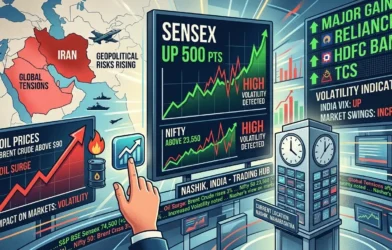
The minister’s address came at a moment when markets had already responded positively to earlier announcements about tariff reductions and a strengthening rupee, underscoring the broader economic significance of the deal beyond diplomatic platitudes.
Protecting Indian Agriculture and Dairy: A Core Priority
One of the centrepieces of Goyal’s statement was his assurance that sensitive sectors such as agriculture and dairy have been effectively safeguarded in the trade negotiations. This message was clearly directed at critics who had expressed concerns that tariff reductions could expose Indian farmers to a flood of foreign produce, potentially undercutting domestic prices and livelihoods.
“Our priority has been to safeguard farmers and vulnerable sectors even as we expand trade,” the minister told MPs, stressing that agriculture and dairy protections were non-negotiable lines throughout discussions.
This stance reflects India’s broader trade philosophy: support increased global integration without compromising the interests of sectors that support millions of livelihoods across the country. By securing favourable terms compared to competing economies, India hopes to maintain resilience in its rural economy while reaping the benefits of expanded access to the vast U.S. market.
What the Deal Means for Indian Businesses and Workers
While protecting farm and dairy interests, the trade agreement also aims to boost opportunities for manufacturers, small businesses, and workers across a range of sectors. Goyal highlighted that the pact will enhance market access for Indian goods from textiles and leather products to engineering goods, gems and jewellery, and technology services.
This expansion is significant for India’s Micro, Small, and Medium Enterprises (MSMEs), which often struggle with export barriers and market penetration despite being cornerstones of domestic employment and innovation. The reduced trade barriers are expected to help these businesses integrate more deeply into global value chains, creating jobs and sustaining growth in traditionally overlooked regions.
The government has tied this pact into its larger economic vision, aligning it with initiatives like “Make in India” and Atmanirbhar Bharat, emphasising self-reliance while still engaging with global markets.
Political Reactions and Public Debate
Despite strong government support, the deal has sparked intense political debate. Opposition parties have questioned aspects of the agreement, particularly regarding transparency and the potential longer term impact on agricultural sectors, with some regional leaders warning of risks to farm employment and rural livelihoods.
Mr. Goyal responded to critics by asserting that farmers’ interests remain protected and urging political rivals to engage constructively rather than disrupt parliamentary proceedings. His comments underscored the government’s contention that the agreement is in India’s national interest and will benefit a cross section of citizens from farmers and workers to small business owners and youth.
Looking Ahead: Implementation and Impact
At the time of Goyal’s address, many technical details of the trade deal were still being formalised, with both countries expected to issue a joint statement outlining the specifics in the coming days.
Analysts and industry leaders are watching closely, particularly how tariff changes and market access will influence export performance and domestic supply chains. With India already eyeing expanded energy cooperation and strategic diversification of suppliers, the pact could also have broader implications for national security and economic strategy.
Conclusion: Balancing Protection and Progress
The India US trade agreement marks a watershed moment in bilateral relations one in which economic ambition must be balanced with the protection of domestic interests. Through careful negotiation, the Indian government maintains it has struck that balance: shielding agriculture and dairy while unlocking new opportunities for growth and global integration.
As the details continue to unfold, the success of this deal will ultimately lie in its implementation and its tangible impact on Indian businesses, workers, and communities nationwide especially in sectors that have long felt vulnerable in global trade discussions.
For more such information: EQmint
Resource Link : TOI