

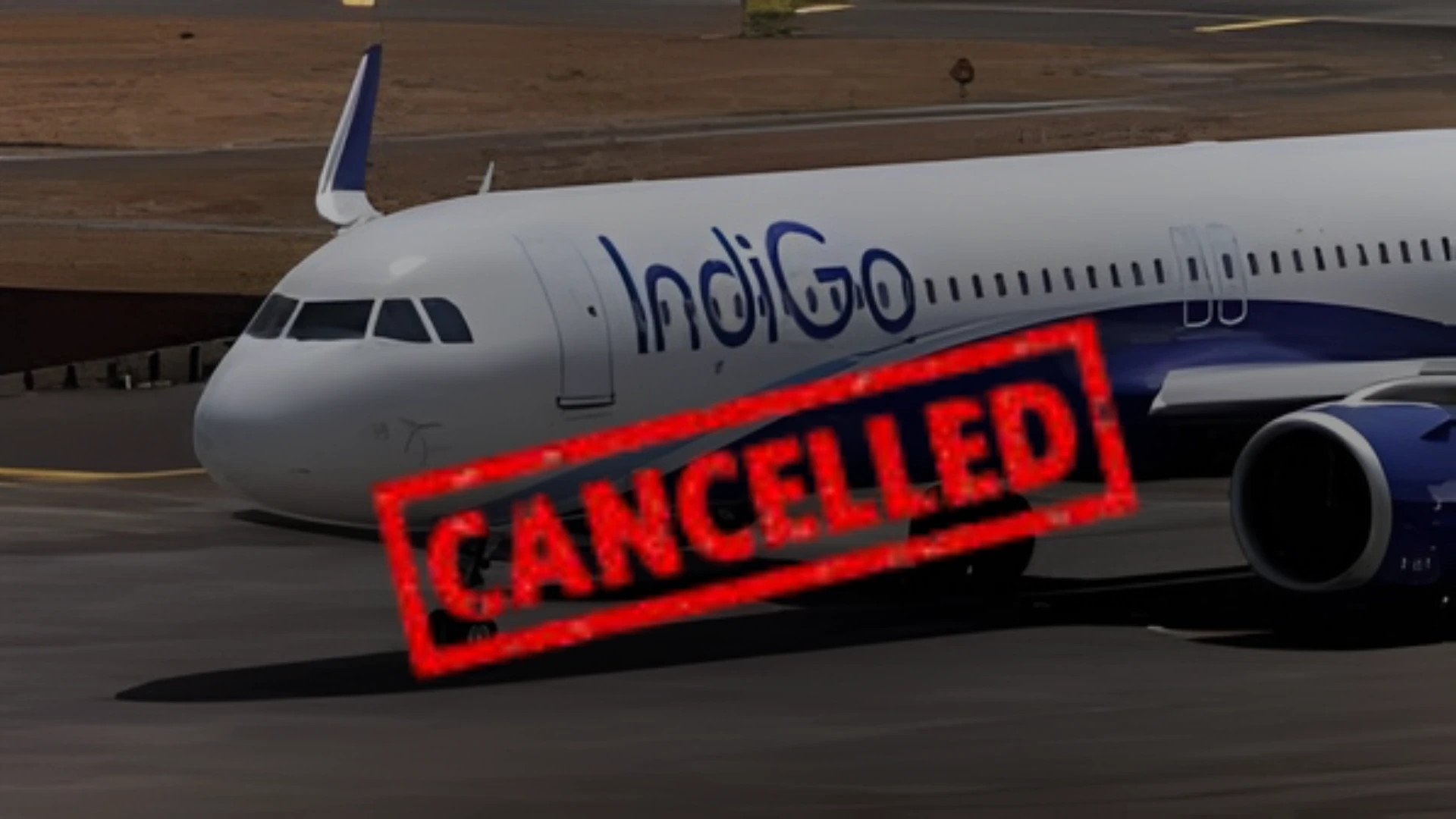
IndiGo has cancelled more than 500 flights due to airspace restrictions in the Middle East. The airline is adjusting schedules and monitoring potential revenue impact.
Author: Aditya Pareek | EQMint
India’s largest airline, InterGlobe Aviation Ltd, which operates the IndiGo brand, is facing operational challenges after escalating geopolitical tensions led to Middle East airspace restrictions flights disruptions. The airline has cancelled more than 500 flights between February 28 and March 3, 2026, affecting several international and regional routes.
The sudden disruption has raised concerns about the IndiGo revenue impact flights, prompting the company to review operational adjustments while closely monitoring the evolving geopolitical situation.
Flight Cancellations Triggered by Airspace Restrictions
The wave of IndiGo flight cancellations comes after several countries restricted or closed portions of their airspace amid rising military tensions in the Middle East.
These restrictions have affected routes that typically pass through key Middle Eastern aviation corridors, which serve as major transit zones for flights between India, Europe, and parts of Africa.
Because airlines rely heavily on these routes to minimize travel time and fuel consumption, sudden closures force carriers to either:
- Cancel flights entirely
- Reroute aircraft through longer paths
- Adjust schedules and aircraft deployment
For IndiGo, the disruption has translated into over 500 flight cancellations within just a few days.
International Routes Most Affected
The impact of the Middle East airspace restrictions flights has primarily been felt on international routes connecting India with key global destinations.
Flights affected include routes to and from:
- Gulf countries
- West Asia
- Select European destinations
- Some long-haul international connections
The IndiGo international routes impact is significant because the airline has been aggressively expanding its international network over the past few years.
Middle Eastern hubs are especially important for Indian airlines because they serve as connecting points for travelers heading to Europe and other long-distance destinations.
Operational Teams Working to Manage Disruptions
According to internal updates, IndiGo’s operational teams are actively working to manage the situation.
The airline has taken several measures to address the IndiGo flight cancellations, including:
- Adjusting flight schedules
- Reallocating aircraft to unaffected routes
- Monitoring airspace developments in real time
- Coordinating passenger rebooking and refunds
Operational teams are also preparing contingency plans in case the airspace restrictions remain in place longer than expected.
Repatriation Planning Underway
One of the key priorities for the airline is assisting passengers who may be stranded due to the cancellations.
The company has initiated plans for:
- Repatriation flights where feasible
- Passenger rebooking on alternative routes
- Coordination with aviation authorities
These measures are aimed at minimizing disruption for travelers affected by the IndiGo international routes impact.
Airlines often implement such emergency operational adjustments during geopolitical crises that affect aviation corridors.
Revenue Impact Under Review
While operational adjustments are underway, the company has also begun evaluating the potential IndiGo revenue impact flights caused by the disruptions.
Flight cancellations can affect airline revenue through several channels:
1. Lost Ticket Revenue
Cancelled flights mean lost passenger revenue for affected routes.
2. Refunds and Compensation
Airlines may need to process refunds or offer alternate travel arrangements.
3. Higher Operating Costs
Rerouting flights through longer paths increases fuel and crew costs.
4. Network Disruptions
Schedule changes can affect aircraft utilization and operational efficiency.
Because the IndiGo flight cancellations occurred over multiple days, analysts are closely watching how the disruption could influence the airline’s short-term financial performance.
Impact on InterGlobe Aviation Stock
The situation has also reflected in market sentiment surrounding InterGlobe Aviation news.
The company’s stock recently traded at ₹4,303.70, down 4.81%, as investors reacted to the uncertainty caused by the airspace disruptions.
Investors often react strongly to aviation sector disruptions because airline profitability depends heavily on:
- High aircraft utilization
- Stable route networks
- Predictable fuel and operational costs
Any geopolitical development affecting flight routes can quickly influence airline valuations.
Aviation Sector Vulnerable to Geopolitical Events
The current situation highlights the aviation sector’s vulnerability to geopolitical tensions.
Airlines frequently face operational challenges due to:
- Airspace closures
- Military conflicts
- Weather disruptions
- Regulatory restrictions
The Middle East airspace restrictions flights situation is a reminder that global aviation networks depend on stable geopolitical conditions.
Because the Middle East lies at the crossroads of global flight routes, disruptions in this region can affect airlines worldwide.
IndiGo’s Growing International Strategy
The disruption comes at a time when IndiGo has been expanding its international footprint.
Over the past few years, the airline has launched new routes connecting India to:
- Europe
- Central Asia
- Southeast Asia
- Middle Eastern destinations
As a result, the IndiGo international routes impact from the current airspace restrictions has gained greater attention from analysts and investors.
However, IndiGo’s strong domestic network continues to provide stability during international disruptions.
Industry Outlook Amid Middle East Tensions
The aviation industry is closely monitoring developments in the Middle East.
Key factors that will determine future airline operations include:
- Duration of airspace restrictions
- Military developments in the region
- Government aviation advisories
- Airline rerouting capabilities
If tensions ease quickly, the IndiGo flight cancellations could remain a short-term operational issue.
However, prolonged restrictions may force airlines to redesign flight routes, increasing costs and travel times.
Conclusion
The cancellation of over 500 flights due to Middle East airspace restrictions represents a significant operational challenge for IndiGo. While the airline is actively adjusting schedules and planning passenger repatriation, the situation highlights the broader risks facing global aviation networks.
As InterGlobe Aviation news continues to evolve, investors and industry observers will be watching closely to see how long the disruptions last and what impact they may have on IndiGo revenue impact flights and international operations.
For now, the airline remains focused on maintaining operational stability while navigating one of the most complex aviation disruptions in recent months.
For more such information visit EQMint
Source link: BSE