
Author: Aditya Pareek | EQMint | Educational News
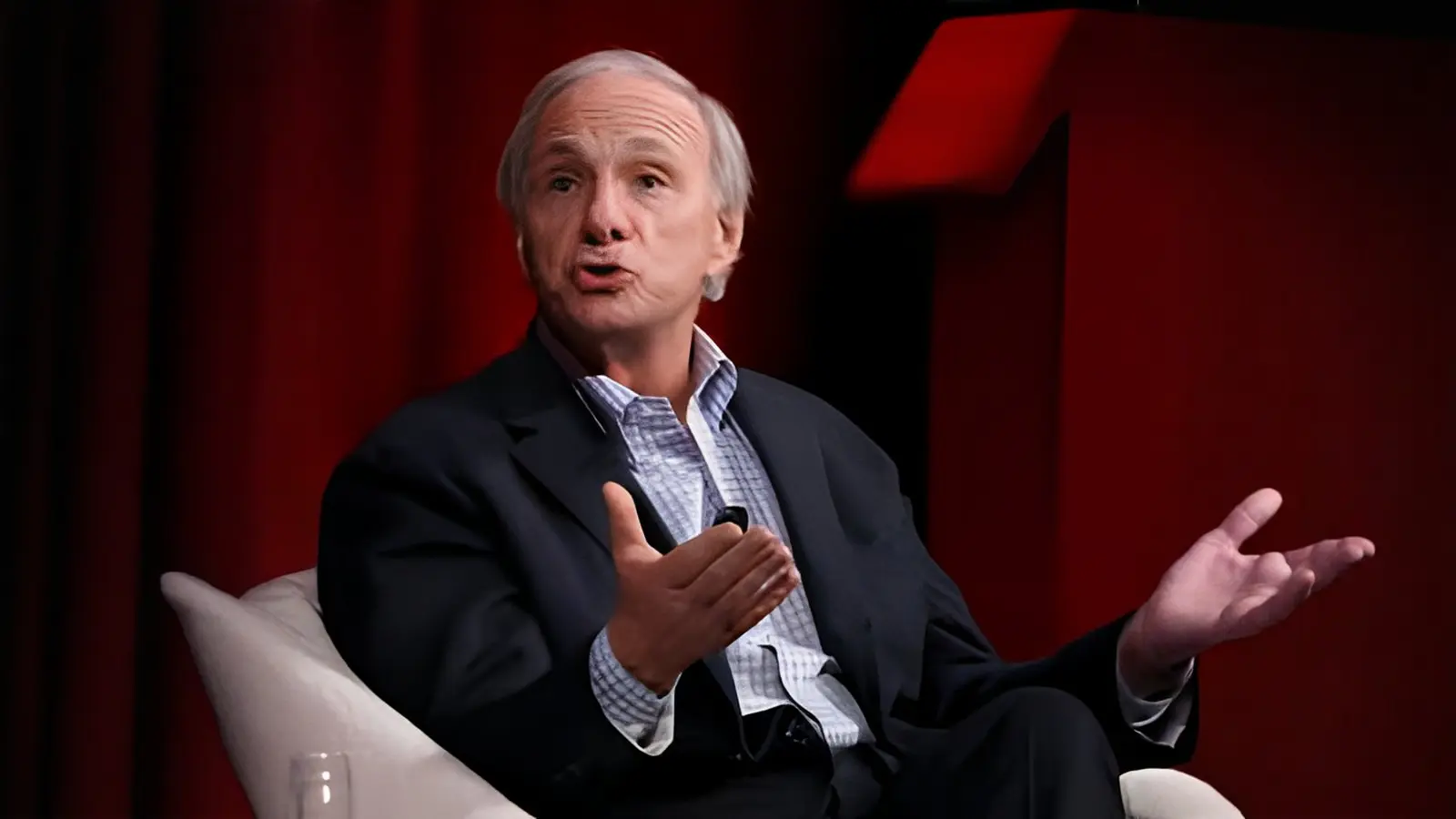
Billionaire hedge fund founder Ray Dalio, the founder of Bridgewater Associates, believes the US stock market is currently experiencing an artificial intelligence AI bubble. However, unlike market sceptics signalling a looming correction, Dalio has advised investors not to panic-sell their tech and AI holdings—at least for now.
In a recent interview with CNBC, Dalio acknowledged elevated valuations across leading AI-linked companies but warned that exiting the market purely because of bubble conditions could be premature.
“Don’t sell just because there is a bubble,” Dalio said. “But if you look at the correlations with the next 10 years’ returns, when you are in that territory, you get very low returns.”
Low Returns Ahead — But Not an Immediate Crash Risk
Dalio explained that historically, high-valuation environments tend to translate into lower investor returns over the next decade. However, he asserted that a bubble does not automatically imply an imminent collapse.
Standing by a data-driven macro outlook, the 76-year-old investor clarified that bubbles burst only when a strong external catalyst forces investors to liquidate assets.
A bubble, Dalio said, is:
- “An unsustained set of circumstances,”
- Characterised by “an unsustainable amount of buying,”
- Combined with “unsustainable valuations,”
- Followed by “something that pricks the bubble.”
According to him, the market has reached the first three stages—but the final trigger is yet to arrive.
What Could Prick the AI Bubble? Dalio Explains
Historically, market bubbles end when investors suddenly need cash, leading to large-scale selling.
“The need for cash is always that which pricks the bubble,” Dalio noted. “When you have wealth, you can’t spend wealth—you have to sell wealth to pay for what you need.”
Currently, Dalio observes no immediate catalyst—such as sharp monetary tightening or a liquidity crisis—that could force institutional investors to sell high-growth tech stocks.
With the US Federal Reserve not signalling aggressive rate hikes in the near term, Dalio believes pressure to withdraw capital from AI stocks is limited.
Why Investors Are Still Excited About AI bubble
Despite concerns of over-valuation, AI remains the strongest investment theme in US markets, fuelled by:
- Accelerating enterprise adoption of AI tools
- Demand for infrastructure powering large-scale AI models
- Rising cloud and data-center investments
- Anticipation of long-term AI-driven productivity gains
This market enthusiasm is echoed by JPMorgan Chase CEO Jamie Dimon, who compared today’s AI boom to the early days of the internet—a phase that ultimately birthed enduring tech giants like Google, YouTube and Meta.
What Dalio’s Warning Means for Investors
Dalio’s stance offers a nuanced middle path amid rising market anxiety:
| Popular Fear | Dalio’s View |
|---|---|
| AI bubble = major crash soon | Bubble ≠ immediate burst |
| Time to sell AI stocks | Not yet — no catalyst |
| High valuations mean big returns | High valuations often mean lower long-term returns |
| Tech is overhyped | Tech still has long runway |
Investors, he suggests, should remain cautious rather than pessimistic—monitoring risks without exiting purely out of fear.
Conclusion
Ray Dalio’s analysis challenges both extremes of current market sentiment. While the world’s largest hedge-fund founder acknowledges that the US stock market is in AI bubble territory, he also stresses that there are no signs yet of an imminent trigger that could burst it.
For now, his message to investors is clear: stay invested, stay alert, and prepare for a decade of potentially lower—but not catastrophic—returns. The long-term trajectory of AI bubble remains strong, but hyper-valuations leave little margin for error if macro-conditions shift.
For more such insights visit EQMint
Disclaimer: This article is based on information available from public sources. It has not been reported by EQMint journalists. EQMint has compiled and presented the content for informational purposes only and does not guarantee its accuracy or completeness. Readers are advised to verify details independently before relying on them.