
Author : Aashiya Jain | EQMint | Political News
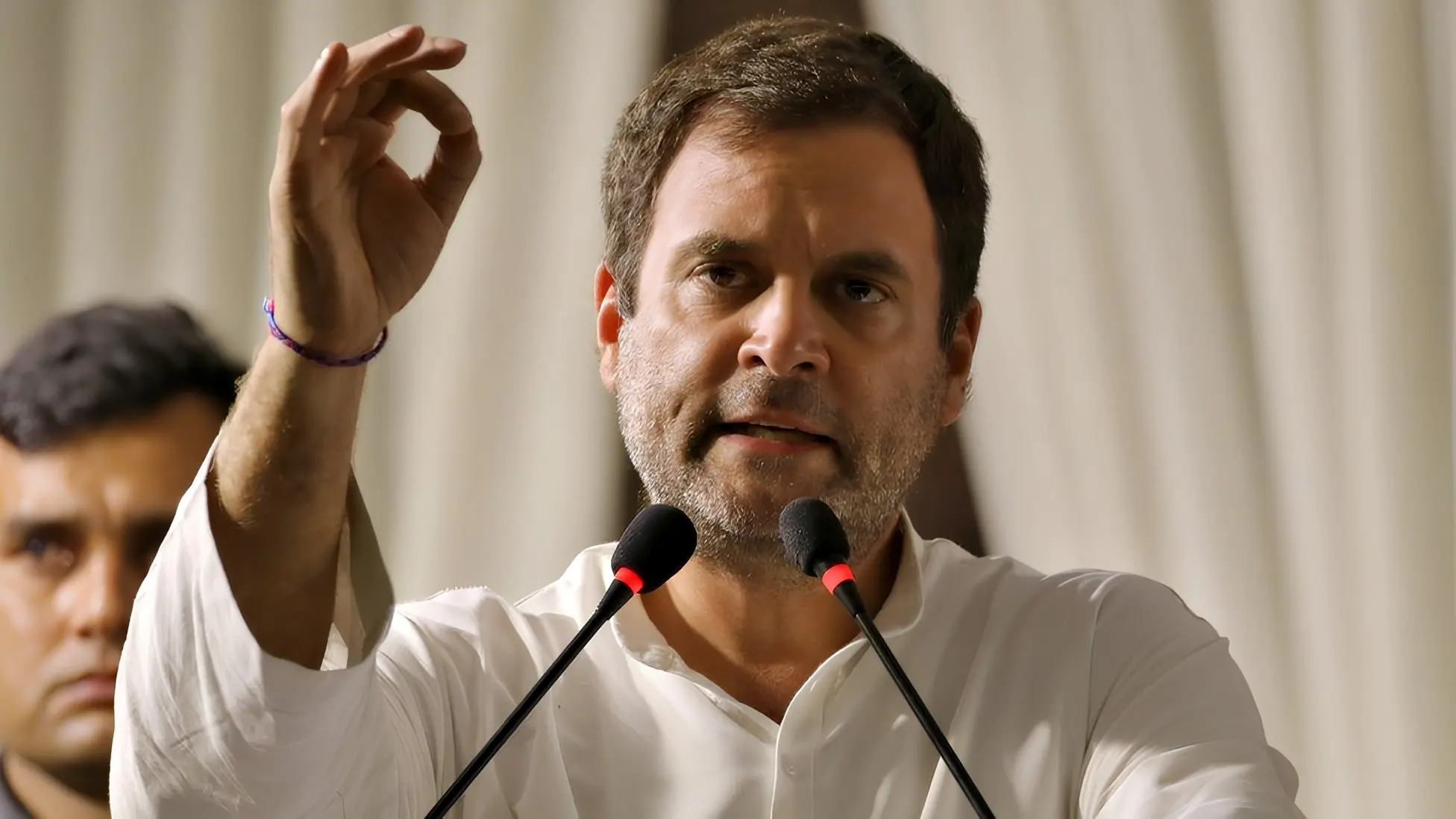
New Delhi: The political battle over the Mahatma Gandhi National Rural Employment Guarantee Act (MGNREGA) sharpened this week after Congress leader Rahul Gandhi accused Prime Minister Narendra Modi of having “single handedly destroyed” the landmark rural employment scheme and of mounting a “devastating attack on states” that depend on it.
In a strongly worded statement and social media post, Gandhi said that the Modi government’s policies had hollowed out MGNREGA once described as a lifeline for rural India through budgetary cuts, delayed wage payments, and administrative changes that made it harder for the poorest workers to access guaranteed work. The government, however, dismissed the allegations as politically motivated, insisting that the scheme continues to function and that reforms have improved transparency and efficiency.
A scheme born of crisis
MGNREGA, enacted in 2005, guarantees up to 100 days of wage employment each year to every rural household willing to do unskilled manual work. For millions of families, particularly landless laborers and marginal farmers, it has been a crucial buffer against drought, crop failure, and seasonal unemployment.
During the COVID-19 pandemic, demand for MGNREGA work surged as migrant workers returned to villages and informal jobs evaporated. At its peak, the programme supported record numbers of households, reinforcing its role as a social safety net.
It is against this backdrop that Gandhi’s critique lands. “A programme meant to protect the poorest has been weakened by design,” he alleged, pointing to what he described as shrinking allocations, unpaid dues, and a centralization of control that has squeezed state governments.
The crux of the allegations
Congress leaders argue that while headline budget figures for MGNREGA may appear stable, actual spending often falls short of demand. They cite repeated instances of funds being exhausted before the end of the financial year, forcing states to ration work or delay wages.
Delayed payments have been a particularly emotive issue. Worker unions and civil society groups have documented cases where laborers waited weeks or months for wages, undermining the scheme’s promise of timely support. Gandhi has framed these delays not as administrative lapses but as evidence of “deliberate neglect.”
Another point of contention is the increased reliance on technology-driven systems such as Aadhaar-based payments and real-time attendance. While intended to curb corruption, critics say these measures have excluded genuine workers due to biometric failures, lack of connectivity, or errors in records—problems that disproportionately affect the elderly, women, and marginalized communities.
Impact on the ground
In a small village in eastern Uttar Pradesh, 52-year-old Sunita Devi (the official name has been changed because of security reasons ) embodies the human cost behind the statistics. With her husband’s health failing and no land of her own, MGNREGA work repairing village ponds once helped her keep food on the table. “The work is there sometimes, but the money comes late,” she says quietly. “Shopkeepers don’t wait. They want cash.”
Stories like Sunita’s are frequently invoked by the opposition to argue that policy choices made in New Delhi ripple down to kitchens and classrooms in rural India.
States versus Centre
Gandhi’s charge of a “devastating attack on states” reflects a broader federal tension. States are responsible for implementing MGNREGA projects, but funding and key rules are set by the Centre. Several non BJP ruled states have complained that delayed fund releases and tighter controls leave them shouldering public anger without adequate resources.
Some chief ministers have argued that this undermines cooperative federalism, a principle the Modi government often emphasizes.
Government’s response
The Union government has firmly rejected claims that it is dismantling MGNREGA. Officials point out that the scheme remains demand driven and that allocations have been enhanced during times of crisis, including during the pandemic. They argue that technological reforms have reduced leakages and ensured that wages reach workers directly.
On payment delays, the government has said that many are linked to incomplete documentation or verification issues at the state level, not a lack of funds. It also maintains that stricter compliance is necessary to protect public money.
What Gandhi claimed
“We are going to resist it, we are going to fight it, and I am confident that the entire opposition will stand united against this action,” he said, referring to the Congress’ ‘MGNREGA Bachao Abhiyan’ that it plans to launch nationwide on January 5.
In a post in Hindi on X, Gandhi later said, “There is only one purpose behind the end of MGNREGA — to erase the right to employment for the poor, to steal economic and political power from the states, and to hand over that money to billionaire friends.”
The entire country will bear the cost of the whims of the ‘lone ranger’ Prime Minister. Jobs will end, and the rural economy will collapse. When villages weaken, the country will weaken,” he also said.
A political fault line
As India heads into another phase of electoral contestation, MGNREGA has once again become a potent symbol. For the Congress, it represents an unfinished promise of social justice. For the BJP, it is a programme that needs reform, not romanticization.
Between these positions lie millions of rural workers whose lives are shaped less by political rhetoric than by whether work is available tomorrow and whether wages arrive on time. Rahul Gandhi’s sharp attack has reignited debate, but the deeper question remains unresolved: how to strengthen, rather than politicize, one of India’s most ambitious social guarantees.
For more such information : EQMint
Resource Link : ET