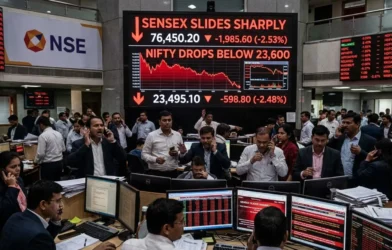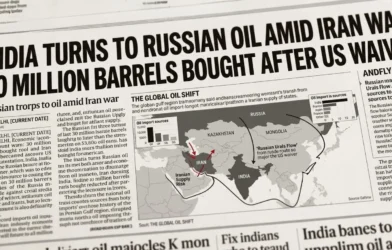

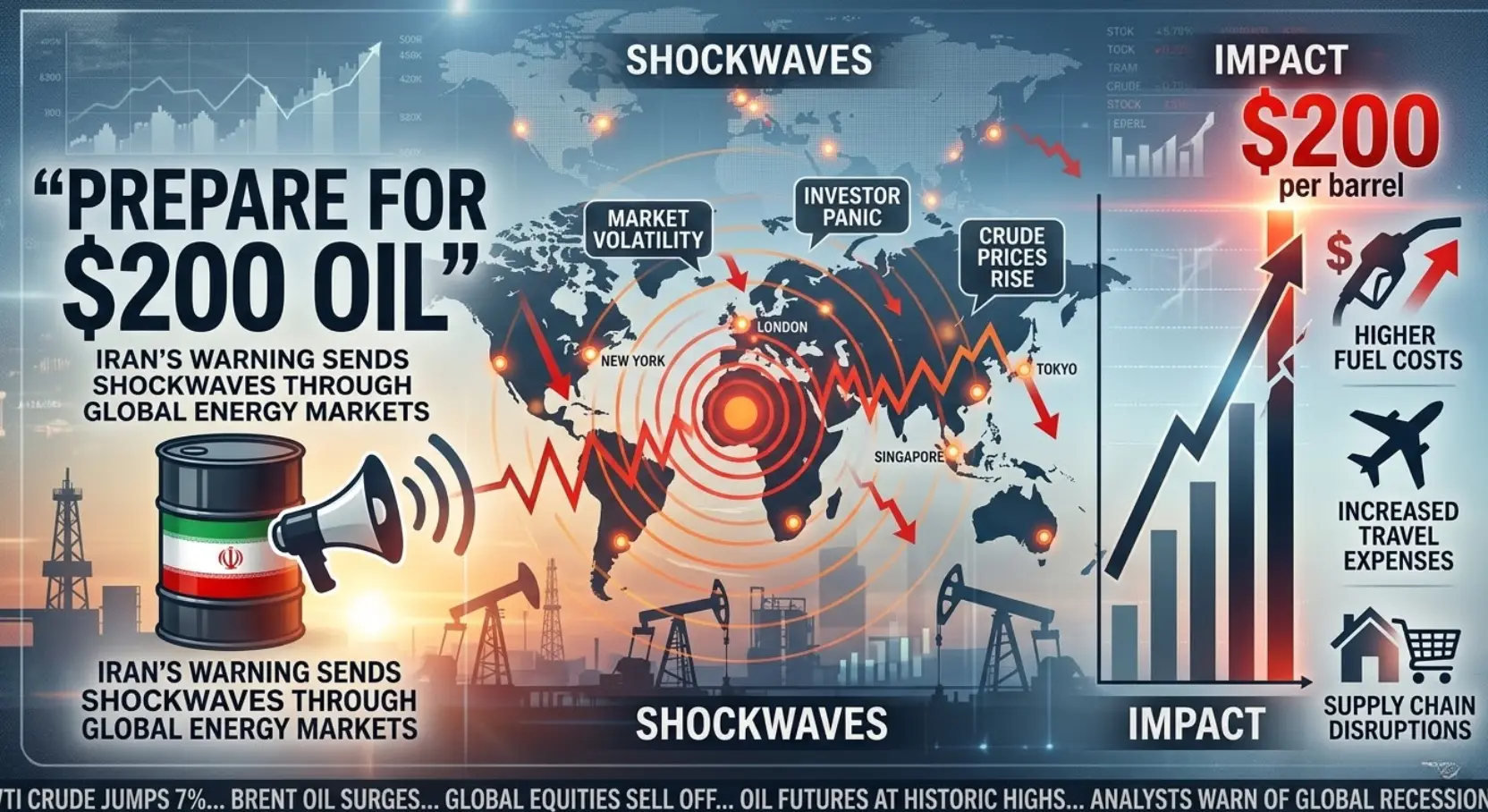
Amid escalating tensions in the Middle East, Iran has issued a stark warning to the global community: oil prices could surge to $200 per barrel if the ongoing conflict continues to disrupt energy supplies. The warning comes as military tensions intensify in the Gulf region and shipping through the Strait of Hormuz, one of the world’s most critical oil routes, faces serious threats. With attacks on vessels, naval mines reportedly deployed in key waterways, and global oil reserves being tapped to stabilize markets, the situation has raised concerns about a potential energy crisis that could impact economies worldwide.
Author : Aashiya Jain | EQmint | Market News
A Stark Warning From Tehran
Iran says the world should brace for oil prices hitting $200 a barrel. They blame regional instability and military actions for this potential surge. According to Iranian military spokesperson Ebrahim Zolfaqari oil prices are closely tied to the security situation in the Middle East. He says if instability continues global oil markets could see prices spike like never before.
This comes amid rising tensions between Iran the United States and Israel. The conflict has led to attacks on infrastructure and shipping routes across the Gulf region. This is raising fears that oil supplies from one of the world’s most critical energy hubs could be severely disrupted.
Iran also warns that financial institutions and infrastructure linked to countries involved in the conflict could become targets. This signals the possibility of a wider regional escalation.
The Strait of Hormuz: A Critical Chokepoint
The Strait of Hormuz is the main problem right now. It’s this really narrow waterway that connects the Persian Gulf to the Arabian Sea. About 20% of the world’s oil supply goes through there every day. So it’s a huge deal for global shipping.
Recent reports say the conflict has messed up shipping traffic in the strait. Tanker movements have dropped a lot. Many ships are just avoiding the route because of security risks. Some estimates say shipping traffic has almost stopped completely.
Dozens of tankers are stuck outside the region waiting. Iran has reportedly put naval mines in the waterway. That’s making people even more worried about safety at sea and how stable the global oil supply is going to be.
Oil Markets Already Feeling the Pressure
Oil prices are already showing extreme volatility even before hitting the $200 mark. In early March Brent crude briefly surged above $100 per barrel for the first time in several years after news of the conflict spread across global markets.
Energy analysts warn that if the disruption continues or the Strait of Hormuz is fully blocked prices could climb dramatically. Such a scenario would echo the energy crises of the 1970s when geopolitical tensions triggered sharp oil price increases that sent shockwaves through global economies.
Higher oil prices would likely translate into rising fuel costs increased transportation expenses and broader inflation across many industries.
Global Response to the Crisis
Governments around the world are already taking emergency measures to prevent a full-scale energy shock. Several countries and international organizations have begun releasing oil from strategic petroleum reserves to stabilize supply and reduce price volatility.
At the same time naval forces in the region are attempting to secure shipping lanes and ensure the safe passage of commercial vessels.
However the situation remains unpredictable with attacks on ships and oil infrastructure continuing in the Gulf. Energy-importing nations especially in Asia including India China and Japan are watching developments closely as they rely heavily on oil shipments from the Middle East.
What a $200 Oil Price Could Mean
If oil were to reach $200 per barrel, the consequences could be far-reaching. Fuel prices would surge globally, increasing transportation costs and raising the price of goods and services. Inflation could accelerate sharply, forcing central banks to tighten monetary policy and potentially slowing economic growth.
For developing countries that rely heavily on imported energy, such a surge could place enormous pressure on national budgets and currency stability.
A Fragile Global Energy Landscape
Iran’s warning really drives home how shaky the global energy system can get when geopolitical tensions heat up. The world still leans hard on a few key supply routes and energy-producing regions.
As the Middle East conflict keeps unfolding, markets, governments, and consumers are all keeping a close eye on things. Whether oil actually hits $200 a barrel is still up in the air, but the warning itself shows how fast geopolitical events can rattle the whole global economy.
For more such information visit EQMint