
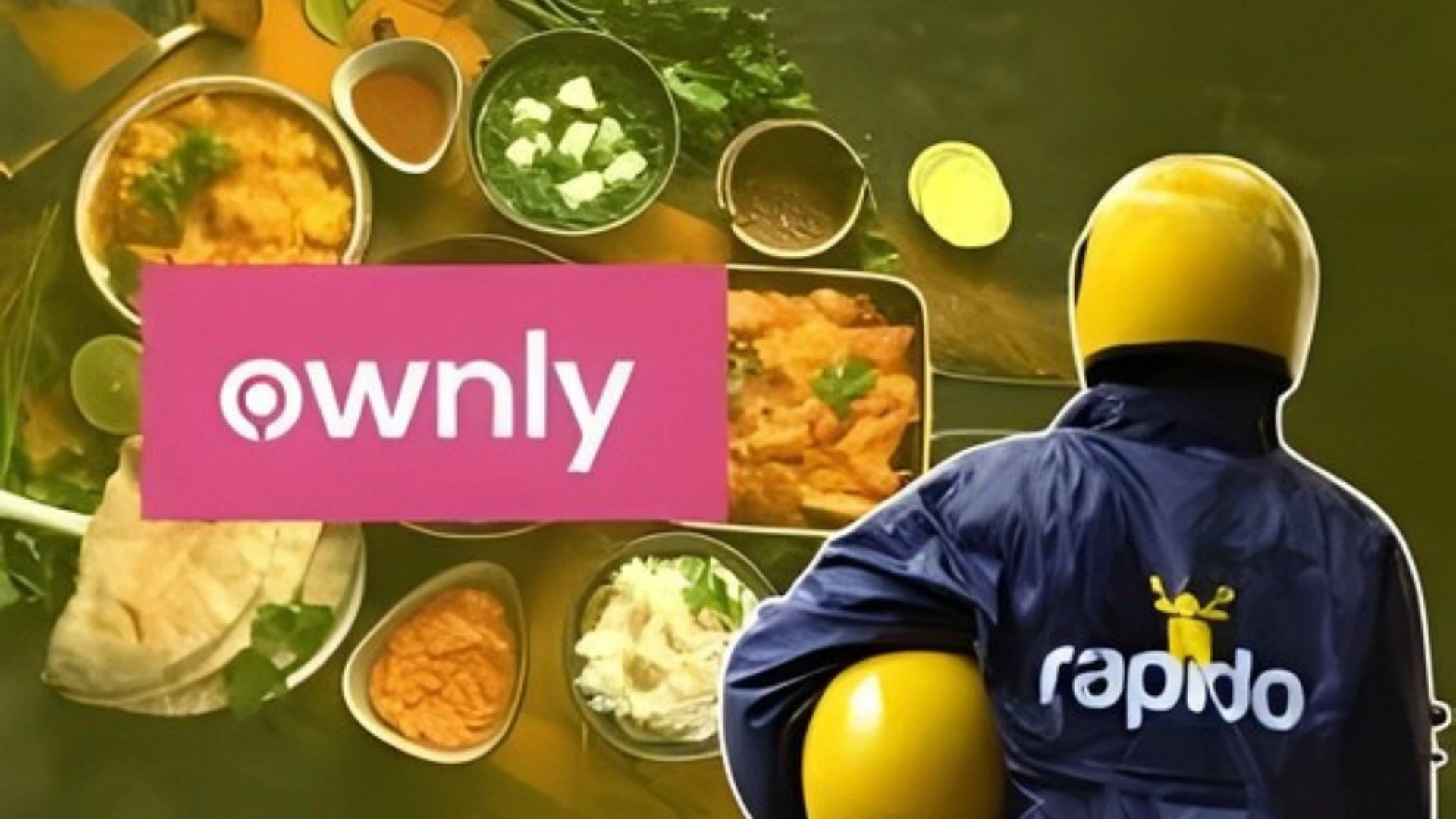
Rapido has launched Ownly, a zero-commission food delivery platform in Bengaluru where restaurants pay nothing and customers pay a ₹30 delivery fee. The move raises a big question: can this business model actually work?
Author: Aditya Pareek | EQMint
Rapido has entered the food delivery market with a bold and unconventional strategy. The ride-hailing startup has launched Ownly, a new platform promising zero commission for restaurants and a flat ₹30 delivery fee for customers.
The service recently went live in Bengaluru and has already sparked debate across the food delivery ecosystem. At a time when restaurants frequently complain about high commissions charged by major platforms, Rapido’s zero commission food delivery model appears designed to attract merchants frustrated with existing players.
However, the big question remains: does the Ownly food delivery business model actually make financial sense?
How Rapido’s Ownly Platform Works
Unlike established food delivery platforms such as Swiggy and Zomato, Rapido’s new offering operates with a simplified pricing structure.
Under the Rapido Ownly food delivery model:
- Restaurants pay zero commission
- Customers pay a flat ₹30 delivery fee
- No hidden charges or service fees
- No subscription-based revenue model (so far)
The idea is straightforward: eliminate restaurant commissions and rely solely on delivery charges from customers.
But this raises a major challenge for the company’s Ownly food delivery business model.
The Unit Economics Problem
In theory, a ₹30 delivery charge per order sounds appealing to customers and restaurants. But in practice, that ₹30 must cover several operational costs.
For the Rapido Ownly unit economics to work, that single delivery fee must fund:
- Rider payment
- Fuel expenses
- Platform technology costs
- Customer support operations
- Server and infrastructure costs
- Marketing and customer acquisition
On top of these expenses, the company would also need to generate profits for long-term sustainability.
When analysts look at these cost layers, the numbers raise serious questions about whether Rapido zero commission food delivery can survive without additional revenue streams.
Lessons From Failed Food Delivery Experiments
Rapido is not the first company to attempt disruption in India’s food delivery market.
Several major platforms have previously tried to enter the industry but ultimately shut down their services.
Notable examples include:
Ola Café
Ola attempted to integrate food delivery within its ride-hailing ecosystem but eventually discontinued the service.
Foodpanda
Despite significant investment and global presence, Foodpanda struggled with logistics and competition before exiting the market in India.
Uber Eats
Uber’s food delivery business in India ultimately merged with Zomato after failing to achieve sustainable growth.
These companies had significant advantages, including:
- Large delivery fleets
- Strong investor backing
- Millions of active users
Despite these advantages, they could not sustain profitable operations.
That raises doubts about whether Rapido Ownly food delivery can succeed where larger players failed.
Rapido vs Swiggy and Zomato
The Indian food delivery market is currently dominated by two major players: Swiggy and Zomato.
These companies rely on a multi-layered revenue model that includes:
- Restaurant commissions (15–30%)
- Delivery charges
- Advertising fees
- Subscription programs like Zomato Gold or Swiggy One
Compared to this structure, Rapido zero commission food delivery appears extremely minimalistic.
By eliminating commissions, Rapido hopes to attract restaurants that are frustrated with high fees charged by existing platforms.
However, competing against established networks like Rapido vs Swiggy Zomato is not just about pricing—it also requires massive logistics and marketing capabilities.
The Restaurant Perspective
Many restaurant owners have long complained about commission rates charged by major delivery platforms.
Some have described the onboarding process as a “honeytrap”:
- Attractive terms during the early stages
- Gradual increase in commissions over time
- Growing dependence on platform traffic
This dissatisfaction creates an opportunity for alternatives like Rapido Ownly food delivery.
If Rapido can position itself as a restaurant-friendly platform, it could attract a significant number of merchants looking for better margins.
However, the long-term challenge remains sustainability.
Possible Future Revenue Models
Industry observers believe Rapido may eventually introduce additional monetization strategies to make the Ownly food delivery business model viable.
Possible revenue streams could include:
Advertising for Restaurants
Restaurants may eventually pay for featured listings or promoted placements.
Subscription Programs
Customers could be offered membership plans that provide free deliveries or discounts.
Commission-Based Pricing
After building scale, Rapido could introduce commissions similar to other platforms.
Data and Analytics Services
Platforms often monetize customer data insights for restaurant partners.
If such revenue streams are introduced, the Rapido zero commission food delivery promise may evolve over time.
The Classic Startup Playbook?
Some analysts believe Rapido may be following a familiar startup strategy.
The approach typically involves three phases:
- Operate at a Loss
Offer attractive pricing to attract users and merchants. - Build Dependency
Become an essential platform for restaurants and customers. - Monetize Later
Introduce commissions, advertising, or subscription fees.
If this strategy is indeed the plan, the Rapido Ownly unit economics challenge may only be temporary.
However, this strategy depends heavily on investor funding.
What Happens When Funding Runs Out?
Food delivery platforms are capital-intensive businesses that require significant investment in logistics, marketing, and technology.
If Rapido continues operating at a loss to grow the Rapido Ownly food delivery platform, it will eventually need strong financial backing.
The key question investors and industry observers are asking is:
What happens when investor funding slows down?
Without sustainable revenue streams, the company could face the same challenges that forced earlier food delivery ventures to shut down.
A High-Risk Bet on Disruption
Despite the challenges, Rapido’s entry into the market could still reshape competition in the food delivery industry.
If Rapido vs Swiggy Zomato leads to lower commissions and better terms for restaurants, it could benefit the entire ecosystem.
The company’s success will depend on whether it can solve the complex logistics and cost challenges that have historically plagued food delivery businesses.
Conclusion
Rapido’s launch of the Ownly zero commission food delivery platform is one of the boldest experiments in India’s food tech industry. By removing restaurant commissions and charging customers a flat ₹30 delivery fee, the company is attempting to disrupt a market long dominated by Swiggy and Zomato.
However, the biggest challenge lies in the Rapido Ownly unit economics. With delivery fees as the only visible revenue stream, the sustainability of the Ownly food delivery business model remains uncertain.
Whether Rapido has discovered a breakthrough approach—or whether history will repeat itself—remains to be seen.
For now, the industry will be watching closely to see if Rapido Ownly food delivery can succeed where previous challengers have failed.
For more such information visit EQMint