
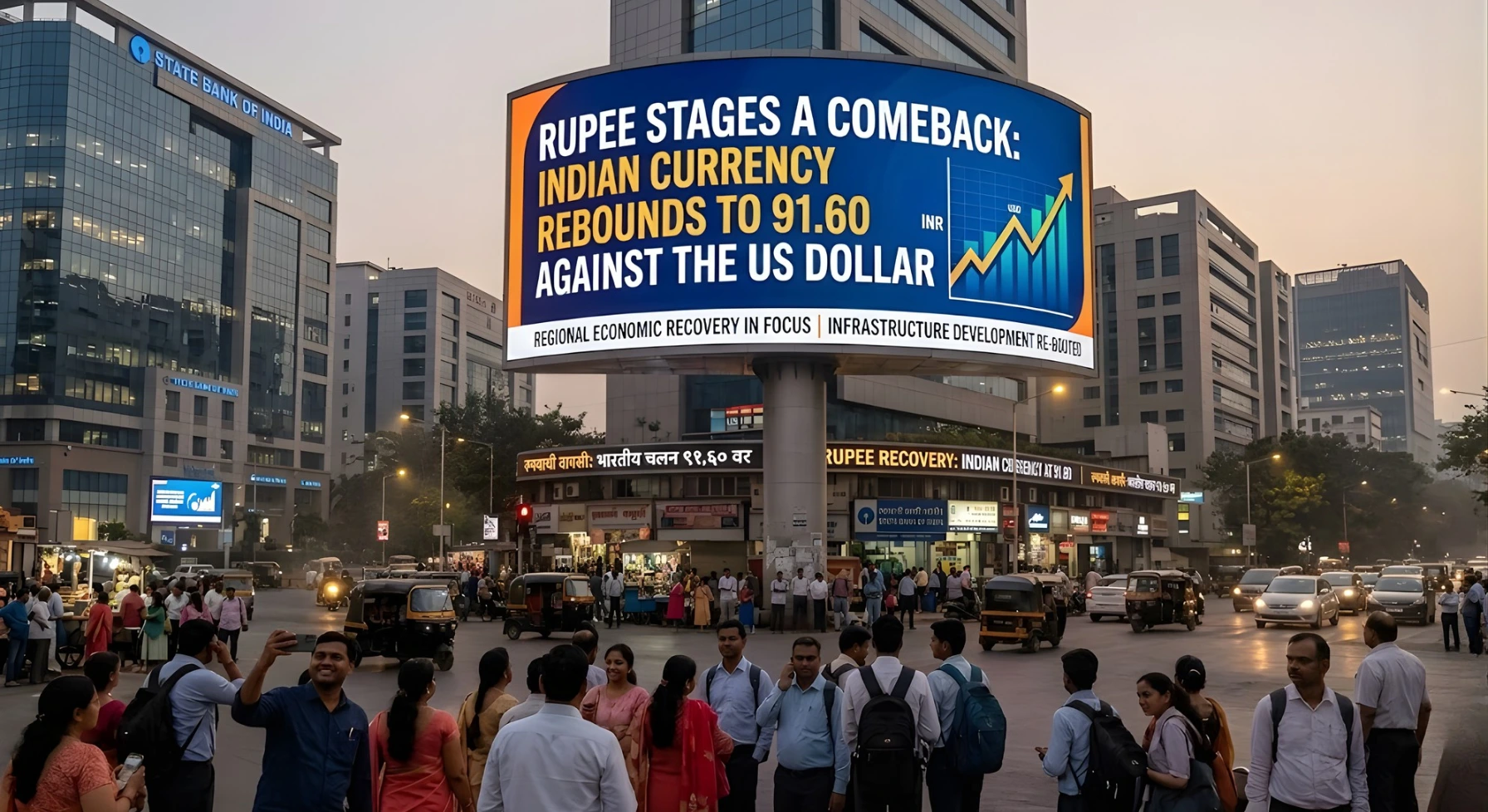
After hitting a historic low amid global uncertainty and geopolitical tensions, the Indian rupee managed to recover and close 45 paise stronger at ₹91.60 against the US dollar. The rebound came after the currency touched record lows earlier in the week due to rising crude oil prices, foreign capital outflows, and global risk aversion linked to the ongoing Middle East conflict. Support from the Reserve Bank of India (RBI), improved market sentiment, and a slight recovery in Asian currencies helped the rupee stabilise temporarily. However, analysts believe that volatility may continue as global economic and geopolitical factors remain uncertain.
Author : Aashiya Jain | EQmint | Market News
A Sharp Fall Followed by a Quick Recovery
The Indian rupee witnessed a volatile trading session before finally ending the day stronger against the US dollar. After slipping to historic lows earlier in the week, the domestic currency bounced back and settled 45 paise higher at ₹91.60 per dollar, marking one of its biggest single-day gains in recent weeks.
This recovery comes at a time when the currency had been under intense pressure due to global economic concerns and geopolitical tensions in the Middle East. The rupee had previously breached the ₹92 per dollar mark, its weakest level ever, as investors rushed toward the US dollar, which is widely considered a safe-haven currency during global crises.
While the rebound provided some relief, analysts caution that the currency remains vulnerable to external shocks.
What Caused the Rupee’s Recent Weakness
The rupee took a big hit earlier in the week. Several factors were at play here. One of the main ones was the situation in West Asia. Tensions between the US Israel and Iran have been rising. That’s pushing oil prices up. And that matters a lot for India because we import most of our crude oil. When oil prices go up our import bill gets bigger. That means more demand for US dollars in the forex market. And that puts pressure on the rupee to fall.
Another big factor was foreign investors pulling money out. They’ve been moving funds away from emerging markets lately. They’re looking for safer places to put their money. This kind of outflow from Indian stocks and bonds increases dollar demand and weakens the rupee even more.
The US dollar has been getting stronger globally too. That’s another reason the rupee declined. It was a mix of global and domestic issues all hitting at once.
RBI Intervention Helps Stabilise the Currency
One of the key reasons behind the rupee’s recovery was intervention by the Reserve Bank of India (RBI). The central bank reportedly sold US dollars through state-run banks to stabilise the currency after it hit record lows.
Such interventions are not uncommon. India follows a “managed float” exchange rate system, where the RBI occasionally steps in to reduce excessive volatility in the foreign exchange market rather than fixing a specific exchange rate.
By supplying dollars into the market, the central bank can temporarily ease pressure on the rupee and prevent sudden or disorderly depreciation.
Markets React to Global Developments
The rupee’s movement is closely linked to global financial trends. Rising geopolitical tensions, fluctuations in oil prices, and shifts in investor sentiment can quickly affect currency markets. During the recent crisis, the dollar index remained firm.
This reflected strong global demand for the American currency. At the same time, oil prices climbed to around $83 per barrel. This added further pressure on import-dependent economies like India.
However, some improvement in Asian currencies and a partial recovery in domestic equity markets helped the rupee regain some lost ground.
What Lies Ahead for the Rupee
The rupee’s rebound brings short-term relief but experts say volatility may continue in the coming weeks. A lot depends on how geopolitical tensions evolve and whether global oil prices stay high. If the Middle East conflict gets worse or crude oil prices climb further the rupee could face more pressure again.
On the other hand easing tensions stabilising oil prices or strong capital inflows could help the currency recover more. For now the rupee bouncing back to ₹91.60 per dollar shows how fast currency markets react to global changes.
It also shows the delicate balance policymakers must keep between economic stability and global market realities. In a world where geopolitics and financial markets are more connected than ever the rupee’s movement will keep reflecting not just India’s economic strength but also what happens far beyond its borders.
For more such information visit EQMint
Disclaimer: This article is not an investment advice and is for educational purpose only