
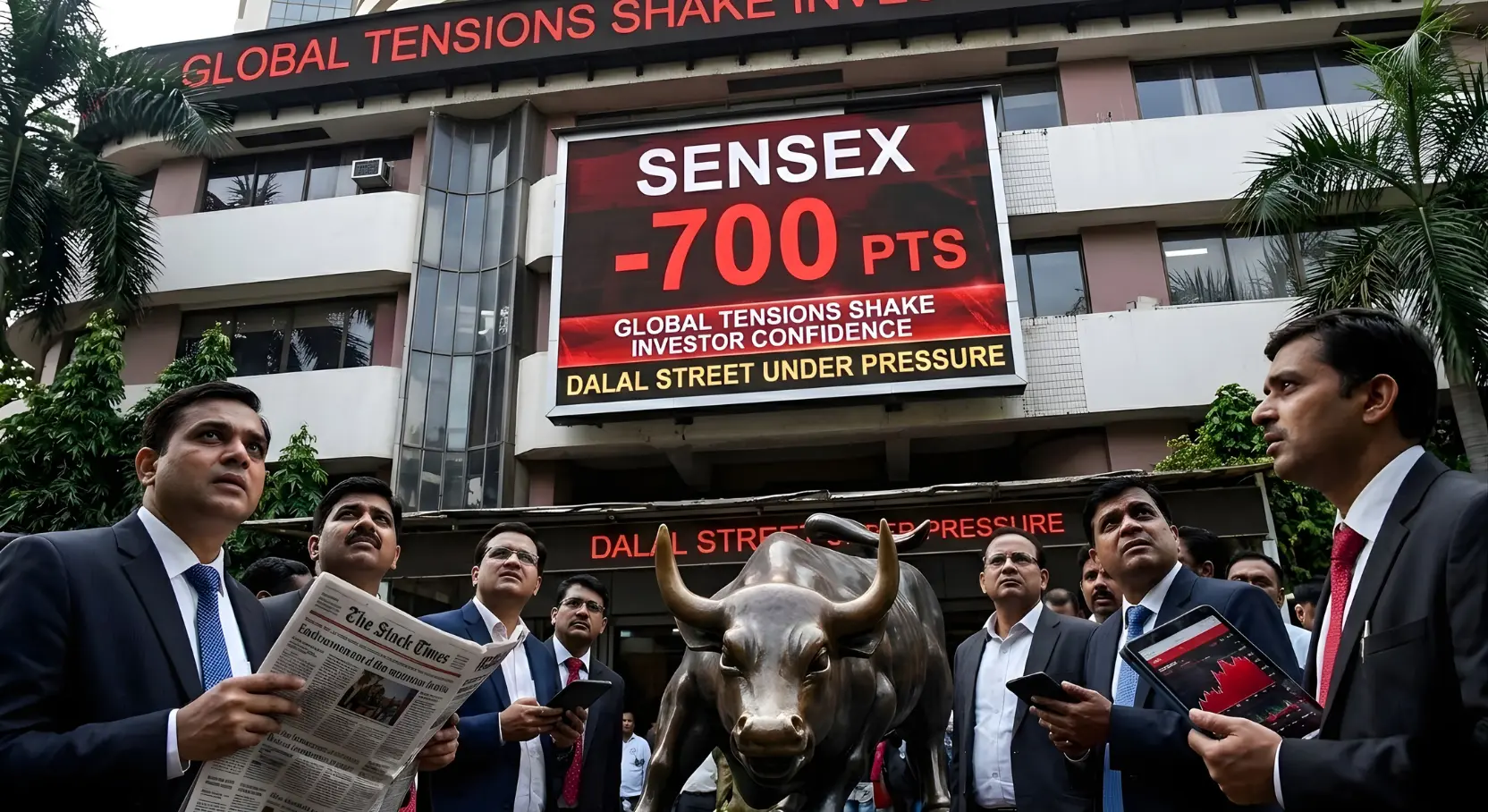
Indian equity markets witnessed another volatile session as the BSE Sensex plunged nearly 700 points and the Nifty 50 slipped sharply, extending their recent downward trend. The decline reflects growing investor anxiety triggered by global geopolitical tensions, rising crude oil prices, foreign institutional investor (FII) selling, and weakness in the rupee. The fall highlights how global events particularly the ongoing Middle East conflict are influencing market sentiment and causing investors to move cautiously in the short term.
Author : Aashiya Jain | EQmint | Market News
Markets Resume Their Downward Trend
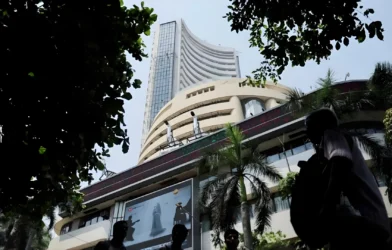
India’s stock markets kept sliding with the Sensex falling nearly 700 points during trading while the Nifty 50 also dropped sharply showing heavy selling across sectors. At one point the Sensex hit an intraday low around 79 346 and the Nifty 50 slipped to about 24,575 underlining broad weakness in equities.
This latest drop follows days of market swings with both benchmark indices seeing sharp moves. The Sensex has fallen more than 3,100 points in recent sessions while the Nifty dropped over 1,000 points wiping out big chunks of investor wealth.
Geopolitical Tensions Trigger Risk Off Sentiment
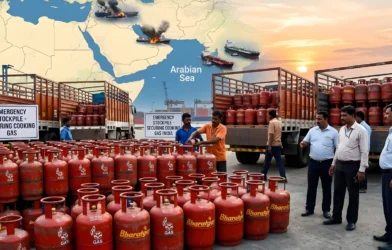
One of the biggest reasons behind the recent market decline is the escalating conflict in the Middle East involving the United States, Israel, and Iran. Global markets tend to react quickly to geopolitical instability because it creates uncertainty about economic growth, trade flows, and energy supply.
The conflict has raised fears of disruptions to global oil supply routes, particularly the Strait of Hormuz, a crucial passage through which a large portion of the world’s crude oil moves. Any disruption in this region could push energy prices higher and affect global economic stability.
Because of this uncertainty, investors around the world have started reducing exposure to risky assets like equities and moving funds into safer investments such as gold and the US dollar.
Rising Crude Oil Prices Add to Market Pressure
Another key factor affecting Indian markets is the sharp increase in crude oil prices. Brent crude has surged significantly amid the geopolitical crisis, raising concerns about inflation and economic growth.
For India, higher oil prices are particularly problematic because the country imports a large share of its crude oil needs. When oil becomes more expensive, it increases the nation’s import bill, weakens the rupee, and raises inflation risks.
Higher energy costs also squeeze corporate margins for industries such as aviation, transportation, chemicals, and manufacturing. As a result, investors often react by selling stocks in these sectors.
Foreign Investors Pull Money Out
Foreign institutional investors have been pulling money out of Indian equities lately and that’s putting more downward pressure on the market. Like a lot of selling happening. Reports say FIIs sold about ₹11,000 crore worth of Indian shares in just two trading sessions.
That’s a huge amount especially with all the geopolitical tensions going on and the general global risk aversion. When foreign investors take their money out it reduces liquidity in the market and usually causes broader selling. Domestic investors sometimes step in to buy but when the FII outflows are this big it still causes noticeable drops in the benchmark indices.
Currency Weakness and Global Market Trends
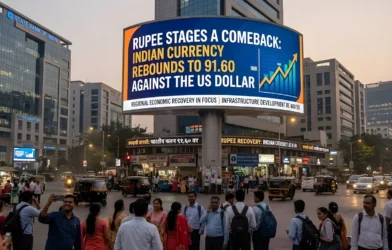
The weakness of the Indian rupee, which recently touched record lows against the US dollar, has further dampened market sentiment. A weaker currency increases the cost of imports and raises concerns about inflation and economic stability.
At the same time, global markets have also been under pressure. Asian and US stock markets have shown signs of weakness due to the same geopolitical and economic concerns affecting India.
When global markets decline simultaneously, it often creates a ripple effect across emerging markets, including India.
Investor Sentiment Remains Fragile
Apart from these major triggers, volatility indicators such as India VIX have surged, signalling increased nervousness among investors. A rising volatility index typically reflects expectations of larger market swings and uncertain short-term trends.
Sector-wise, most industries have witnessed selling pressure, with banking, IT, and consumer stocks among the notable laggards.
What Investors Should Expect Next
Market experts say the near-term direction of the Indian stock market will largely depend on global developments. If geopolitical tensions ease and oil prices stabilise, investor confidence could return quickly. However, if the conflict in the Middle East intensifies or crude oil prices continue to climb, markets may remain volatile.
For long-term investors, analysts often view such corrections as part of normal market cycles rather than a sign of fundamental weakness. While short-term uncertainty may continue, India’s strong economic growth outlook and corporate earnings potential remain important supportive factors for the market in the long run.
For more such information visit EQMint
Disclaimer: This article is not an investment advice and is for educational purpose only