

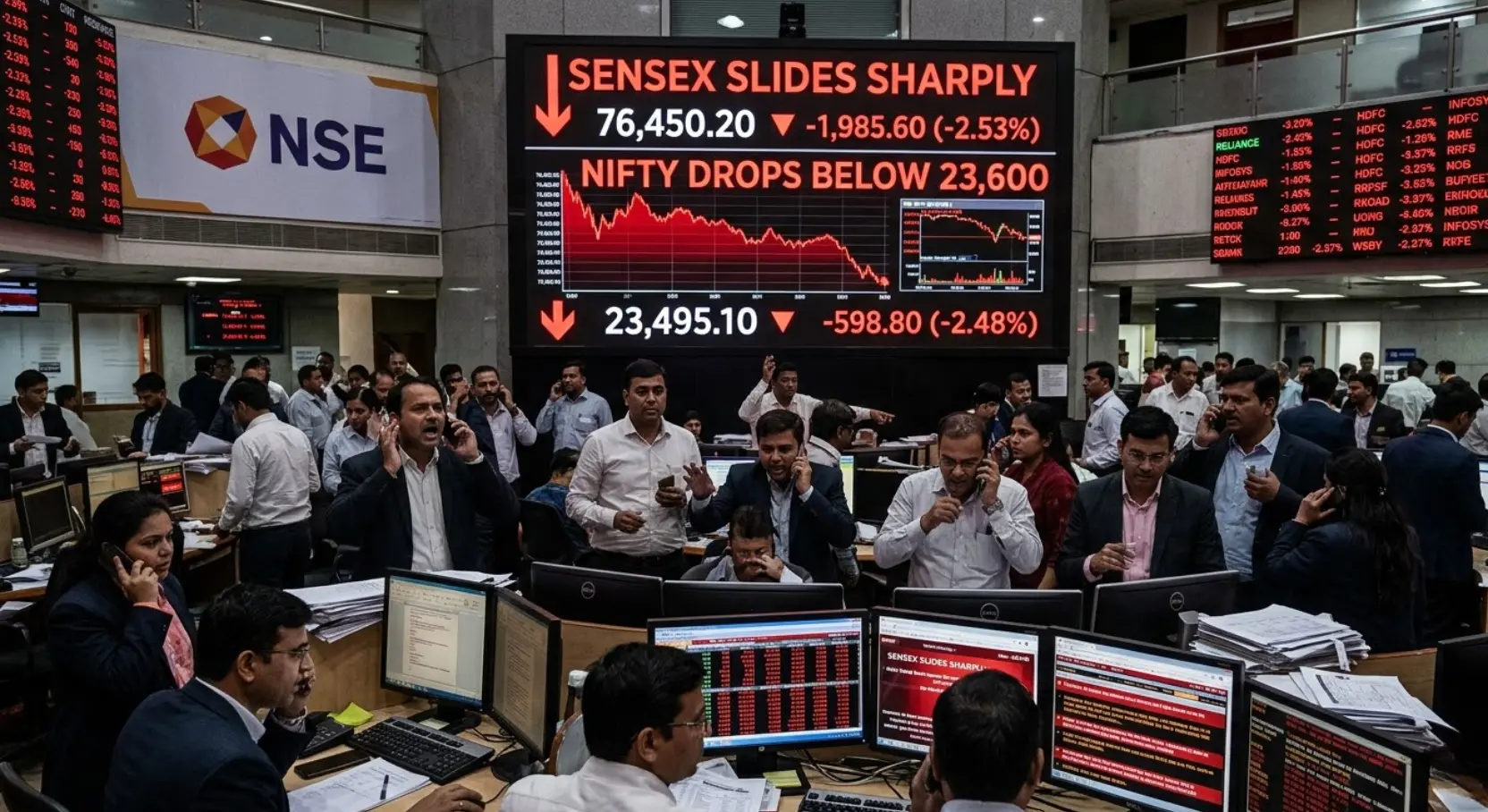
Indian stock markets opened on a weak note on March 12, 2026, with benchmark indices BSE Sensex and Nifty 50 witnessing a sharp fall amid global uncertainty and rising geopolitical tensions. Escalating conflict in West Asia pushed crude oil prices higher, triggering concerns over inflation and economic stability. Weak global cues, foreign fund outflows, and selling pressure across sectors further dampened investor sentiment, while several stocks such as IndiGo, Adani Enterprises, IDFC First Bank, and Ashok Leyland remained in focus due to key developments.
Author : Aashiya Jain | EQmint | Market News
Indian equity markets experienced significant volatility on Thursday, March 12, as investors reacted to a mix of global and domestic pressures. The BSE Sensex plunged more than 900 points during the opening session, while the Nifty 50 slipped below the 23,600 mark, signaling a cautious mood on Dalal Street. The decline came after a weak pre-market indication, where GIFT Nifty had already hinted at a negative start for the day.
Market Sentiment
Market sentiment stayed weak because of the ongoing geopolitical tensions in West Asia. The conflict between Iran and the United States kept getting worse and that created a lot of uncertainty in global financial markets. Asian markets fell and U. S. equities also closed lower in the last session so investor confidence in India took another hit.
Another big factor was the jump in crude oil prices. Oil prices went up in Asian trading because people were worried about supply disruptions after things got worse in the Middle East. Higher energy prices raised inflation concerns and made it less likely that interest rates would be cut soon. That put more pressure on equity markets. Currency markets showed the stress too.
The Indian rupee dropped sharply opening at 92.28 against the US dollar and then falling to around 92.32 in early trade. That showed how global volatility was affecting India’s financial system. Back home selling pressure was visible in most sectors. Banking and financial stocks led the way down as investors kept pulling money out of riskier assets.
Foreign institutional investors have been cautious lately which added to the overall weakness. The benchmark indices had already closed nearly 2% lower in the previous session showing that nervousness was still there. Even with the market slump some sectors held up better.
Defence stocks got attention because investors think geopolitical tensions could lead to more defence spending in India. That expectation helped the sector stay relatively stable compared to others.
Individual stock
Several individual stocks were also in the spotlight during the session. Shares of InterGlobe Aviation (IndiGo), IDFC First Bank, Adani Enterprises, Ashok Leyland, and Mahanagar Gas were among the most actively tracked stocks due to company-specific developments and market speculation.
These stocks are likely to remain closely watched by traders throughout the trading session. Meanwhile, the ongoing volatility has started affecting corporate plans as well. Companies planning to launch initial public offerings (IPOs) are reconsidering their timelines.
With markets swinging sharply, many firms are now adopting a wait-and-watch approach, choosing to delay listings until conditions stabilize rather than accept lower valuations.
Conclusion
Overall, the sharp fall in benchmark indices reflects the fragile global environment currently influencing financial markets. While India’s economic fundamentals remain relatively strong, external shocks such as geopolitical conflicts, rising oil prices, and global market weakness are temporarily weighing on investor confidence. Market participants are expected to closely monitor global developments and commodity prices in the coming days, as these factors will likely determine the near-term direction of Indian equities.
For more such information visit EQMint
Disclaimer: This article is not an investment advice and is for educational purpose only