
Author : Adarsh Vepachedu | EQmint | Political News
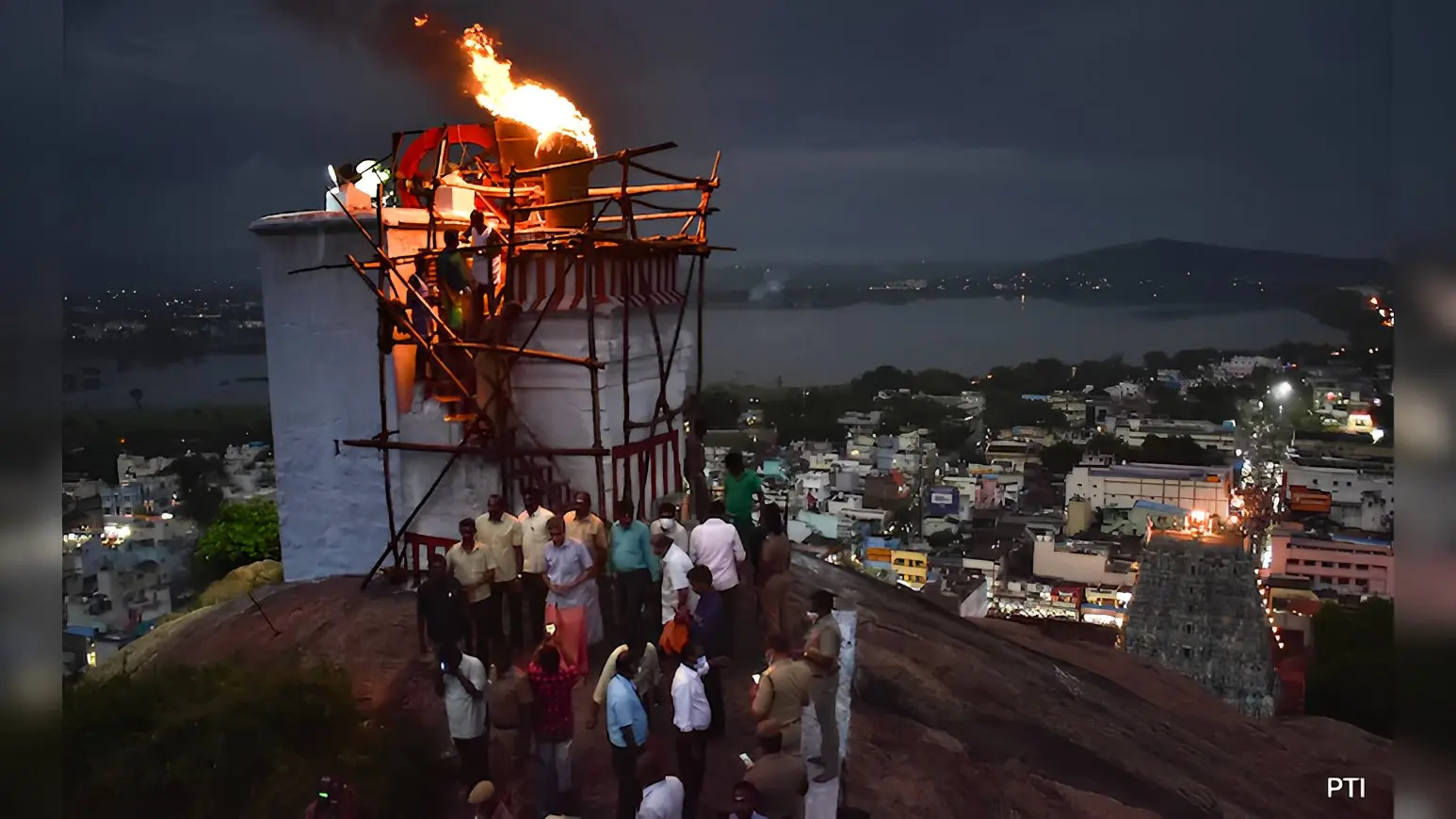
In what can be termed a setback for the Tamil Nadu government, the Madras High Court intervened in a dispute regarding the traditional lighting of deepam (sacred lamp) at temples.
The controversy took shape after Hindu groups alleged that the state government was infringing on religious traditions by imposing curbs on temple lamp-lighting ceremonies. The court’s ruling has brought back the long-standing debate surrounding government control over temple administration and religious practices.
The Controversy
The issue revolves around who holds the final authority on how temple rituals are to be carried out. It’s also about whether government can regulate/alter traditional practices. Tamil Nadu’s Hindu Religious and Charitable Endowments (HR&CE) Dept., which manages and controls administration and assets of over 36,000 temples in the state, issued guidelines on deepam rituals. Many feel these guidelines violate age-old existing traditions. The key allegation is that the state government is overstepping its administrative role by entering religious affairs.
Historical Background
Temples in Tamil Nadu have been under control of state government since the Hindu Religious and Charitable Endowments Act, 1951. This act gives the state extensive powers over temple management. In most other Indian states, temples are under community control. The deepam tradition itself dates back centuries and is considered sacred for dispelling darkness and ignorance.
The Two Sides
Government’s Stand: Officials assert that they are ensuring safety by preventing fire hazards and maintaining order during festivals that usually get crowded. They say, administrative oversight protects temple assets and ensures equal access for all devotees.
Devotees’ Stand: Hindu groups contend that the state government has no business in dictating religious practices. They view the restrictions as cultural interference and demand temples be freed from state control.
What did the Madras High Court Say
• “Government cannot interfere with essential religious practices”
• “Deepam lighting is integral to Hindu worship”
• “Safety measures must not compromise religious traditions”
• “HR&CE Department should consult religious experts before making ritual-related decisions”
• “Temple committees should have greater autonomy in religious matters”
What Next
The latest Madras HC ruling has set the stage for future, long-standing temple-related disputes in Tamil Nadu. It remains to be seen how the government balances its administrative responsibilities while ensuring religious sensitivities are not affected. The ruling is also likely to strengthen demands for freeing temples from the state government’s clutches entirely, a key demand of many Hindu organisations.
For more such a information : EQmint