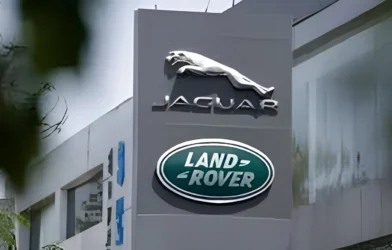

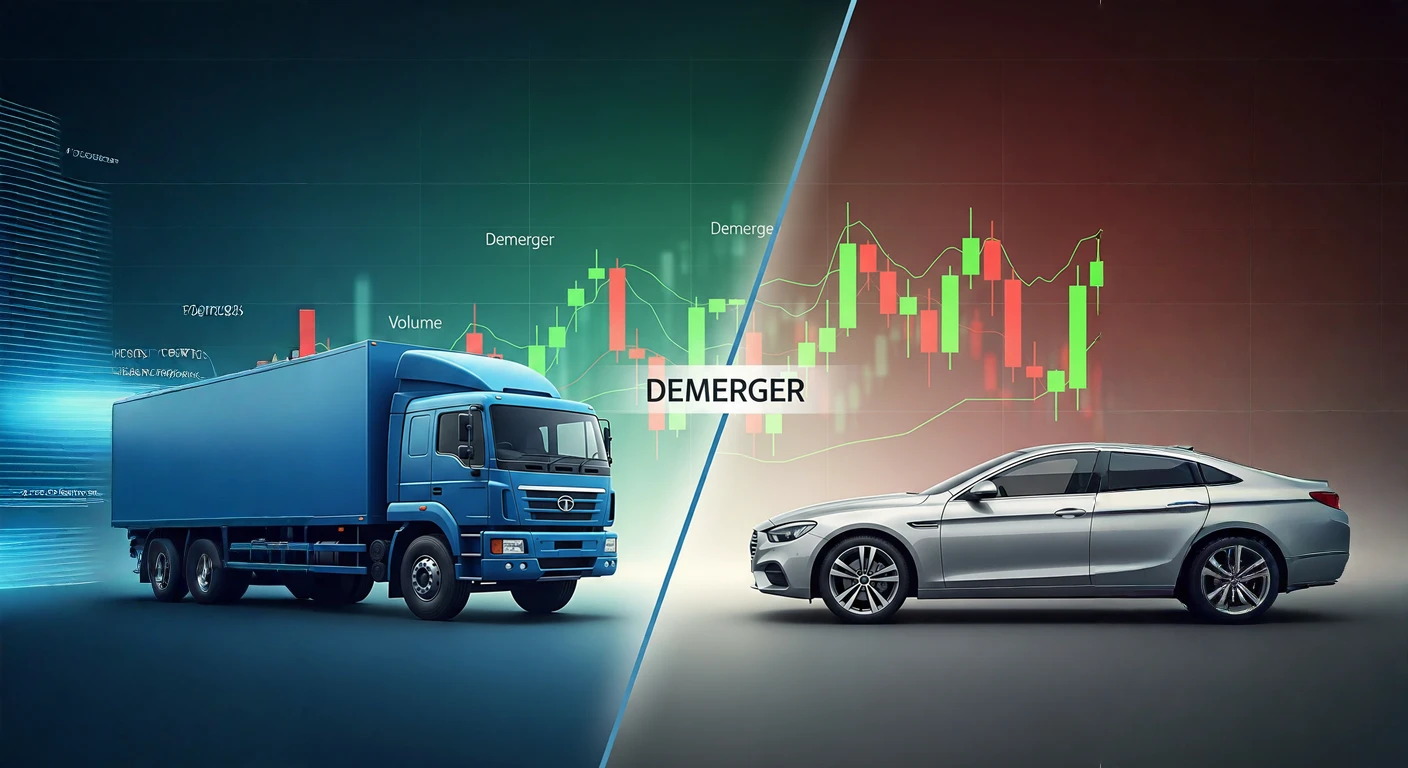
Tata Motors Demerger: In a major corporate restructuring move, Tata Motors is set to formally demerge its business into two separate listed companies, effective 1 October 2025. Under this scheme, the company’s Commercial Vehicles (CV) business will be separated from its Passenger Vehicles (PV) segment (which includes EVs and luxury brands such as Jaguar Land Rover).
The purpose is to unlock shareholder value by allowing each business to operate with sharper focus, different operational strategies, profit metrics, and growth drivers. Analysts believe this split will help in better market valuation of each segment, cleaner financials, and more strategic autonomy. Moneysukh
Key Dates & Approvals
-
- Effective date of Tata Motors demerger: 1 October 2025. From this date, the new structure becomes legally effective. Angel One+1
-
- Shareholders’ approval: On 6 May 2025, Tata Motors shareholders overwhelmingly approved the plan — more than 99.9995% of votes in favour. Reuters+1
- Regulatory clearance: The National Company Law Tribunal (NCLT) has cleared the composite scheme of arrangement involving Tata Motors and its two key subsidiaries (TML Commercial Vehicles and Tata Motors Passenger Vehicles). This was a critical legal step. The Economic Times+1
How the Share Structure and Listing Will Work
-
- The Tata Motors demerger will follow a 1:1 share entitlement ratio, meaning for every share an investor currently holds in Tata Motors, they will receive one share in the new Commercial Vehicles company. Tata Motors+1
-
- After Tata Motors demerger, there will be two separate entities listed on stock exchanges (NSE & BSE). One will be the commercial vehicle business; the other will retain the passenger vehicle, EV, and luxury brand operations. Angel One+1
- Note: As per the latest publicly available info, the record date (i.e. the date by which shareholders must hold shares to be eligible for the new CV company shares) has not yet been officially announced. EBC Financial Group+1
Financials, Market Reaction & Investor Implications
-
- Following the announcement, there was a positive reaction in the markets. Tata Motors’ stock has seen heightened interest since the demerger plan first became public. Reuters+1
-
- For Q1 FY26, Tata Motors reported a fall in revenue for some segments but the Commercial Vehicles division has shown resilience in margins even when volumes were muted. This suggests that the CV business might benefit more immediately post-demerger in terms of operational clarity. Moneysukh
- Investors will need to assess whether they prefer exposure to CV, PV, or both. Over time, the two independent listings should allow selective investment depending on risk appetite and growth expectations in EVs, luxury, or commercial transport sectors.
Risks & What to Watch Out For
-
- Execution Risks: While approvals and framework are in place, actual operational separation, listing, and regulatory compliance take time. Delays or unexpected regulatory hurdles are possible. Tata Motors+1
-
- Volatility: In the period around demerger and the trading ex-demerger date, share prices may fluctuate significantly. Investor sentiment, speculative trades, and news flow will play a large role.
-
- Valuation Uncertainty: The market will initially attempt to value the two segments separately; however, synergy effects (or lack thereof), cost allocations, and cross-business dependencies will affect that.
-
- Macro & Industry Risks: Changes in EV policy, trade tariffs, semiconductor supply, etc., especially for the PV/luxury/Electric Vehicle business (including JLR), may impact results. These external factors are beyond Tata’s direct control. Funds, margins, global supply chain pressures remain relevant.
What’s Next
-
- Tata Motors is expected to announce the record date for determining eligibility for CV company shares. Investors should watch for that announcement. EBC Financial Group+1
-
- Once demerger is effective, the two entities will begin trading separately, enabling more precise financial reporting for each.
-
- Investors should also monitor how each entity’s leadership and strategic priorities evolve — e.g. investments in EV technology, luxury segment improvements (JLR), and expansion for commercial vehicle exports.
-
- Regulatory compliance and corporate governance during the transition must be followed closely, as any oversights will risk investor trust and valuations.
Disclaimer: This article is for informational purposes only. EQMint does not endorse or provide investment advice. The accuracy of facts depends on publicly available sources; EQMint assumes no liability for any decisions made by readers based on this article.