
Author : Aashiya Jain | EQMint | Political news
Christmas markets are among Europe’s most beloved cultural traditions, dating back as far as the 13th century. The scent of mulled wine, cinnamon, cloves and orange draws millions of visitors to historic towns across the continent at this time of year from Strasbourg to Stuttgart, from Berlin to Wien, and from Warsaw to Budapest. However, in Western Europe, Christmas markets are no longer synonymous with calm, safety and festive nostalgia. Since the turn of the millennium and increasingly after 2010 the spirit of celebration has been overshadowed by seasonal terror: Christmas markets have become prime targets of radical Islamist attacks during the holiday period.
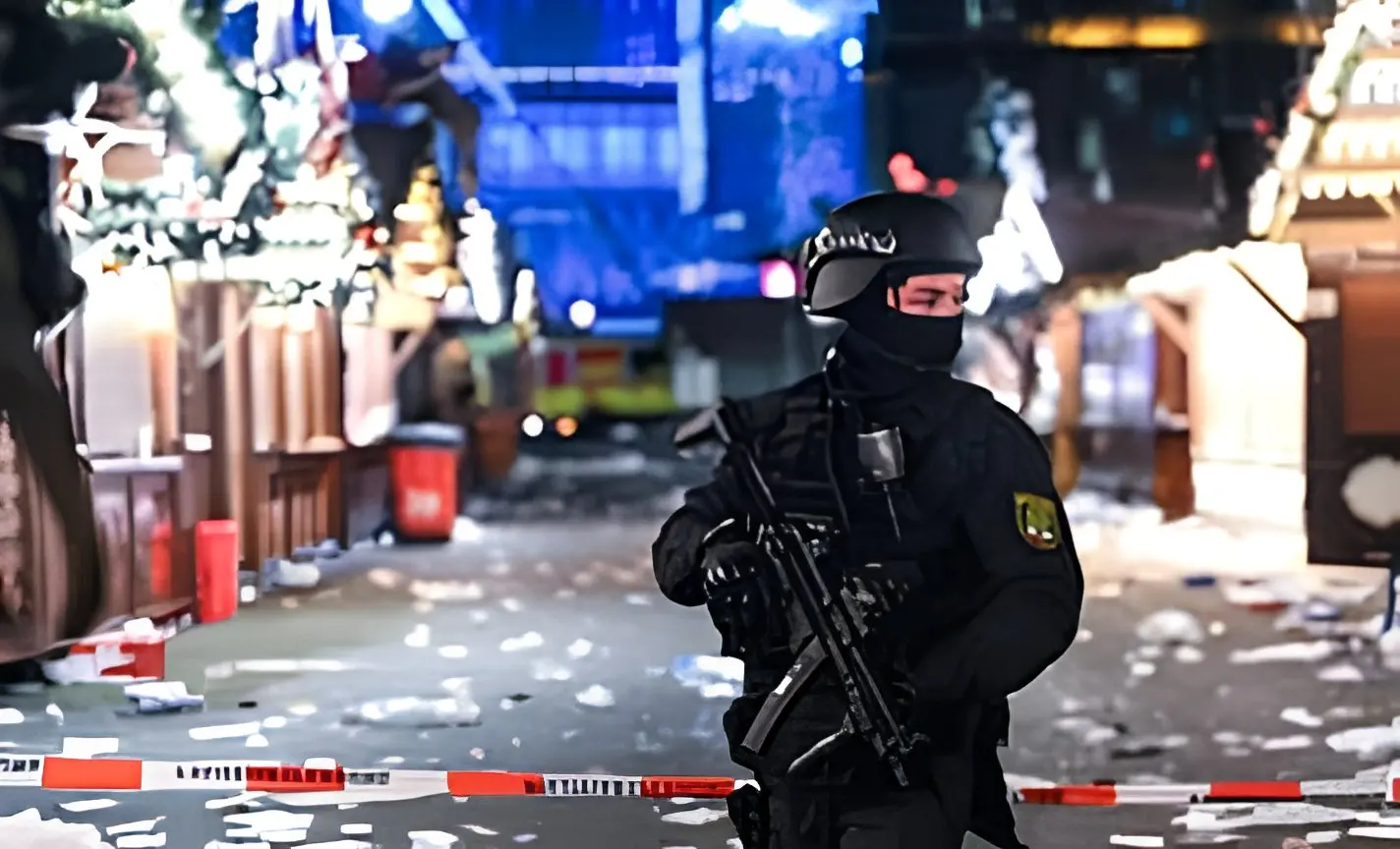
The German supermarkets are no longer filled with christmas carols,and happines. They are now filled with security cameras all over the markets and armored men guarding the markets. The locals no longer feel safe to come out and visit the country’s famous Christmas markets said Rob Schmit on News Max.
The German arrested 5 people because of a suspicious attack planned
Terrorists have obstructed 7 European Christmas markets since 2014 .3 in France and 4 in Germany all carried out by the people of background of the Muslim community and middle eastern country. The authories arrested 5 men last week on suspicion of planning the 8th attack took. German authorities said 5 men were arrested last week Saturday on suspicion of involvement in an Islamist plot to plow a vehicle during peak hour of the day during the Christmas markets.
The Egyptian, aged 56, was an imam at a mosque in the Dingolfing-Landau district, German newspaper Bild reported. According to authorities, he had called for an attack to be carried out on a Christmas market in the area “using a vehicle in order to kill or injure as many people as possible.”
The Moroccans aged 30, 28 and 22 allegedly then agreed to carry out the attack while the Syrian, 37, encouraged them. All the suspects were brought before a magistrate on Saturday after their arrest and are in custody.
Bavaria’s interior minister, Joachim Herrmann, said close coordination among security agencies played a key role in stopping what could have been a serious attack. Speaking to the German newspaper Bild, Herrmann credited the “excellent cooperation between our security services” for preventing what he described as a potentially Islamist-motivated plot.
For now, authorities are sharing only limited details. They have not revealed where the suspects were taken into custody or which Christmas market may have been targeted. Officials also did not say when the attack was expected to take place or how far along the planning had progressed, leaving many questions unanswered as the investigation continues.
Another widely shared video circulating this month shows a man dressed in a white robe appearing to deliver the Islamic call to prayer at what many online users claimed was a German Christmas market. The clip quickly sparked outrage on social media.
“This Christmas market has completely capitulated!” one Instagram user wrote. The video spread rapidly across platforms, including Facebook, with captions in multiple languages such as English, Greek, Russian and Slovak.
However, AFP’s fact checking tells a different story. The footage is not recent and does not show a Christmas market at all. According to AFP research, the video dates back to November 2023 and was filmed in the Bavarian town of Karlstadt, during an event unrelated to Christmas. The clip was later reused and taken out of context, fueling misleading narratives online.
A similar attack took place last year in Magdeburg which saw a car barrel through a crowded christmas market. This attack killed 6 people and more than 300 people were badly injured .Another similar event took place in 2016 through Berlin’s Christmas market carried by a Tunisian man with jhadist motives that killed 13 people.
While mass migration and radical Islam have transformed many Christmas markets in Western Europe from spaces of shared celebration into places overshadowed by fear and deadly violence, Eastern Europe has largely followed a different path. In cities and small towns across Poland, Hungary, Romania, Slovakia, and the Balkans, Christmas markets still feel deeply familiar quietly reverent, family centred, and rooted in tradition.
There, Advent choirs sing carols passed down through generations. Wooden stalls glow with candlelight, offering handmade ornaments, spiced pastries, and hot mulled wine. Churches remain central to the season, drawing families together not just for celebration, but for reflection. Christmas is less a spectacle and more a shared cultural rhythm one shaped by faith, history, and continuity.
For more such information : EQMint
Resource link : LeMonde