
Author: Aarya Shah | EQMint | Market News
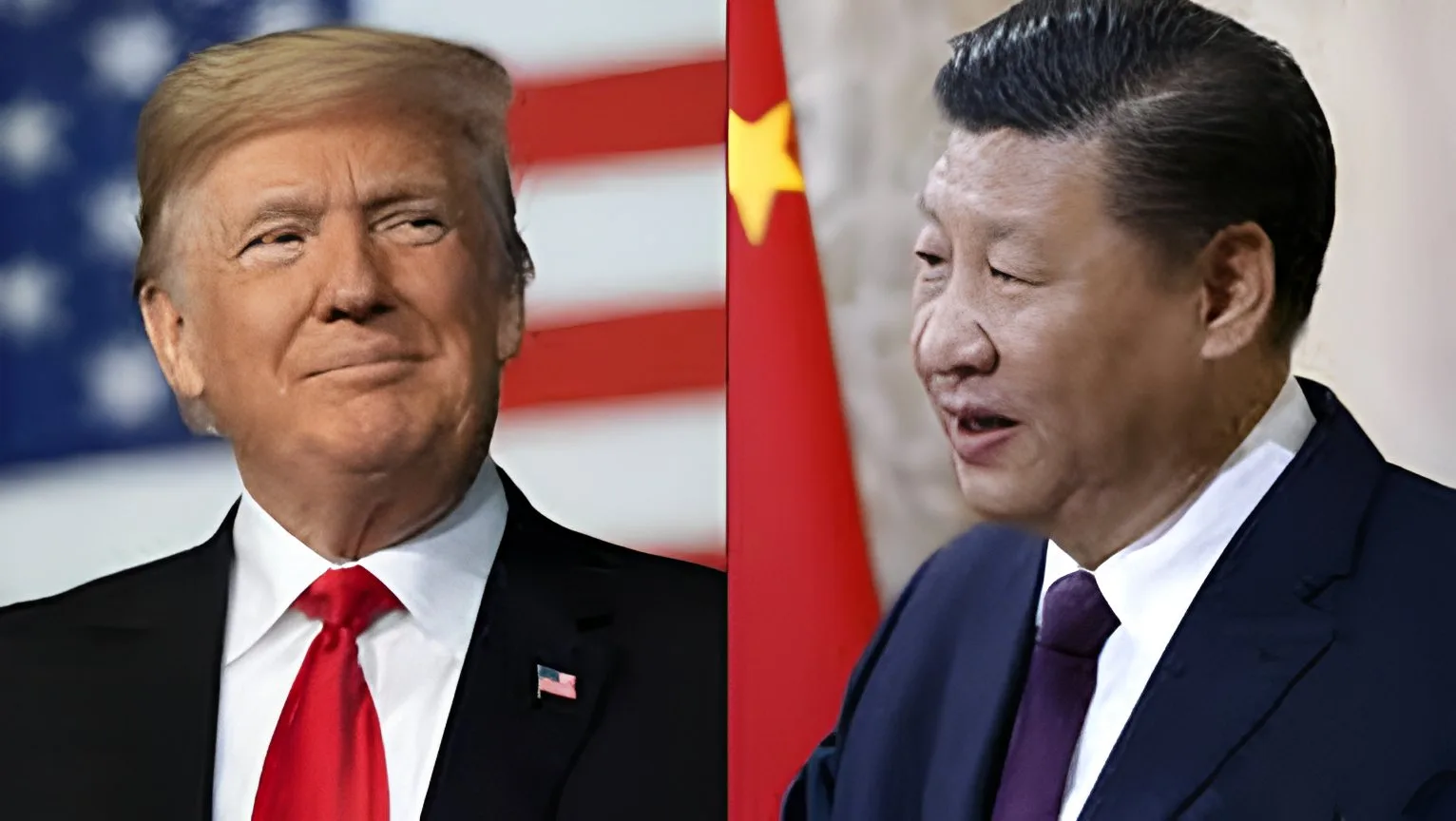
In a dramatic escalation of trade hostilities, former U.S. President Donald Trump has announced that the United States will impose a 100 % tariff on every Chinese import — above and beyond any current duties — starting November 1, 2025 (or even sooner, if China takes further provocative steps). Alongside this, he declared sweeping export controls on critical software. The move marks one of the sharpest turns yet in the intensifying economic standoff between Washington and Beijing.
Trump made the declaration via his Truth Social platform, accusing China of adopting an “extraordinarily aggressive” stance on global trade. He accused Beijing of issuing a “hostile letter” to nations worldwide, warning of broad export curbs on virtually all Chinese-manufactured products — even ones not fully made in China. He said China’s announcement signaled a long-planned strategy to leverage global trade in its favor, and warned that such behavior is “a moral disgrace” in international dealings.
The timing of this hardline push is especially consequential. Both world powers are set to attend the upcoming Asia-Pacific Economic Cooperation (APEC) summit in South Korea. Trump said that, given China’s maneuvers, there was “no reason to meet” with Xi Jinping, though he did not formally cancel any scheduled meeting.
Why Trump is Doubling Down
Trump framed the new tariffs and export controls as a direct response to China’s recent actions. Beijing expanded restrictions on rare earth element exports, adding five additional elements (holmium, erbium, thulium, europium, and ytterbium) to its controlled list — raising the total of restricted rare earths to 12 of 17 types. These elements are crucial to key industries such as consumer electronics, electric vehicles, military hardware, and more.
China also imposed stricter rules on lithium batteries and graphite anode materials — fundamental components for batteries used in EVs and other advanced technologies. Authorities in Beijing claimed these measures were necessary to “safeguard national security and interests,” especially in strategic sectors like semiconductors and defense.
Trump said he could not “believe that China would have taken such an action,” but insisted they had, and thus the “rest is history.” The message: the United States will not allow China to dictate terms through trade levers.
What’s in the U.S. Arsenal?
Trump’s announcement lays out two major instruments of retaliation:
- The 100 % tariff: This doubles the cost of Chinese goods entering the U.S., layered on top of already existing tariffs.
- Export controls on critical software: This could drastically limit China’s access to advanced software, tools, and technologies tied to semiconductors, AI, defense applications, and more.
Taken together, these measures aim to choke key technological and supply streams to China, while imposing steep costs on imports.
Global Ripples and Risks
The implications of this showdown extend well beyond U.S. and China borders:
- Supply chains under siege. Many industries rely on complex interdependence with Chinese suppliers — electronics, auto, consumer goods, and more. Disruptions could cascade globally.
- Commodity and rare earth markets in flux. With China throttling exports of rare earths and battery materials, prices could surge, and companies dependent on these may scramble for alternatives.
- Trade alliances tested. Other countries might be forced to choose sides or face secondary fallout. Allies caught in the crossfire may see trade volatility.
- Retaliation looming. China could respond with its own tariffs or sanctions, particularly targeting U.S. agricultural exports, critical technologies, or firms invested in American markets.
Can Diplomacy Survive This?
While both nations have hardened their positions, there remains some diplomatic room. The fact that Trump did not outright cancel talks at APEC suggests he is leaving space for negotiation — albeit under heavily pressured terms. Washington may be counting on its economic heft, global alliances, and technological dominance to force China back to the negotiating table.
Still, with both sides now digging in, the coming months could bring fierce economic turbulence. Any misstep or escalation could risk triggering a full-blown trade war with global consequences.
Trump’s latest announcement draws a stark line: the era of gradual tariff adjustments may be over, replaced now by aggressive, sweeping economic weaponization. For businesses, governments, and economies worldwide, brace for impact.
Disclaimer: This article is based on information available from public sources. It has not been reported by EQMint journalists. EQMint has compiled and presented the content for informational purposes only and does not guarantee its accuracy or completeness. Readers are advised to verify details independently before relying on them.