
India’s Union Budget 2026–27 has quietly but significantly reframed the country’s approach to climate action moving from broad “ambition” statements toward building the systems and structures that underpin long-term sustainability and decarbonisation. Rather than dramatic declarations, this year’s fiscal blueprint focuses on institutional readiness, supply chain strength, technology pathways and pragmatic investments in clean energy, industrial transition and infrastructure. Experts describe this fresh emphasis as shifting from symbolic climate goals to climate architecture building the scaffolding that could support real progress over time.
Author : Aashiya Jain | EQmint | Sustainability News
Building the Foundations, Not Just Promises
When Finance Minister Nirmala Sitharaman presented the Union Budget 2026–27 on February 1, she touched on economic priorities for growth, jobs and fiscal stability. But a deeper read reveals subtle realignment toward climate-aligned economic design even without frequent use of the word “climate” in her speech. Analysts and sustainability leaders note that the Budget focuses on systems that will make climate action scalable and financially sustainable, rather than singling out isolated schemes.
This approach described as a shift from climate ambition to climate architecture emphasises policy platforms that can endure and expand over time. According to Shailesh Tyagi, Partner and Sustainability & Climate Leader at Deloitte South Asia, the Budget is “building the systems required to scale” climate neutral technologies and supply chains, with outcomes likely to accrue over the long term.
Investing in Technology and Hard to Abate Sectors
One of the most talked about climate-linked announcements in Budget 2026 is the ₹20,000 crore allocation for Carbon Capture, Utilisation and Storage (CCUS) over the next five years. CCUS technologies aim to capture CO₂ emissions directly from industrial processes particularly in sectors like steel, cement, refineries and power and either store or repurpose them. By doing so, India positions itself to tackle emissions where conventional electrification or fuel switching remains difficult.
This large scale commitment recognises that climate strategy must include tools that work alongside economic growth, especially in heavy industries that constitute India’s manufacturing backbone and export strength.
Strengthening Clean-Tech Supply Chains
In addition to CCUS, Budget 2026 strengthens other climate pillars, including clean energy and supply chain resilience. It proposes:
- Support for mining and processing of critical minerals and rare earths, essential ingredients in clean technology, batteries and electric vehicle ecosystems.
- Customs duty exemptions for equipment used in renewable energy, nuclear power and battery manufacturing, helping reduce costs for clean infrastructure.
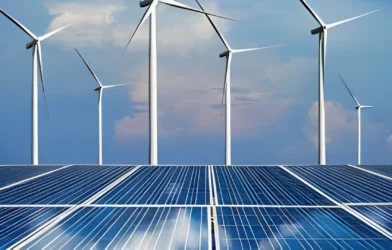
- Renewable energy system support, such as rooftop solar incentives, battery storage facilitation and enabling infrastructure.
These moves are designed not just to “tick climate boxes,” but to build competitive domestic capabilities that reduce import dependencies and foster local manufacturing.
Where the Budget Still Falls Short
Despite these strategic choices, observers argue the architecture is incomplete without sufficient focus on adaptation and resilience. While investments reinforce transition technologies, explicit funding for climate adaptation measures such as heat-wave resilience, water scarcity management and climate-ready agriculture are less prominent in this Budget compared with mitigation tools.
That has opened up discussions among experts who believe climate architecture should balance both mitigation and adaptation, especially as climate impacts intensify on the ground.
A Quiet But Structural Climate Message
Whether viewed through the lens of policy design, investment scale or sectoral focus, Budget 2026 signals a maturing fiscal approach to climate policy in India. It reflects an understanding that achieving net-zero commitments and sustainable growth cannot be done through headlines alone it requires institutional readiness, coordinated investment and resilient supply chains.
In other words, climate action is no longer treated as a standalone agenda, but as an integrated feature of economic planning and growth infrastructure.
As India moves forward, the real test will lie in how these architectural foundations are translated into implementation, monitored for impact, and adapted to emerging climate realities. If those pieces fall into place, this Budget may well be remembered as the moment when climate policy moved from good intentions to structural reality.
For more such information : EQmint
Resource Link : SustainabilityNext