
A US fighter jet shoots down Iranian drone that approached the USS Abraham Lincoln in the Arabian Sea, while a US destroyer later assisted a US-flagged tanker harassed by Iranian boats in the Strait of Hormuz. The back-to-back incidents highlight rising maritime tensions between the US and Iran in strategic waters.
Author: Aditya Pareek | EQMint
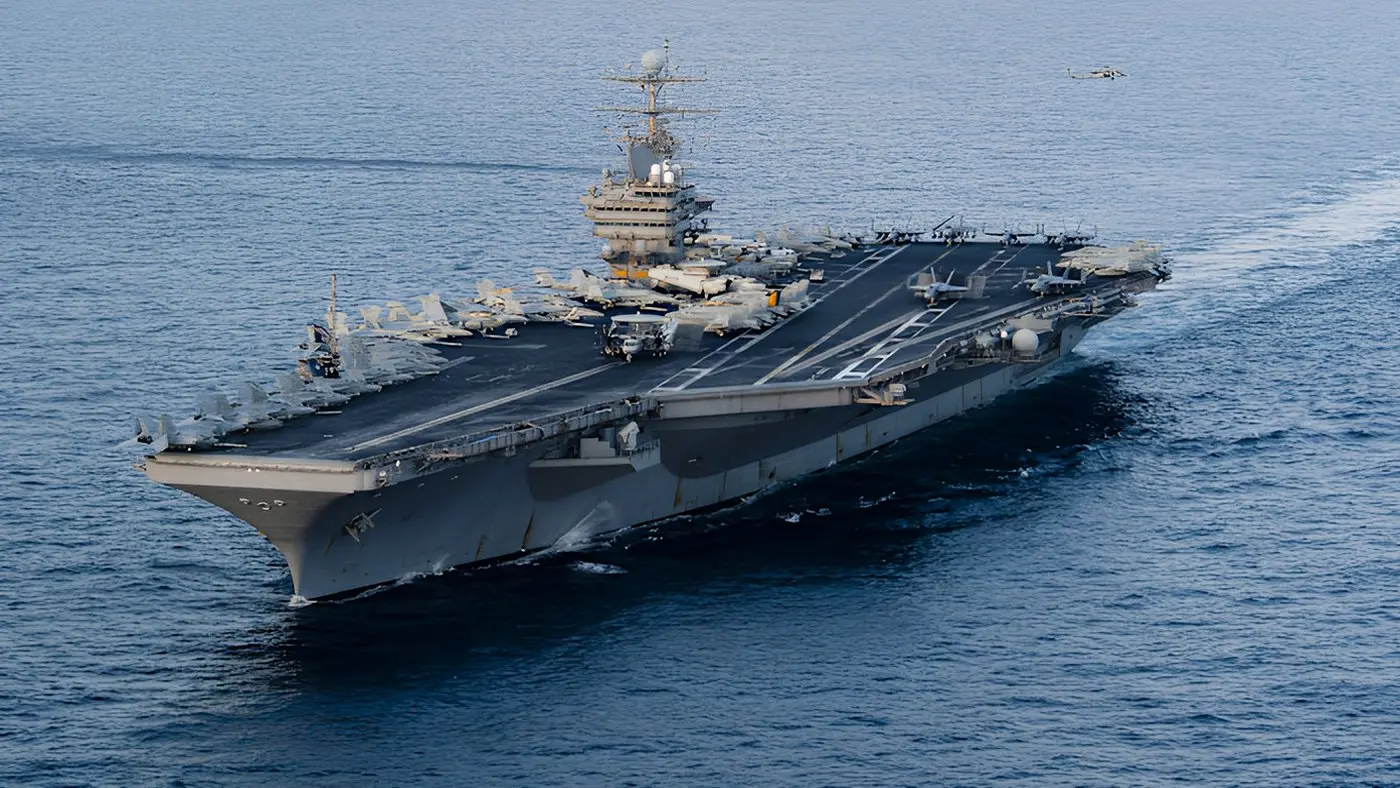
Tensions flared in the Middle East after a US fighter jet shot down an Iranian drone that approached the USS Abraham Lincoln aircraft carrier in the Arabian Sea, according to a statement released by United States Central Command (CENTCOM).
The incident occurred Tuesday when a Navy F-35C fighter jet operating from the carrier intercepted and destroyed the drone after it “aggressively approached” the ship with what officials described as “unclear intent.”
CENTCOM said the drone was neutralized in self-defense to protect the carrier and personnel on board. No injuries were reported, and no US equipment was damaged.
Drone Identified as Iranian Shahed Variant
The drone involved in the encounter was identified as an Iran Shahed drone, part of Tehran’s long-range, one-way attack systems capable of carrying over 100 pounds of explosives.
Shahed drones have gained global attention in recent years for their battlefield use, particularly in long-range strike missions. Their approach toward a major US naval asset raised immediate security concerns.
According to CENTCOM, the drone continued advancing toward the carrier despite de-esclatory measures taken by US forces operating in international waters, prompting the defensive action.
At the time of the incident, the USS Abraham Lincoln aircraft carrier was positioned roughly 500 miles from Iran’s southern coastline while conducting routine operations in the northern Arabian Sea.
Second Incident: Tanker Harassed in Strait of Hormuz
Hours later, a separate maritime confrontation unfolded in one of the world’s most critical shipping lanes — the Strait of Hormuz tanker incident.
CENTCOM reported that a US-flagged, US-crewed tanker was approached at high speed by multiple Iranian small boats and a drone while transiting the narrow strait.
The situation escalated when Iranian Revolutionary Guard craft allegedly threatened to board and seize the vessel, prompting immediate US intervention.
A US Navy destroyer, the USS McFaul, responded swiftly, accompanied by US Air Force aircraft providing defensive air support.
The presence of US forces helped de-escalate the confrontation, allowing the tanker to continue its journey safely.
Carrier Strike Group Presence in Region
The USS Abraham Lincoln aircraft carrier recently arrived in the Middle East and is currently operating with a carrier strike group consisting of three destroyers.
CENTCOM also confirmed additional deployments across the region:
- One destroyer in the Red Sea
- Two destroyers near the Strait of Hormuz
- Three littoral combat ships in the Persian Gulf
This expanded naval footprint reflects Washington’s ongoing efforts to secure maritime routes and deter potential threats to commercial shipping and military assets.
CENTCOM Issues Strong Warning
Following the back-to-back incidents, US Central Command (CENTCOM) issued a stern warning to Iran, stating that:
- Continued harassment of US and commercial vessels
- Unsafe airspace approaches
- High-speed boat maneuvers
- Threats to board ships
“will not be tolerated.”
The command reiterated its commitment to ensuring the safety of US personnel, ships, and aircraft operating in international waters and airspace.
Diplomacy Still on the Table
Despite the heightened tensions, diplomatic channels remain open.
White House Press Secretary Karoline Leavitt confirmed that upcoming talks between the United States and Iran are still scheduled.
She noted that President Donald Trump prefers diplomacy first but retains multiple options as commander-in-chief should threats persist.
Special envoy Steve Witkoff is expected to lead discussions aimed at reducing tensions.
Strategic Importance of the Strait of Hormuz
The Strait of Hormuz tanker incident underscores the strategic importance of the waterway, through which a significant portion of the world’s oil shipments pass daily.
Any disruption in the strait:
- Impacts global energy markets
- Raises shipping insurance costs
- Increases geopolitical risk
As a result, US naval operations in the region aim to preserve freedom of navigation and protect commercial vessels.
Broader Context of Rising Tensions
The incidents follow earlier warnings from CENTCOM after Iran announced a two-day live-fire naval exercise in the Strait of Hormuz.
US officials had urged Iran to conduct operations safely to avoid unnecessary risks to maritime traffic.
The recent confrontations highlight how quickly routine patrols can escalate in contested waters.
Conclusion
The downing of an Iran Shahed drone near the USS Abraham Lincoln aircraft carrier, combined with the Strait of Hormuz tanker incident, signals rising friction between US and Iranian forces in the Middle East. While diplomacy continues, the US military has made it clear that threats to its assets and international shipping will prompt immediate defensive action. The situation remains closely watched as both sides navigate a delicate balance between deterrence and diplomacy.
For more such information visit EQMint
Source link: ABC News
Disclaimer: This article is for informational purposes only and is based on official statements from US authorities. Geopolitical situations are dynamic and may evolve rapidly. Readers are encouraged to refer to official sources for the latest updates.