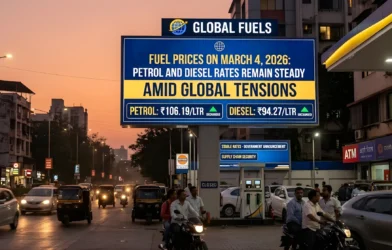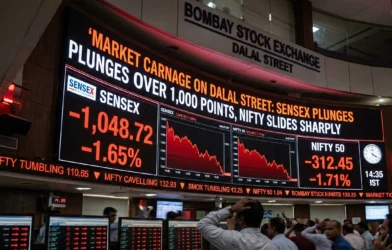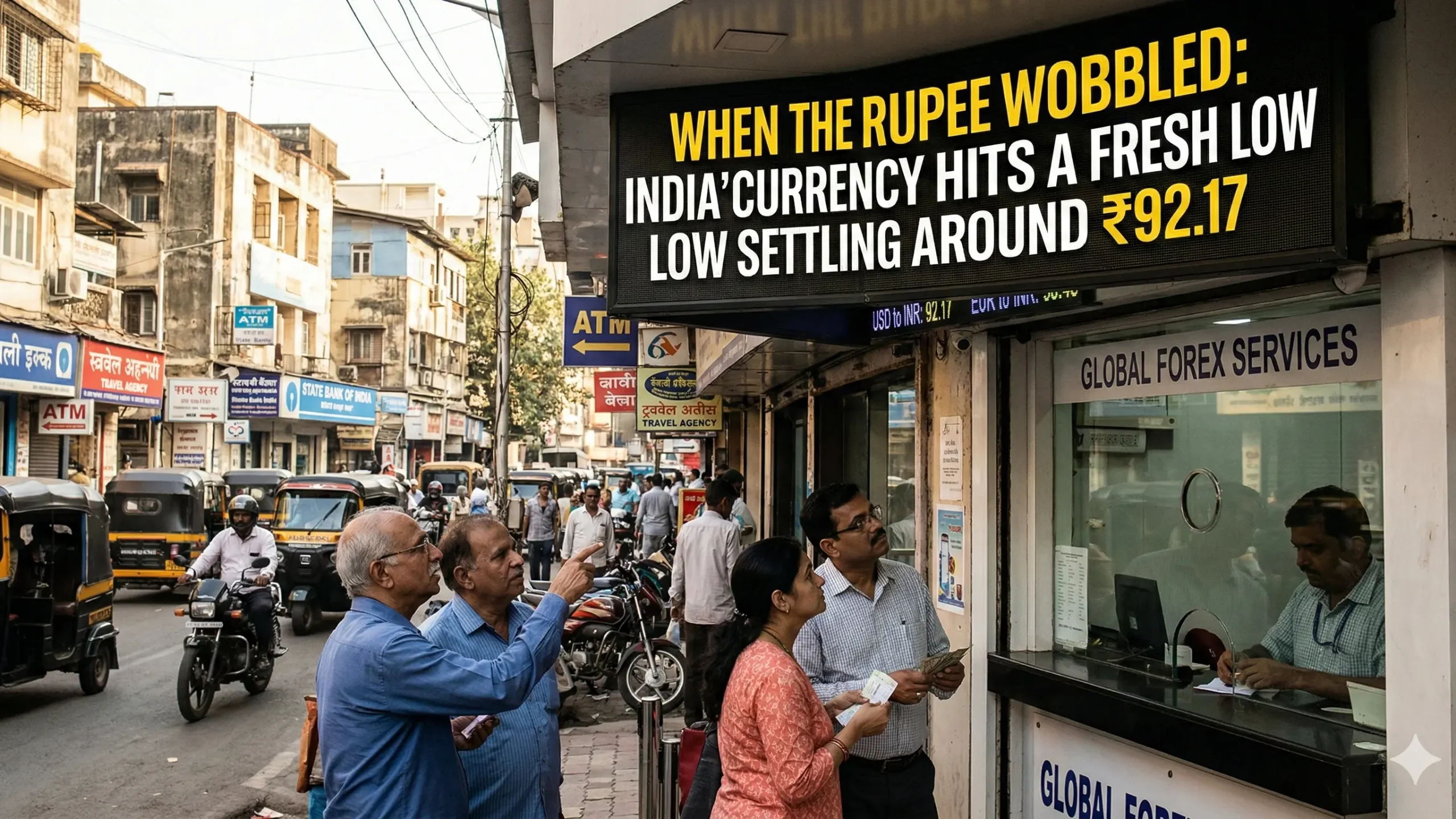
The Indian rupee weakened sharply to an all-time low in early March 2026 as geopolitical tensions in the Middle East rattled global markets. On March 4, the currency breached the ₹92 mark against the US dollar, reflecting soaring crude oil prices, risk-off sentiment among investors, and broader economic concerns. This slump in the rupee is not just a number on the forex board it carries real implications for inflation, import costs, and India’s economic stability.
Author : Aashiya Jain | EQmint | Market News
A Record-Setting Slump in the Forex Market
The Indian rupee fell hard in early trading on March 4 2026 and hit a new low settling around 92.17 to the US dollar its weakest ever against the greenback. That’s a big drop from recent weeks and keeps the downward trend going which has been putting pressure on the currency.
This sharp drop happened while tensions in the Middle East kept rising mainly between the United States Israel and Iran. As uncertainty grew global markets got nervous and investors rushed to safe havens like the US dollar.
Why the Rupee Is Losing Ground
Several interconnected factors are at play behind the rupee’s recent weakness:
1. Geopolitical Turmoil and Risk Aversion
The ongoing conflict in the Middle East has fueled global market nervousness. When geopolitical risk spikes, investors often move capital into safer assets especially the US dollar which puts downward pressure on emerging market currencies like the rupee.
2. Crude Oil Price Surge
India is heavily dependent on imported oil, with more than 80% of its crude requirements sourced from overseas. As tensions escalated, Brent crude prices climbed sharply, lifting global energy costs. Higher oil prices inflate India’s import bill, widen the current account deficit, and create inflationary pressures all of which weigh on the rupee.
3. Capital Flight and Foreign Outflows
In times of heightened uncertainty, foreign investors often reduce exposure to emerging markets. Outflows from Indian equities and other risk assets have intensified, reinforcing downward momentum in the currency markets.
4. Pressure on Remittances
With a substantial Indian diaspora in the Middle East, any slowdown in economic activity or disruption of remittance flows can impact foreign exchange earnings another factor deepening stress on the rupee.
Economic Implications for India
The rupee’s persistent weakness is felt across the wider economy:
Imported Inflation: A weaker rupee means India must spend more rupees to buy the same amount of foreign goods, especially oil. As fuel costs rise the price of everyday goods and transportation can climb contributing to inflationary pressures that squeeze household budgets.
Trade Deficit Concerns: Higher import costs risk widening the trade deficit making it harder to balance external accounts and maintain macroeconomic stability.
Monetary Policy Challenges: Central banks including the Reserve Bank of India may have to balance efforts to contain inflation with measures to support growth complicating policymaking in an already uncertain environment.
Market Sentiment: Softening currency can amplify risk-off sentiment in equities and bonds leading to volatility and lower investor confidence. Anyway yeah that’s basically how it goes. The weaker rupee thing just makes everything cost more and then all these other problems start piling up.
What Lies Ahead?
Analysts suggest that if geopolitical tensions ease and crude prices stabilise, the rupee could regain some strength. However, in the near term, volatility is likely to persist as global markets digest evolving news from the Middle East. Some forecasts even see the rupee testing deeper lows if the conflict extends, potentially probing levels beyond ₹92-93 to a dollar before stabilising.
For households and businesses across India the currency’s performance matters. From fuel costs at the pump to imported goods on store shelves a weaker rupee filters into daily life. While policymakers may intervene to smooth extreme volatility the current situation underscores how interconnected global events, from geopolitical strife to oil markets, can ripple through to domestic economic realities Households and businesses across India feel it when the currency moves.
For more such information visit EQMint
Disclaimer: This article is not an investment advice and is for educational purpose only