
In the aftermath of the 2026 Brihanmumbai Municipal Corporation (BMC) elections, the Urdu press has posed a striking question: Can Eknath Shinde prevent the BJP from claiming its first-ever Mumbai mayoral post? At the same time, commentators wonder whether secular opposition parties have lost their influence entirely. These debates reflect deeper shifts in Mumbai’s political landscape, shaped by election outcomes, alliance dynamics, and identity-based voting trends. This article explores the nuances behind these developments and what they might mean for the city’s civic governance.
Author : Aashiya Jain | EQmint | Political News
A Historic Shift in Mumbai Politics
For decades, the Brihanmumbai Municipal Corporation India’s richest civic body with an annual budget exceeding ₹70,000 crore was dominated by Shiv Sena and Congress, with the BJP as an influential partner at best. But the 2026 civic polls changed that narrative. In a powerful performance, the BJP emerged as the single largest party with 89 seats in the 227-member BMC, significantly ahead of its rivals.
This outcome marks a major milestone for the BJP, reflecting its expanding base in urban Maharashtra and a shift in voter alignment. Narratives in Urdu newspapers highlighted this victory not just as a local event but as a broader indicator of the BJP’s consolidated influence across major states, where civic poll outcomes have echoed its recent electoral successes.
However, the BJP did not secure an outright majority. It reached 89 seats on its own shy of the 114 needed for control meaning its aspirations to directly appoint the Mayor of Mumbai hinge on pact dynamics with ally parties.
Shinde’s Role: Kingmaker or Power Broker?
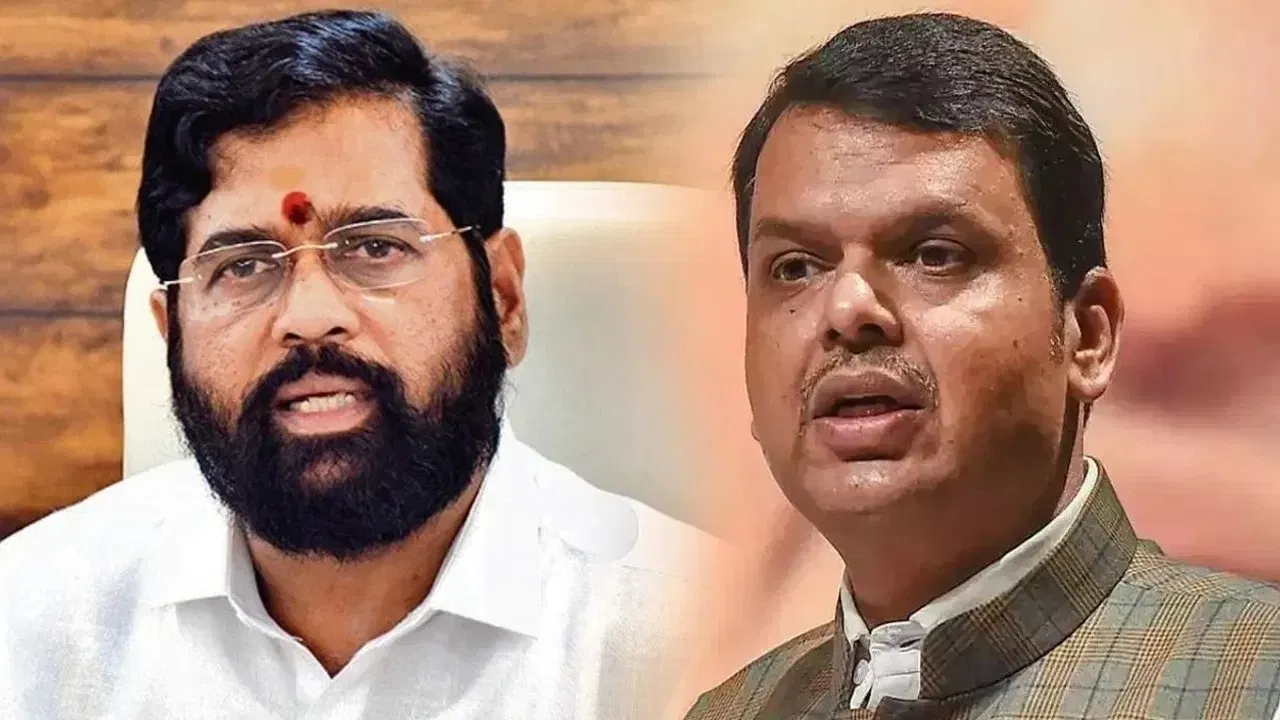
Enter Eknath Shinde, Maharashtra’s Deputy Chief Minister and leader of the Shinde faction of Shiv Sena. His party won 29 seats in the BMC, making them critical to any coalition that hopes to form the civic body government.
Urdu press editorials, reflecting broader political commentary, pose a key question: Can Shinde leverage this position to influence who becomes Mumbai’s next mayor?
Negotiations between Shinde’s Sena and the BJP have already begun in earnest. Following the Gazette notification last week, which formally recognised the Shinde faction’s elected corporators, Shinde even toured Delhi for discussions with BJP leadership signalling the seriousness of power-sharing talks.
Political analysts note that while the BJP needs Shinde’s support to cross the majority mark, Shinde himself may seek meaningful concessions in return perhaps even a shot at the mayoral post or key committee chairmanships before closing the deal. As one election update notes, the alliance has the numbers to claim control, but the exact distribution of posts remains under negotiation.
Shinde’s stance also resonates with broader factional legitimacy issues. After the 2022 Shiv Sena split, his faction was ultimately recognised by the Election Commission as the “real Shiv Sena,” a decision that continues to bolster his political clout in Maharashtra.
Secular Opposition: Struggling to Keep Relevance
While the BJP-Shinde alliance dominates the headlines, another question is gaining traction: Have secular parties lost ground in Mumbai? Urdu editorials suggest that Congress, Uddhav Thackeray’s Shiv Sena (UBT) faction, and others have struggled to match the Mahayuti alliance’s momentum.
The opposition block including the Shiv Sena (UBT), Nationalist Congress Party (Sharad Pawar faction), Congress, and others managed 65 seats for the Thackeray group, but this was not enough to challenge the combined success of the BJP and Shinde Shiv Sena.
Even strategic moves, like the once-notable attempt by Uddhav Thackeray and Raj Thackeray to unite forces, didn’t translate into decisive electoral gains this time around. Analysts attribute this not only to organisational shortcomings but also to voter priorities shifting towards development agendas and governance narratives championed by the Mahayuti alliance.
In addition, traditional ally parties such as the NCP (Sharad Pawar faction) have suffered internal disruptions in Mumbai, with leaders defecting and alliances failing to cohere effectively further reducing their traction in the city.
Is This a Turning Point?
So what does this all mean for Mumbai’s political future?
On one hand, the BJP’s strongest ever showing in the city signals a deeply shifting urban political landscape, where traditional regional forces are finding it harder to assert dominance. In many civic bodies across Maharashtra, the Mahayuti alliance has replicated this pattern of victory, suggesting a broader trend rather than an isolated event.
On the other, the cooperation (or tension) between the BJP and Shinde could influence how power is shared locally. If Shinde extracts significant terms in exchange for his support, local governance may emerge as a complex balancing act rather than simply a BJP triumph.
Finally, the secular opposition’s performance though currently subdued may not be permanently eclipsed if they can regroup, rebuild grassroots connections, and offer an appealing alternative to voters tired of entrenched major alliances.
Conclusion
The questions posed by the Urdu press encapsulate a moment of transition. Mumbai long a crucible of diverse political thought is now witnessing an unprecedented consolidation of power by the BJP-led alliance. Whether Shinde can steer the next mayoral selection or whether the secular parties find a resurgence will depend on negotiations, strategic choices, and how well each group listens to the changing aspirations of the city’s voters. The outcome will not only shape Mumbai’s civic governance, but also signal where India’s broader political winds may be blowing in the years ahead.
For more such information: EQmint
Resource Link : TheIndianExpress