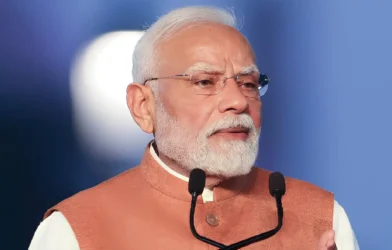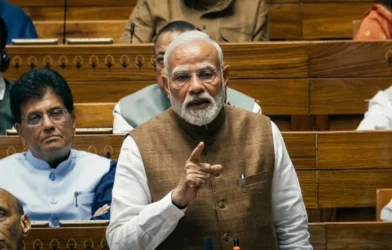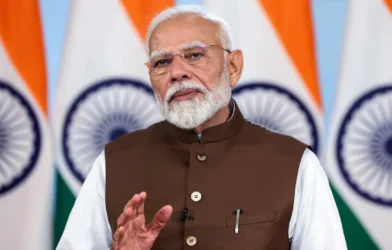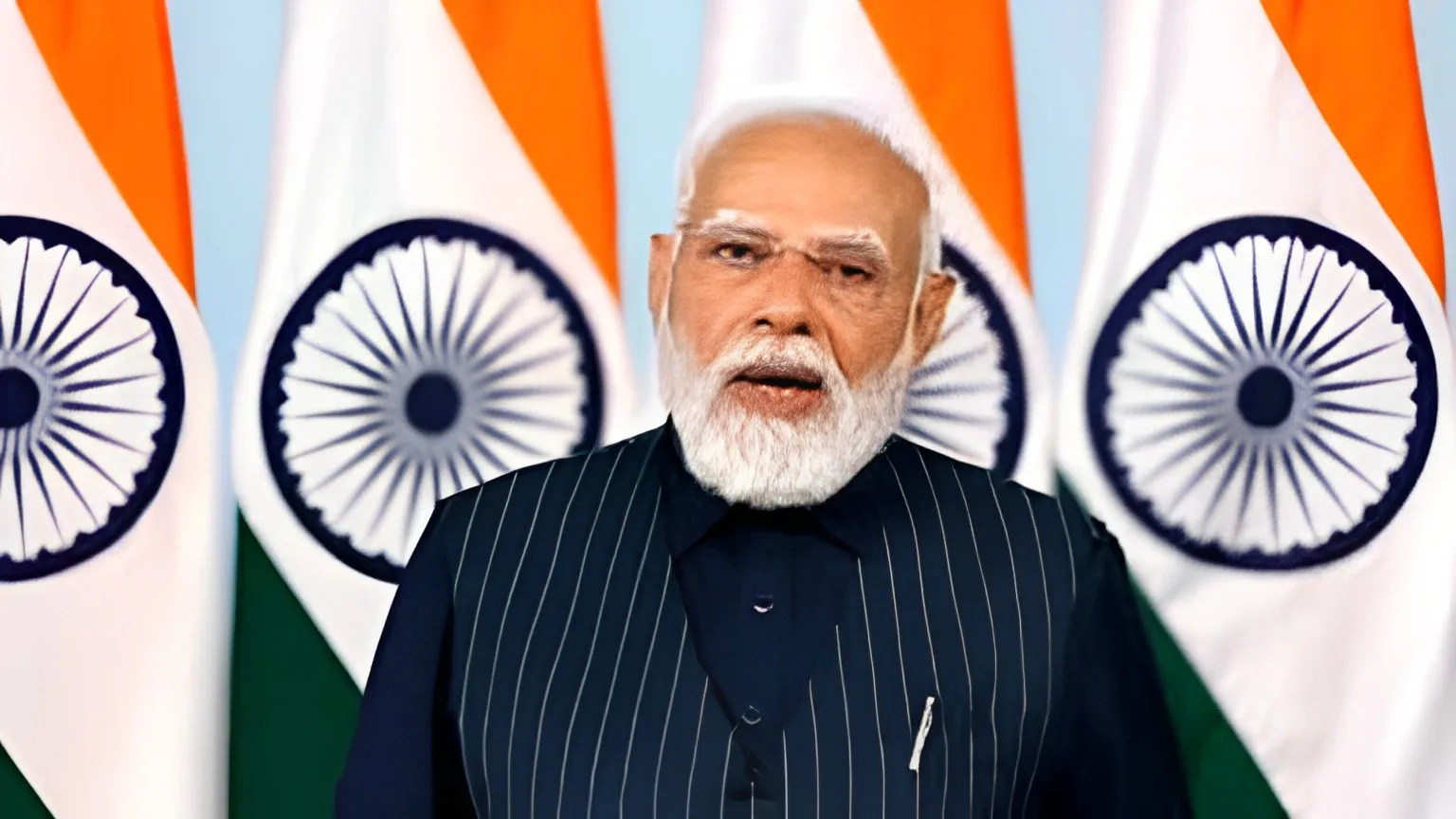
At a pivotal moment for the nation’s youth, Prime Minister Narendra Modi issued a bold challenge — “Gen Z must help pull India out of the lingering colonial or slavery mindset.” But what does this mean for India’s future, and will young Indians rise to the occasion?
Author : Aashiya Jain | EQmint | Political News
A Vision for Youth Power — But What’s Slavery Mindset Really About?
The message that was conveyed by Prime Minister Modi was at the Viksit Bharat Young Leaders Dialogue in New Delhi, where he emphasized that Gen Z in India should get rid of the legacies of a colonial slave mentality and drive the nation to self-confidence and creativity.
But what exactly is this slavery mindset that he refers to, and why does it matter in today’s India?
The PM argues that past generations up to 2014 were stifled by policy inertia and backward thinking that suppressed the growth of entrepreneurship. It was thought that innovation was to be embraced with confidence until now, when India’s youth power, start-up revolution, and Orange economy growth become the centre stage.
This preconditions the more in-depth look at India’s national identity, the place of young innovators, and how self-reliance is becoming a national priority.

Policymaking Stagflationism to Opportunity Economy: Has India Yet Rounded the Corner
Modi cited that the fast development of India in areas such as start-ups, space exploration, and creative industries is evidence of the transition of the old mindsets to the dynamic future.
The policies and red tape used to be restrictive in the pre-2014 period, which slowed down the progress, particularly among young entrepreneurs who wanted to develop a venture or to test something new. Going to the present day, the situation is very different:
-
- India is undergoing a start-up revolution with many more opportunities now than in the past.
-
- Self-reliance, particularly in tech and creative areas, has been reinforced by government incentives and ambitious reforms.
-
- Modi highlighted that this new generation demands that young people continue the wave and ensure the establishment of India’s global standing.
The point is obvious: the power of youth in India is not merely optimism but a tangible shift in attitude and potential.
Watch this YouTube Video below to learn more-https://www.youtube.com/watch?v=X_zY2QHxIwc
Is Gen Z Prepared to be on the Frontline to Lead this Transformation?
This leads to the million-dollar question:
Can India’s Gen Z truly help eradicate the slave mindset and propel the country forward?
No simple answer is available, but the PM puts it in the following way:
-
- Nation-building is based on youth creativity and innovation.
-
- The future development can be based on cultural confidence that is rooted in the tradition of Indian culture.
-
- Entrepreneurial resilience will be based on entrepreneurial resilience.
But this challenge, nevertheless, has its sceptics. Others think that a change of mindset cannot be done merely through rhetoric, but it needs real chances, economic stability, and a steady social empowerment. The pressure on youths to perform, be innovative, and break the traditional boundaries may be enormous.
However, Modi also felt that with focused efforts and new technologies, young people can also stand up, in particular, through the Fit India movement, creative economy programs, and strengthened startup programs.

So, Is There Such a Thing as the Slave Mindset?
This sub-question might cause division of opinion:
There is an argument that the slavery mindset is too much colonial hangovers such as reliance on external authentication or backward policies. Modi concentrates on self-confidence and national pride.
Some complain that economic inequality, access to education, and the lack of employment are the actual obstacles, and not necessarily the mindset. Nevertheless, the figurative meaning of the symbolic breaking of the mental shackles appeals to a great number of young Indians nowadays.
In any case, this is the call that India’s Gen Z must lead the charge in making India a more confident and competitive country.
What Should Gen Z Do Next? A Youth Cheat Sheet
Here, young Indians may make vision become reality:
-
- Be self-reliant: Develop ideas, but not with uncertainty.
-
- Be creative: Startups, online content, creative industries – where Gen Z excels.
-
- Always learn: Culture and skill development are important.
-
- Take part in nation building: Giving, community leadership, and participation.
These are not mere slogans but viable steps towards the right direction of the future India as Modi sees it.
Conclusion: Is It the New Dawn of Yuva Shakti?
The speech of Prime Minister Modi was not just another speech; it was rather a challenge and an invitation. Gen Z balances between the past and the future, between the self-assured, self-reliant future. The call to abolish the slavery attitude is not just empty lip service; it’s a call to action for innovation, confidence, and national purpose.
Whether the young generation of India will take it with a passion will not only define the following decade, but maybe the history of India’s rise on the global stage.
For more such information : EQmint
Resource Link : EconomicTimes