

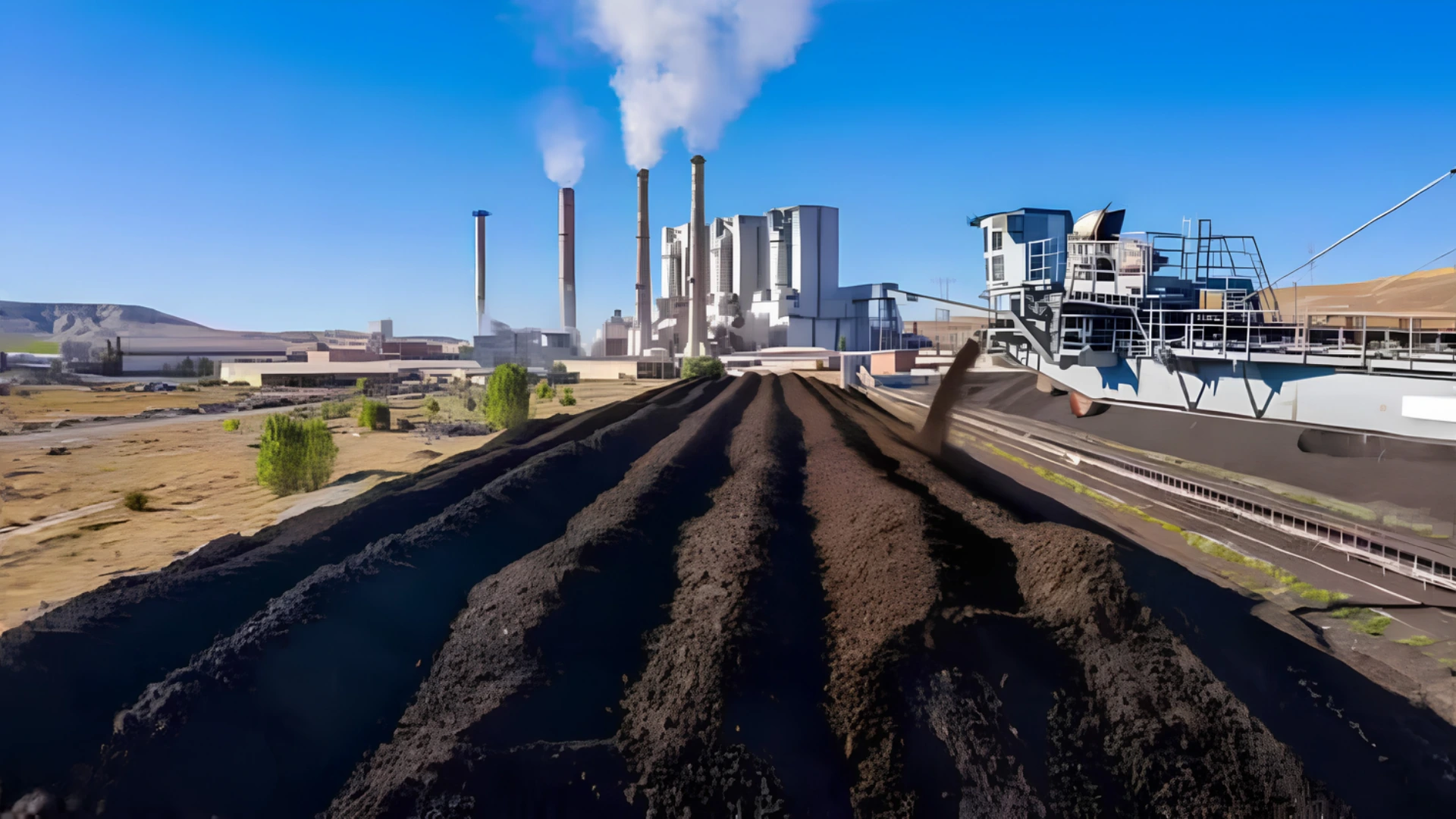
India’s coal gasification push looks like an energy policy on the surface. It’s actually a geopolitical hedge.
Author: Aadarsh Patel | EQMint
The Union Cabinet has cleared a ₹37,500 crore support scheme to expand India’s coal gasification projects across the country. Most headlines focused on cleaner coal usage or reducing fuel imports. The bigger story sits underneath all of that.
India is preparing for a world where global energy supply chains can break overnight. That changes how this policy should be read.
Why coal gasification suddenly matters again
India’s coal gasification converts coal into synthetic gas, commonly called syngas. That gas can then be used to produce methanol, fertilisers, chemicals, synthetic natural gas and industrial feedstocks.
India imports a large chunk of those materials. And those imports are expensive.
The government has been under pressure to reduce exposure to volatile LNG prices and external supply shocks, especially after repeated disruptions in global energy markets over the last few years. A conflict in one region now pushes fuel prices higher across continents within days.
Coal changes that equation because India already has massive domestic reserves. Instead of depending entirely on imported gas, the country wants to convert local coal into industrial fuel and chemical inputs inside India itself. That’s the real shift here.
The policy lines up with Modi’s recent fuel-saving messaging
Prime Minister Narendra Modi recently urged citizens to conserve fuel and reduce oil imports. Days later, the Cabinet approved one of the country’s biggest coal conversion pushes. The timing isn’t accidental.
India’s energy strategy now has 2 tracks running together:
- Expand renewables aggressively
- Build backup industrial systems using domestic resources
Solar and wind help electricity generation. But industries still need gas, chemicals, ammonia and fertiliser feedstocks. Those sectors can’t run on optimism about renewable transitions alone. Governments think in worst-case scenarios. Coal gasification gives India another fallback option.
China already built this playbook years ago
China scaled coal-to-chemicals infrastructure long before most countries started discussing energy resilience seriously. The logic was simple. If global trade routes tighten or fuel imports become unstable, domestic coal can still keep industries running. India appears to be moving in a similar direction now, though at a smaller scale.
That could reshape industrial activity in coal-heavy states like Odisha, Jharkhand and Chhattisgarh. These regions may eventually become centres for chemical manufacturing, synthetic fuel production and downstream industrial processing. Which means this is also an industrial policy story, not just an energy story.
Fertiliser security may become the hidden driver
One of the least discussed parts of coal gasification is fertiliser production. India imports large amounts of fertiliser-related inputs every year. Gas price spikes directly affect fertiliser subsidies and food inflation.
That creates political pressure very quickly. Coal-derived syngas can reduce part of that dependence over time. If the technology scales properly, India could build more domestic ammonia and urea capacity using local coal resources.
That matters for food security as much as energy security. And governments care deeply about anything connected to food prices.
The environmental debate isn’t going away
India’s coal gasification is still tied to coal. Environmental groups will continue questioning whether India should commit billions toward coal-linked infrastructure while also talking about net-zero targets. The government’s argument is that gasification is cleaner than directly burning coal and can reduce crude oil and LNG imports.
Critics will argue the country should spend more aggressively on green hydrogen instead. Both sides have a point. But energy transitions rarely move in straight lines. Countries usually build parallel systems during uncertain periods. India seems to be doing exactly that.
Why this matters for investors and industry
This policy could trigger fresh activity across several sectors:
- Mining
- Industrial engineering
- Gasification technology
- Chemicals
- Fertilisers
- Infrastructure equipment
Companies involved in syngas systems, coal conversion plants, industrial piping and chemical processing could see new project opportunities if execution begins at scale. Coal India and public-sector energy firms are likely to stay central to that rollout.
The bigger question is execution speed. India has announced large industrial missions before. The difference between policy headlines and operational plants is often several years, sometimes longer.
Still, the direction is now clear. India wants more control over the fuels and industrial inputs that keep its economy running. And for now, coal remains one of the few resources the country has in abundance.
For more such information visit EQMint
Join our Whatsapp channel for timely updates: Whatsapp
Disclaimer: This article is not an investment advice and is for educational purpose only.